



From September 5 to 8 this year, the 58th China International Furniture Fair (CIFF Shanghai) will take place in Shanghai.
As the second major event of 2026, it follows the successful Spring Edition held in Guangzhou this past March.
As the largest and most influential furniture exhibition in China, CIFF brings together around 6,000 leading brands from China and abroad each year, attracting over 500,000 professional visitors from more than 150 countries. The total exhibition area reaches 750,000 square meters.
Whether you’re a furniture buyer, product designer, or individual homeowner, you’ll find plenty of options worth exploring here.

CIFF Shanghai overview
Full Name: China International Furniture Fair Shanghai
Dates: September 5–8, 2026
Venue: Shanghai New International Expo Centre (SNIEC)
Address: No. 2345 Longyang Road, Pudong, Shanghai
Scale: 300,000 sqm exhibition area, 1,500+ brands
Scope: Bedroom furniture, sofas and living room furniture, office and commercial furniture, hotel furniture, furniture manufacturing equipment, home decor and textiles, outdoor furniture
CIFF Shanghai overview: what you can gain
At the China International Furniture Fair, over 90% of the exhibits are newly launched products.
This gives you early access to the latest designs, materials, and innovations—especially valuable for designers and buyers, as it’s not just about what’s trending now, but where the market is heading over the next 1–2 years.
In particular, the “Business Matchmaking Sessions” allow buyers with clear sourcing needs to connect directly with qualified exhibitors, helping turn conversations into real partnerships more efficiently.

For individual buyers, the real value of attending the fair lies in experiencing products firsthand.
The furniture showcased here represents the top level of each brand. You can lie on smart mattresses that adjust temperature and firmness, and directly experience the latest innovations.
“Based on my body type, the consultant recommended a bed with excellent support—it fit me perfectly,” said Joey, who traveled from the UK to attend CIFF last year. “If I had only looked online, I would never have found a bed this suitable.”
Pricing is another major advantage. With so many brands competing on-site, most offer special discounts, giving buyers more room to compare and choose. In many cases, prices at the fair are noticeably lower than those listed online.
“I found quite a few great deals,” Joey added. “Some sellers offered small gifts, others sold display samples at lower prices—and you can negotiate directly. I ended up buying a solid wood nightstand for just $30.”
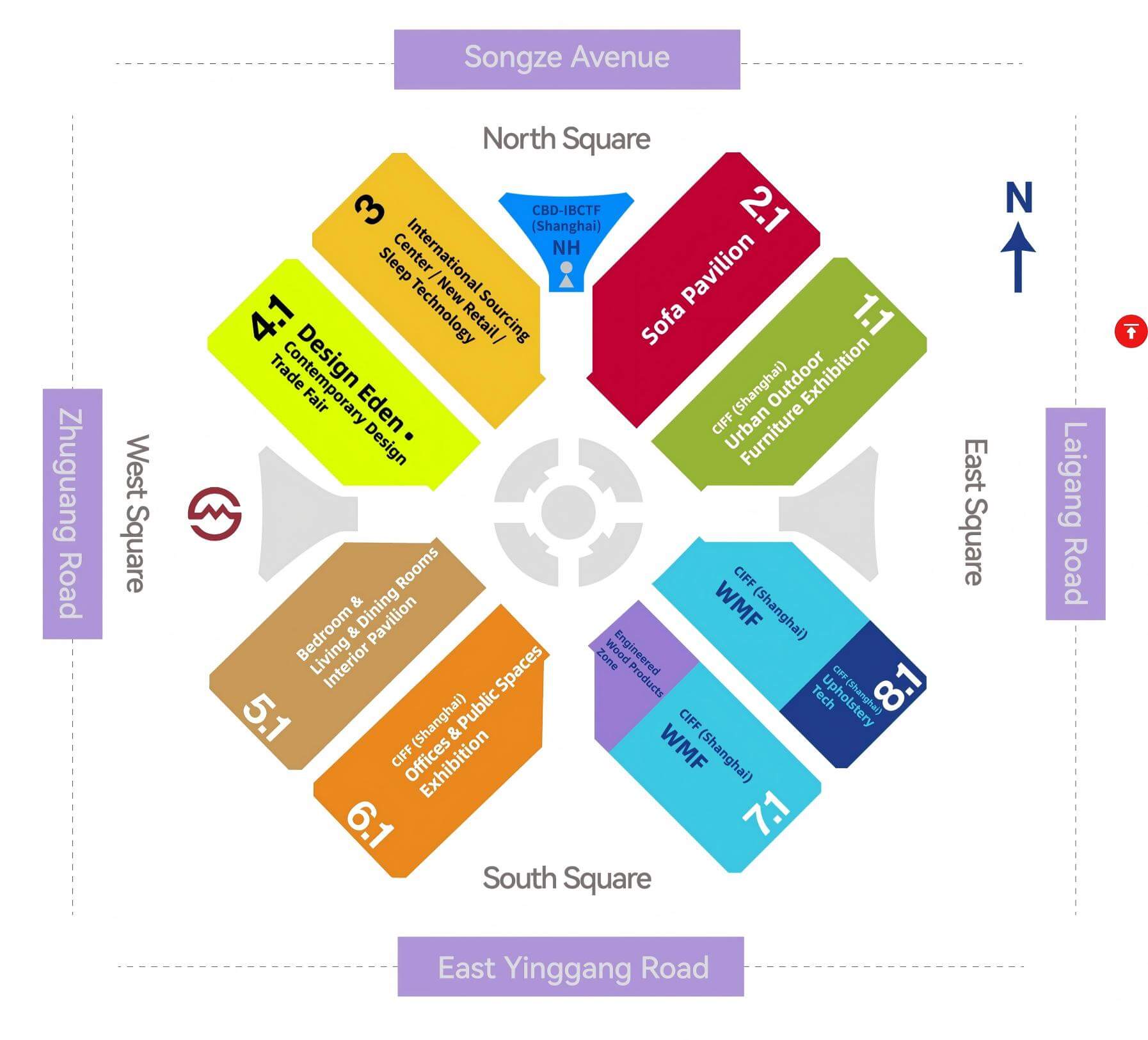
It’s also easy to connect with original manufacturers. Hall H4, known as the “Factory Direct Hall,” brings together over 200 factories, allowing you to go straight to the source.

Tips for visiting CIFF Shanghai efficiently
1. Plan Ahead
CIFF covers a vast exhibition area, and it’s easy to feel lost without prior preparation.
The most effective approach is to clarify your purchasing goals and budget in advance, and download the exhibition map ahead of time to mark target exhibitors and products.
For example, if you plan to source both sofas and bedroom furniture, note that the sofa halls are located in the northeast, while the bedroom-themed halls are in the southwest. The distance between them is significant, so scheduling your route and timing carefully is essential.
2. Language and Communication
Many exhibitors have only basic English skills, making it difficult to clearly explain details about materials, structures, or craftsmanship.
A practical solution is to use translation tools to assist communication. Apps like Google Translate, DeepL, or built-in phone translators are already widely used on-site. Many salespeople are accustomed to typing messages and showing responses through translation apps.
For even greater efficiency, consider hiring a professional trade show interpreter. They are familiar with furniture industry terminology and can accurately explain differences in materials and processes, helping you make informed decisions more quickly.

3. Selecting suppliers
At CIFF, it’s often the design that catches your eye, but what truly determines whether you buy is the supplier’s capabilities.
Overall, furniture quality at CIFF is generally good, but craftsmanship varies across different price ranges. From basic models to premium and high-end custom pieces, it’s crucial to select suppliers that meet your specific needs.
For individual buyers, pay close attention to minimum order quantities (MOQs). Some large factories only accept bulk orders and do not cater to retail customers.
Additionally, if you have specific home design requirements—such as adjusting table and chair dimensions to fit your space or customizing sofa colors to match your style—you should prioritize suppliers with customization capabilities.
4. Price Negotiation
Many first-time CIFF buyers mistakenly assume that furniture prices at the fair are fixed.
In reality, it’s quite the opposite. Brands transport products from across China to Shanghai for the exhibition. If items aren’t sold during the fair, they must be shipped back, incurring not only high transport costs but also additional storage fees. As a result, many brands are eager to sell their products quickly on-site, especially samples.
Therefore, if you find a piece you like at CIFF, it’s worth discussing the price with the salesperson before paying. Simply asking, “Is this your best price?” can often secure a discount of around 5%–20%.

5. Shipping and Logistics
After selecting products at CIFF, planning how to transport them home is essential.
Some suppliers may need to adjust inventory or produce custom items, so it’s important to confirm delivery timelines.
Regarding shipping, ask whether the supplier provides transport services or works with a logistics partner. For individual buyers without international shipping experience, having the supplier or their logistics partner handle the process is usually much easier.
If the supplier lacks export experience, you will need to manage customs clearance, duties, delivery, and installation on your own.
Post-Fair Challenges
It’s often at this stage that many first-time overseas buyers realize attending CIFF is just the beginning—the most complex parts come after the exhibition.
You may have selected your preferred products, negotiated prices, and signed contracts, but managing production progress and quality checks, coordinating shipments from multiple factories, handling international transport, customs clearance, and final delivery can be overwhelming for individual buyers.
After choosing several pieces at the fair, Linda encountered similar challenges. “I had already decided to buy, but the further along I got, the more uncertain I felt,” she said. “Each factory ships differently, and there’s no unified logistics plan—it was hard to coordinate everything.”
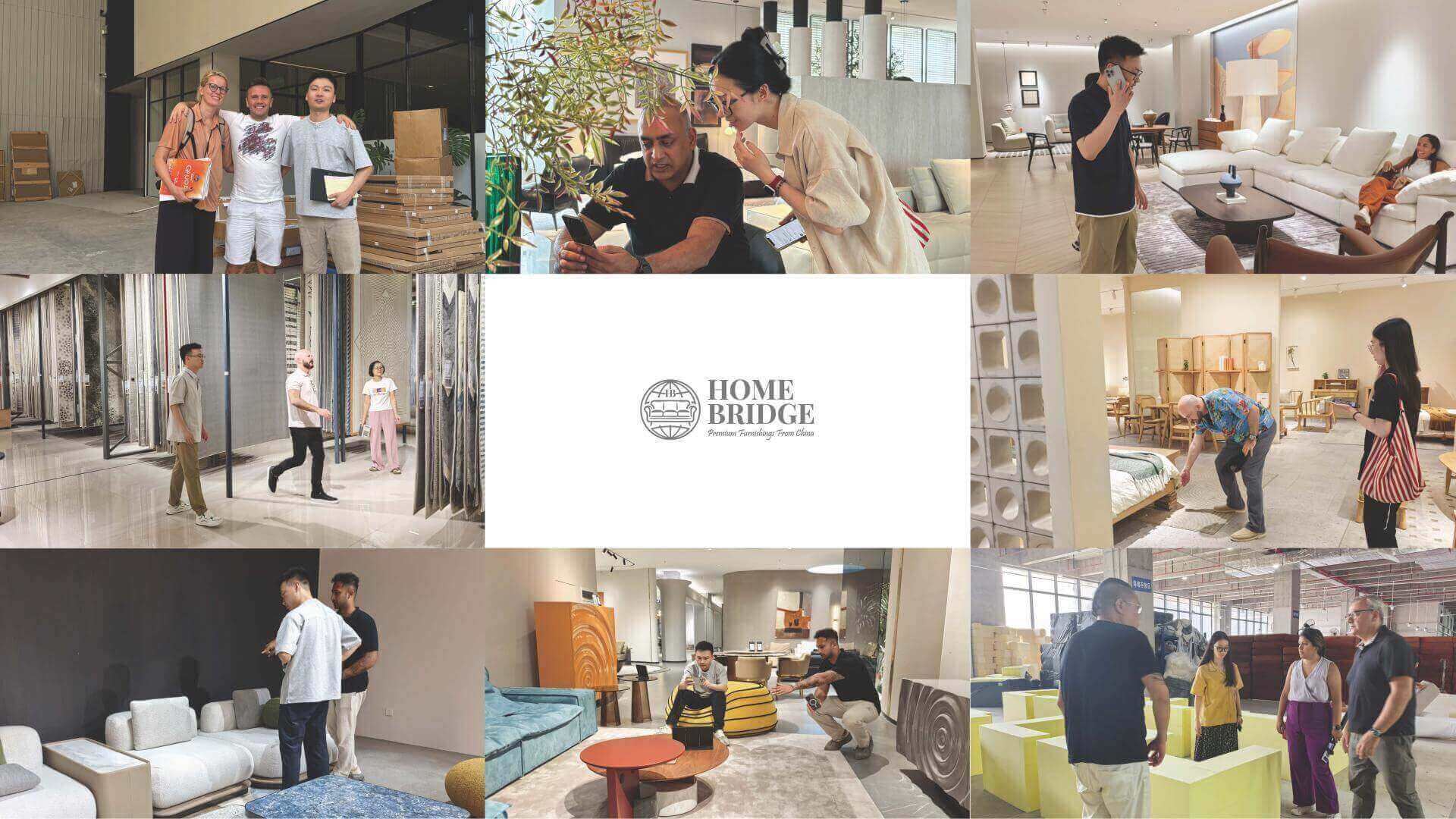
She eventually chose to work with a professional team like Homebridge to manage the process, from order confirmation and production follow-up to final delivery at home.
“For me, this step was actually the most critical,” Linda shared. “At the fair, you only see the products, but what really determines the experience is how smoothly the entire process is handled.”
As a result, more overseas buyers attending CIFF now seek support teams to pre-select suppliers, monitor production, ensure quality, and manage unified shipping, customs, and delivery. When these processes are streamlined, the full value of CIFF is truly realized.
.svg)






.svg)
.svg)


