



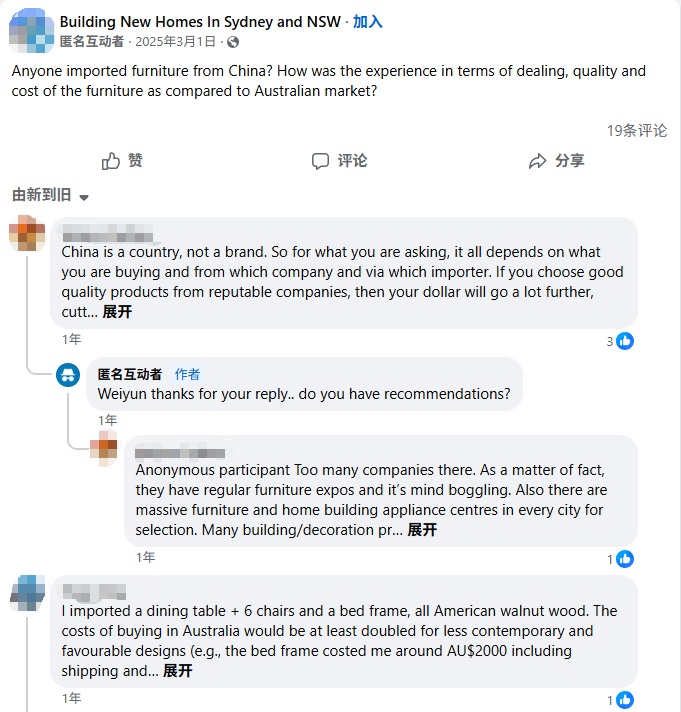
Open social platforms today, and you’ll see more people asking: How to import furniture from China?
In recent years, as international logistics have improved, sourcing networks have become more transparent, and more suppliers have joined platforms like Facebook and Instagram, these discussions have grown quickly. You can also find more buyers sharing their successful experiences in the comments.
Importing furniture directly from China can help bypass distributors, marketing layers, and brand markups, reducing costs by around 40%–70%.
However, the process is not as simple as it looks. This article will walk you through every step, from placing an order to receiving your furniture.
1. Confirm Your Sourcing Model
Many first-time buyers make the mistake of treating all furniture sourcing from China like regular online shopping. But buying one chair and furnishing an entire home are completely different projects.
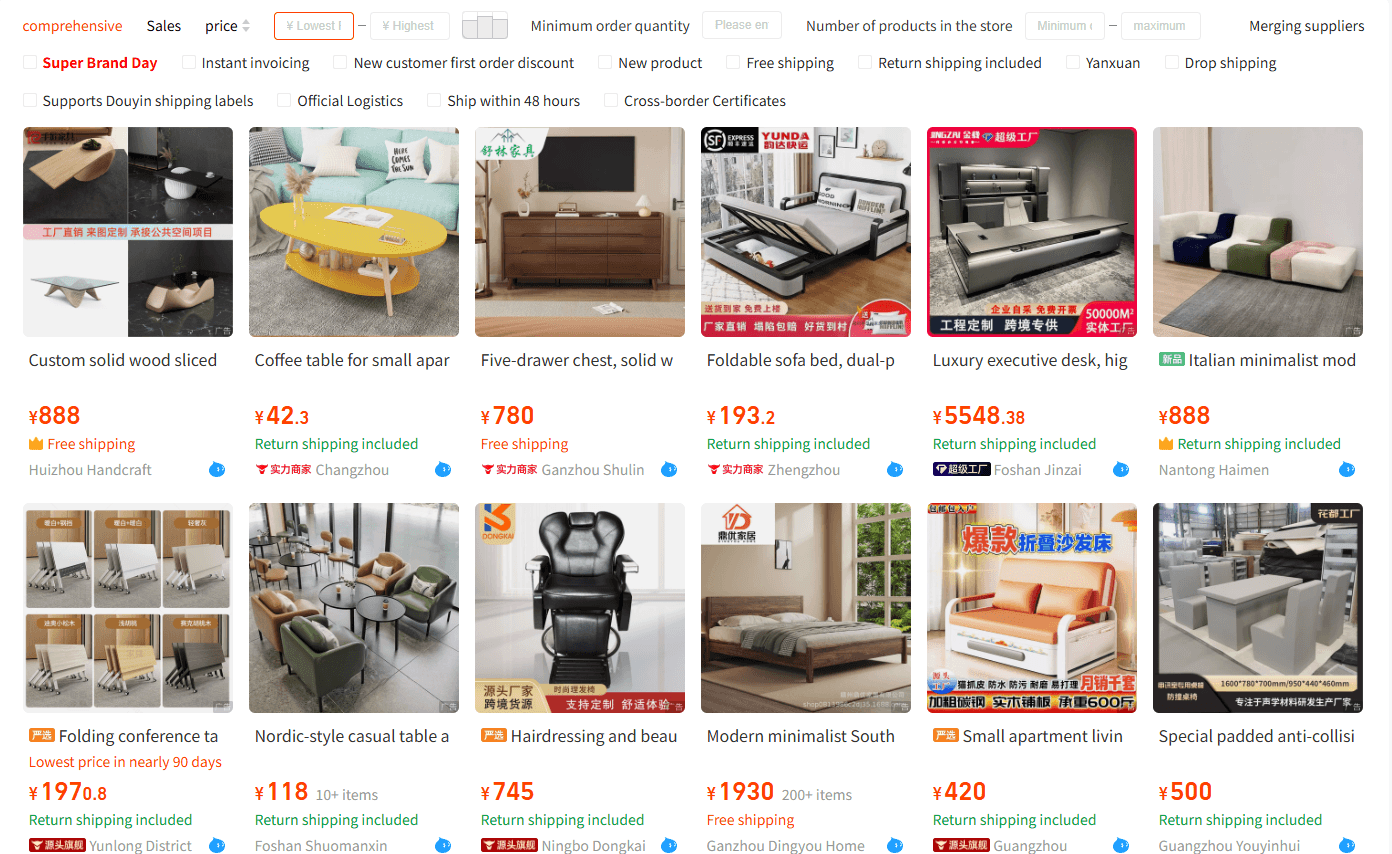
1)Buying Only 1–3 Items: Taobao / 1688 + Buying Agent
If you only need a dining table or a few chairs, Taobao and 1688 can be direct options. You can browse many styles, compare clear prices, and often find local factory-level deals.
But the real problem usually comes later—not when placing the order, but during shipping.
Many overseas buyers assume every seller can ship directly to their home. In reality, different stores may ship separately, pack separately, and charge separately. The products may not cost much, but the freight bill can become surprisingly high.
Rachel learned this the hard way. Her furniture cost around $600, but because each item was packed and shipped separately, the final logistics bill reached $1,500.
That’s why small-item sourcing works better with a buying agent. A good agent can collect goods from different stores into one warehouse, then repack and ship them together—reducing repeated charges, unnecessary packaging, and inefficient shipping costs.
2) Full-Home Sourcing: Foshan Direct + Sourcing Company
If you are sourcing furniture for a house, apartment, or guesthouse, what you need is not just a cheaper link, but a complete sourcing system.
The hardest part of full-home sourcing is coordination: sizes need to fit, styles need to match, colors need to work together, and production and shipping schedules need to be consolidated.
If you handle it like single-item shopping, you may end up managing dozens of factories at the same time.
Robin’s experience is typical: “I bought more than 20 products, and it turned into following up with over 20 factories every day. One cabinet was finished, while the table hadn’t even started production. Worse still, when the goods arrived, several items didn’t match in color.”
That’s why full-home sourcing is better handled through furniture hubs like Foshan.
Take Lecong as an example. Its furniture market covers nearly 4 million square meters and includes more than 180 large furniture malls. The value of this kind of industrial cluster is not just having more products—it also makes selection, receiving, consolidation, and container loading much easier.
This is where sourcing companies like Homebridge become especially valuable. A truly useful sourcing company does more than send product links. It helps turn scattered factories, orders, timelines, inspections, and logistics into one executable project.

2. Choosing Reliable Suppliers
Your supplier selection logic will differ depending on whether you are using Taobao, 1688, or a sourcing company. For a more detailed guide, you can refer to Homebridge’s article: How to Choose a Reliable Chinese Furniture Sourcing Channel.
Choosing Taobao / 1688 Stores
It’s not recommended to focus only on the lowest price. The real cost of furniture is hidden in materials, structure, foam density, hardware, packaging, and after-sales support. Two products that look almost identical online may differ greatly in actual quality.
A safer approach is to stay within the mid-price range and evaluate suppliers based on product specifications, transaction history, and genuine customer reviews. Pay close attention to negative reviews—if many complaints mention color differences, cracking, or deformation, it’s better to be cautious.
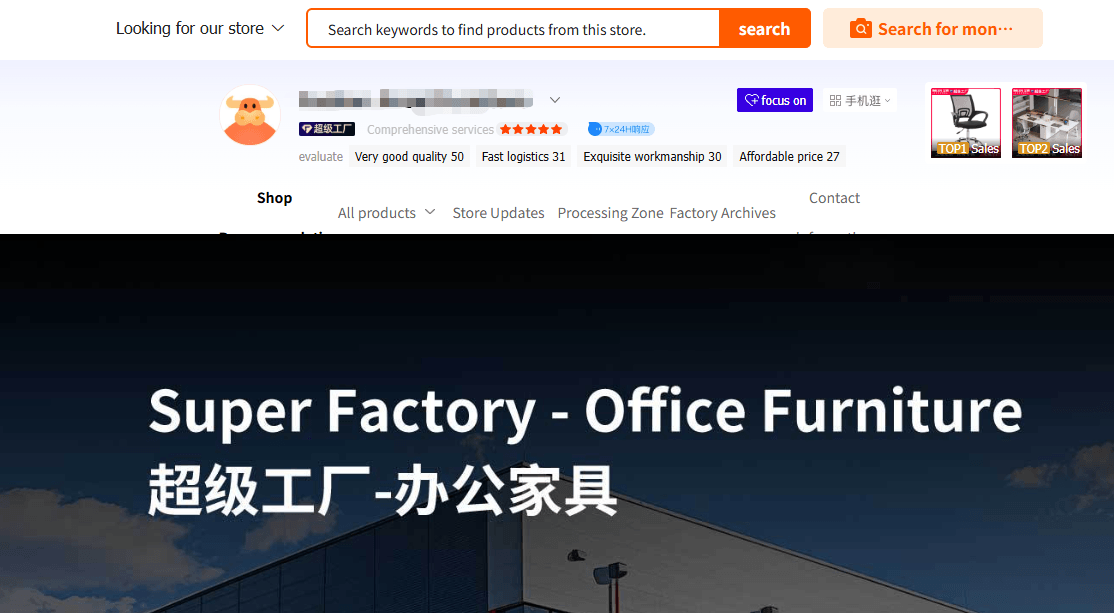
Also, some stores may look highly professional online, but are actually trading companies or product collection shops rather than real manufacturers. Genuine factories usually specialize in one category for years, instead of simultaneously selling sofas, dining tables, lighting, and hardware.
One of the simplest tests is to ask directly: “Can we do a live video call to see the factory right now?” If the seller keeps avoiding the request, it’s a sign to be careful.
Choosing a Sourcing Company
A truly valuable sourcing company does more than find factories or ask for prices. It stays involved throughout the entire process—from product selection, production, and quality inspection to receiving goods, container loading, and shipment.
To judge whether a sourcing company is reliable, focus on its local execution capability. Does it have a team in Foshan? Does it have a warehouse? Is it directly involved in receiving goods, inspection, and container loading?
If a sourcing company only forwards images and quotations, it is essentially just a middleman. A responsible company should help manage multiple factories, different lead times, quality checks, and final shipment, making the entire sourcing process clear and controllable.
Cindy once worked with an unreliable company. After payment, she had to follow up on every product herself, and no one took responsibility for shipping. Later, she realized that a good sourcing company does not make clients chase updates every day—it handles each step proactively.

3. Confirm Fabric Samples
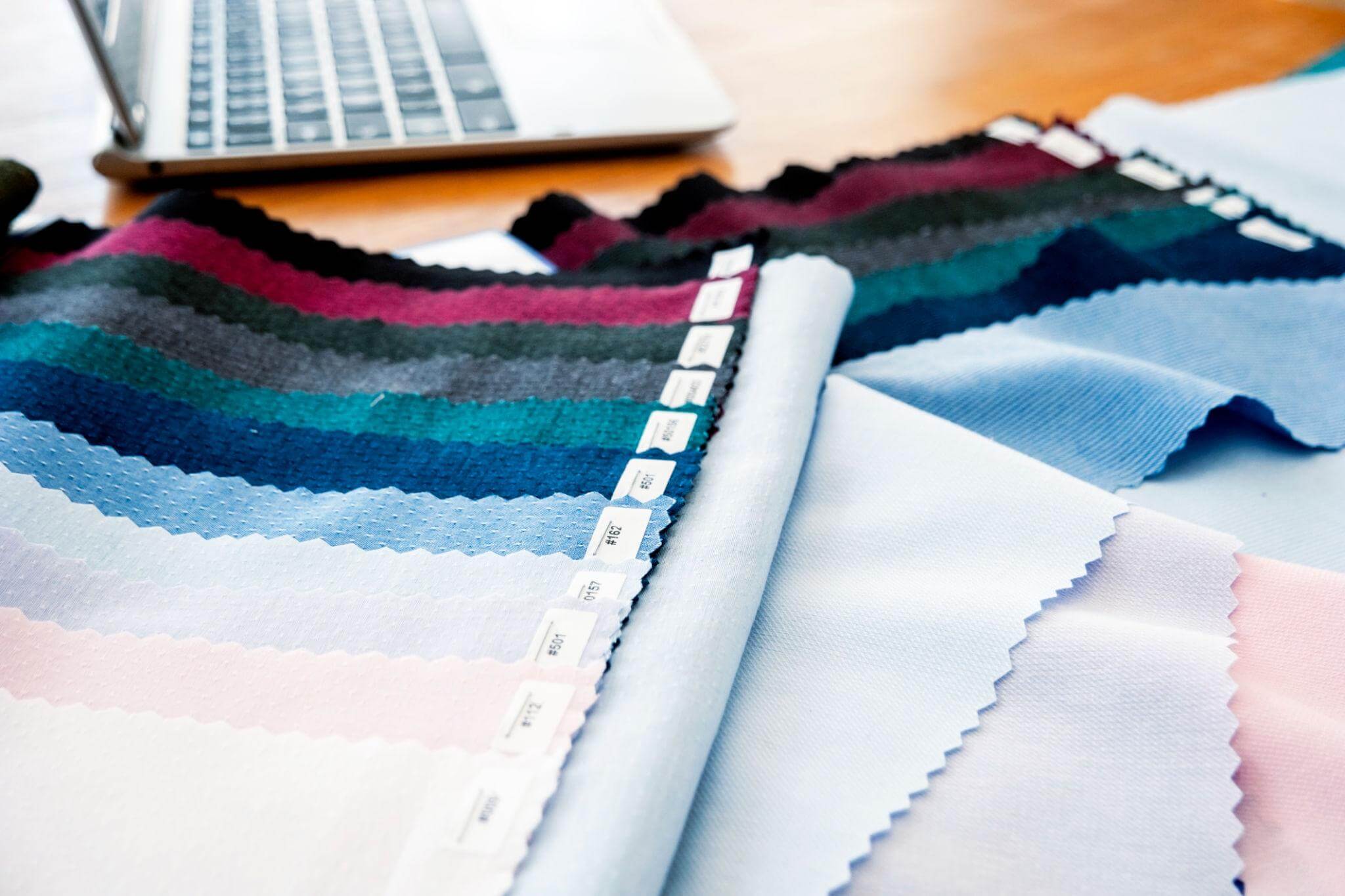
Before production begins, you should at least confirm fabric samples, because colors can look different on screen.
Off-white, cream white, and light gray-white may seem only slightly different online, but they can feel completely different in a real space.
Texture is the same. What looks premium in photos may come from lighting and editing. Once you receive the material, it may feel rough or look cheaper than expected.
So for fabric, leather, wood veneer, and metal finishes, request samples whenever possible. It may take extra time, but it is far better than dealing with returns later.
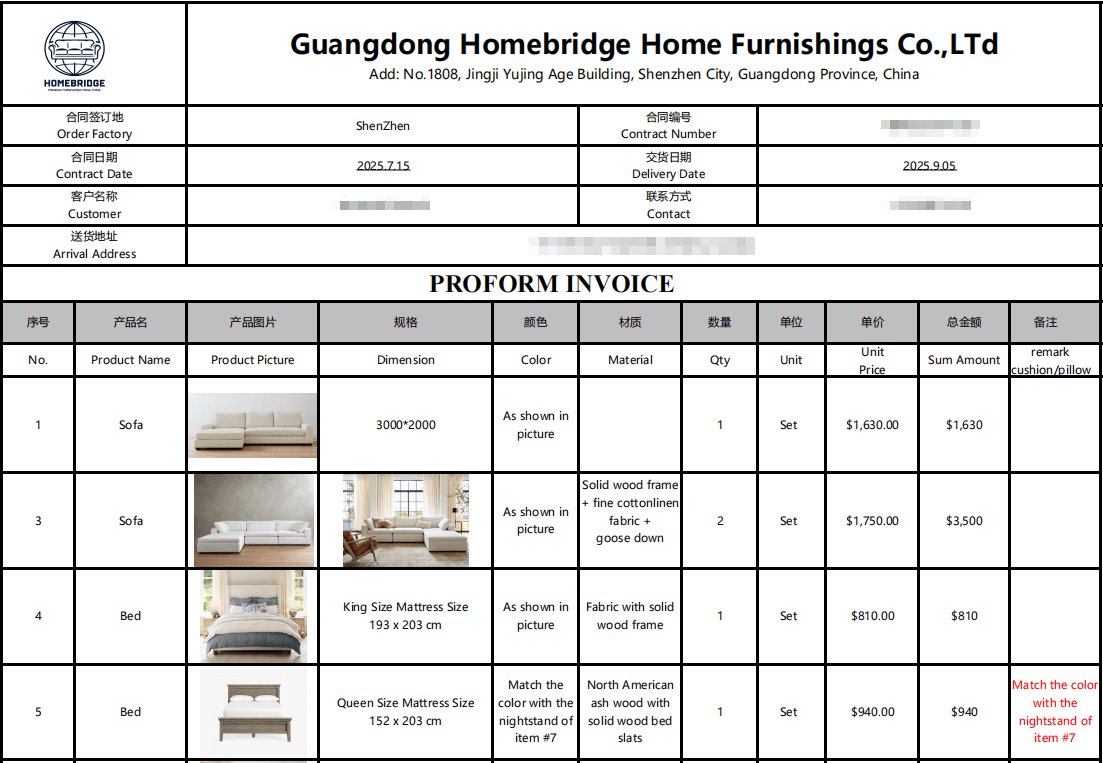
4. Signing the Contract
There is a very practical saying in the furniture industry: “Anything not written clearly may be adjusted to reduce cost.”
If you are buying a leather sofa, the contract should not simply say “leather sofa.”
That could mean top-grain leather or split leather; thick leather or thin leather; a solid wood frame or particle board inside.
A safer way to write it would be:
- Three-seater sofa
- Size: 2200 × 950 × 850 mm
- Materials: top-grain leather + solid wood frame + 40D foam
- Color: off-white
- Craftsmanship: hand-tufted backrest
- Packaging: export carton + moisture protection + corner protection
This kind of detail helps reduce risk in advance. In furniture production, the biggest problems often come from products that look similar on the surface, while the cost has quietly been reduced inside.
5. Choosing Shipping Terms
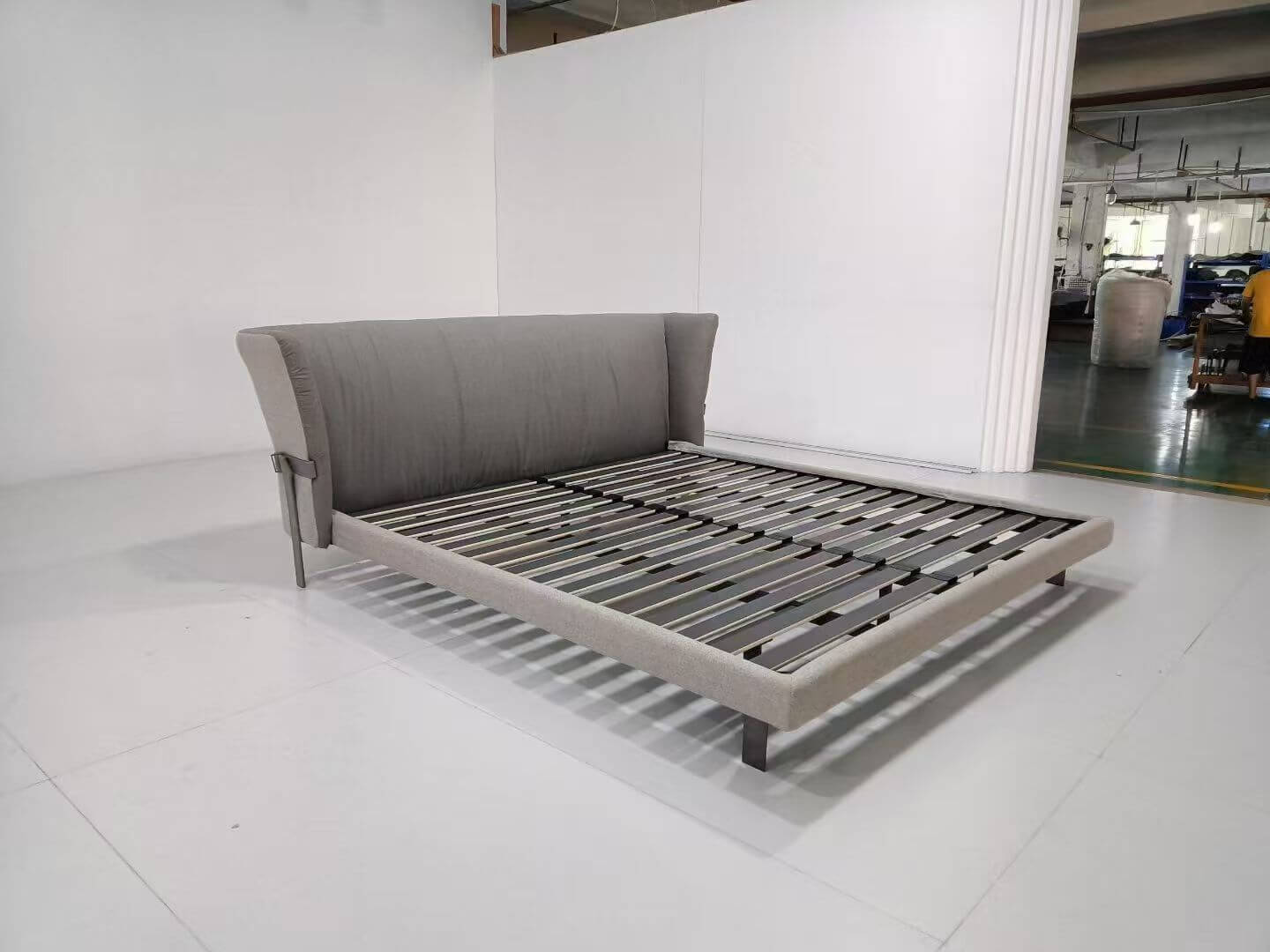
For large products like furniture, sea freight is usually the standard option. Depending on the shipment volume, buyers typically choose between FCL (Full Container Load) and LCL (Less than Container Load). But even more important than the shipping method is choosing the right trade term, because this determines who is responsible for each stage of the process.
This is also why the same product may be quoted at $1,200 by one supplier and $1,800 by another. The difference may not come from the product itself, but from different trade terms such as EXW, FOB, or DDP.
- EXW: Looks Cheapest, but Creates the Most Work
EXW stands for Ex Works pricing. In simple terms, the factory is only responsible for manufacturing the goods. Once the products leave the factory gate, everything else—pickup, export customs, sea freight, customs clearance, and delivery—becomes the buyer’s responsibility.
- FOB: Better for Buyers with Some Experience
FOB means Free on Board. Under this term, the factory delivers the goods to a Chinese port and loads them onto the vessel. After that, the buyer is responsible for sea freight, destination customs clearance, and final delivery.
The advantage of FOB is that the process within China is relatively clear, while buyers still have control over international shipping costs.

- DDP: The Most Convenient, but Pay Attention to Pricing
DDP means door-to-door delivery. After payment, the goods are shipped directly to your address.
The biggest issue with DDP is that the pricing is often less transparent. It can be difficult to clearly separate the product cost, sea freight, import duties, and final delivery fees.

A better approach is to first ask for the EXW product price, then separately request FOB and DDP quotations. This allows you to understand where the money is actually being spent, instead of only seeing one bundled total price.
For a more detailed shipping guide, you can also refer to Homebridge’s article: Furniture Shipping Guide: Choosing the Right Option.
6. Receiving the Goods and Handling After-Sales Issues
Just because the furniture arrives at your door does not mean the sourcing process is fully complete.
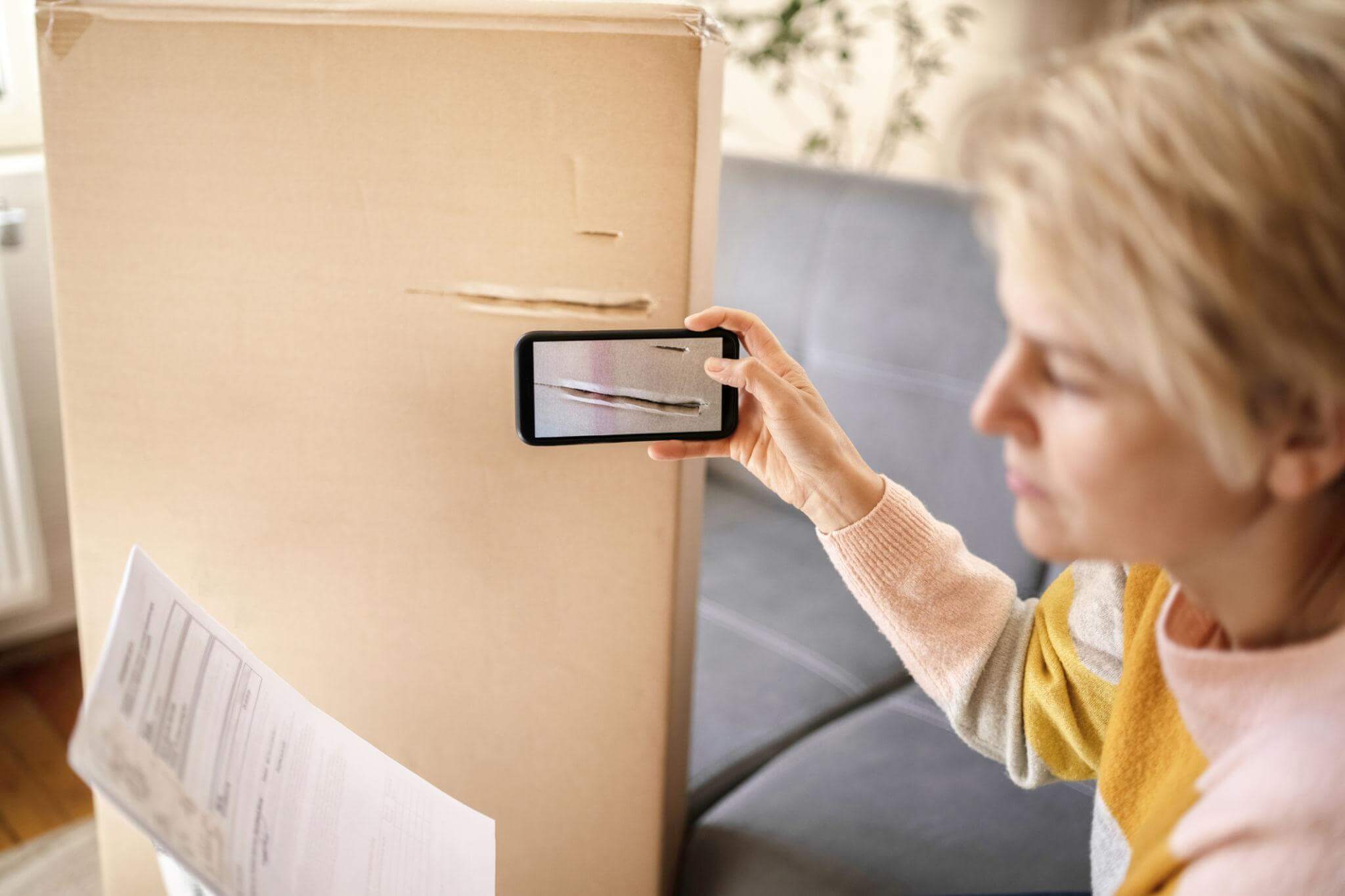
In fact, the final step is extremely important: always record a full unboxing video.
This does not mean taking a few casual photos. You should clearly document the outer packaging condition, the entire unboxing process, product quantity, surface condition, and accessories.
If problems appear later, suppliers, logistics companies, and customs-related parties may try to shift responsibility to each other. In many cases, the buyer becomes the final person left to handle the issue.
That is why an unboxing video is not just a formality—it becomes the most important evidence for compensation claims, replacement shipments, repairs, or after-sales support later on.
7. What Truly Reliable Furniture Sourcing from China Looks Like
Cross-border sourcing, something that once seemed possible only for large companies, has gradually become part of everyday life thanks to the growth of international logistics, cross-border payments, and video communication.
An even bigger change is that overseas buyers are beginning to view Chinese furniture differently. More people now realize that many products sold in local furniture stores are already manufactured in Chinese factories.
As a result, China’s furniture B2C market has grown rapidly in recent years.
However, for individual buyers, successfully sourcing furniture from China still requires preparation in areas such as product quality, supplier selection, and international logistics. This article is intended to provide a practical starting point.
If you would like to learn more, you are welcome to explore Homebridge’s How to Buy Furniture from China series, where each article explains different aspects of China furniture sourcing in greater depth.
.svg)






.svg)
.svg)


