
Bedroom Furniture Guide: 7 Must-Have Pieces for 2026
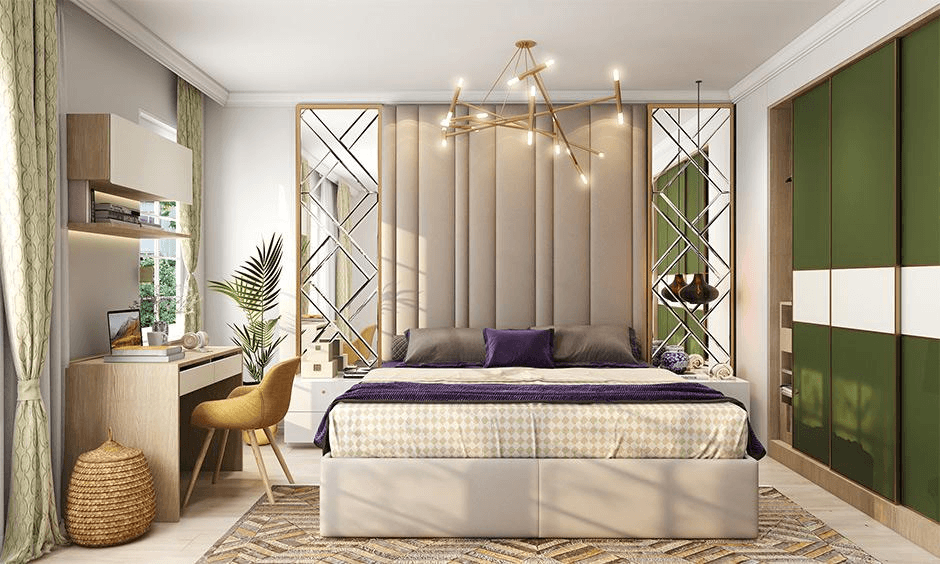
You have spent hours scrolling through bedroom furniture photos and still have no clue what to buy. A catalog makes everything look good, but your actual room — awkward corner, half-empty closet, that wall you are not sure about — is another story.
Here is the thing: the best bedroom furniture comes down to seven specific pieces that balance comfort, storage, and style. This guide covers each bedroom furniture type in detail, plus how to choose furniture based on your room size and how to lay it all out so your room actually works.
1. What Type of Bedroom Furniture Is Best?
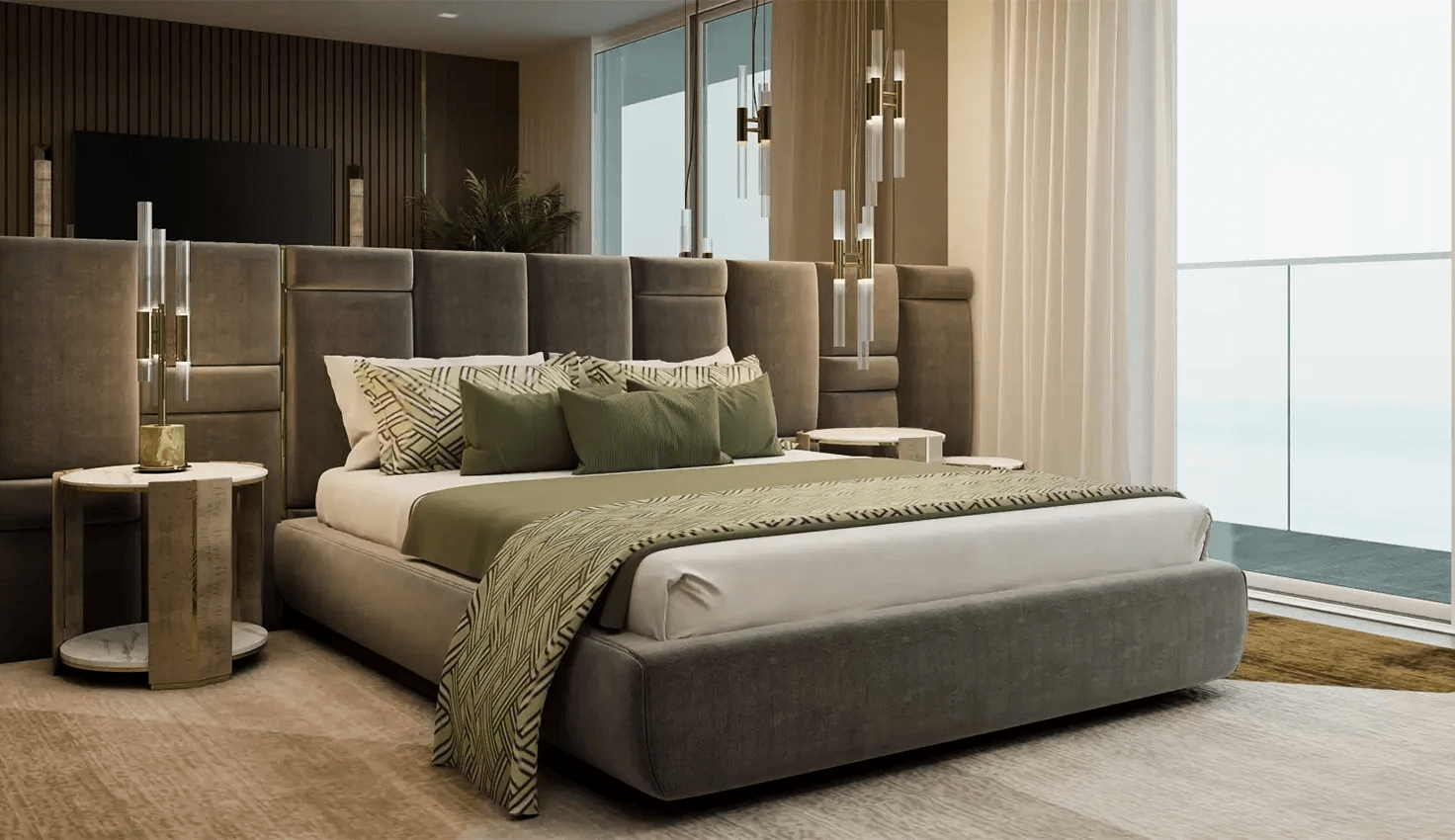
Not everything belongs in a bedroom. A dining table does not. Neither does a bulky entertainment center. The best bedroom furniture does one of three jobs: helps you sleep, stores your stuff, or makes the room comfortable. Bed frames and mattresses handle sleep. Dressers, nightstands, and wardrobes handle storage. Chairs, benches, and ottomans handle comfort. Pick pieces that match those jobs and your room size, and you will be fine.
2. 7 Must-Have Bedroom Furniture Pieces for 2026
Every bedroom needs a smart mix of furniture. The seven pieces below cover the essentials — from the bed frame that anchors the room to the ottoman that hides extra blankets. Here is a quick comparison, then the details on each one.
Bed Frame
Most guides tell you to buy a bed frame but skip what actually matters. The frame is the most important piece in your room. It holds your mattress, keeps it off the floor (which stops mold and extends mattress life), and sets the visual direction for everything else. You will find three main materials: wood (warm and classic), upholstered (soft headboard, modern feel), and metal (slim frames, industrial look).
Key Features to Look For
- Size match: Queen is the most common size in US homes at 60 by 80 inches. Make sure your frame matches your mattress exactly.
- Headboard: Gives back support for reading and makes the bed look finished. An upholstered headboard also cuts down noise in apartments.
- Storage options: Platform frames with built-in drawers or an ottoman lift base save floor space.
A low platform bed opens up a small room. An upholstered frame with a tall headboard adds softness and acts as a visual anchor. The National Sleep Foundation notes that a supportive bed frame is a key factor in mattress longevity.
Best For
Every bedroom. Spend the most on this piece because it affects your sleep every night.
Nightstand
A nightstand is the small table beside your bed that keeps daily items within reach — phone, lamp, water glass, book. Without one, those items end up on the floor or stuffed under your pillow. Sounds simple. But most guides skip the practical details.
Key Features to Look For
- Drawer count: At least one drawer hides clutter like chargers and remotes. A two-drawer model doubles storage in the same footprint.
- Height match: The top should line up roughly with your mattress height. Too low and you will strain reaching. Too high and it blocks bed access.
- Surface space: At least 18 to 24 inches wide gives room for a lamp plus a phone and a book.
If you share a bed, get one on each side. Matching pairs create symmetry, but different styles work too as long as the heights match.
Best For
Anyone with a bed. It is the second most practical piece after the bed frame.
Dresser
A dresser is low, wide storage with multiple drawers for folded clothes. It is the workhorse of the bedroom. Most dressers stand 30 to 42 inches tall, and the top works great for a TV, mirror, or decorative items.
Key Features to Look For
- Drawer depth: Deep drawers (6 to 8 inches) hold sweaters and jeans. Shallow ones (3 to 4 inches) work better for socks and accessories. A mix of both is ideal.
- Material durability: Solid wood lasts decades. Hardwood plywood with a veneer is a solid mid-range option. Particleboard costs less but can sag over time.
- Mirror compatibility: Many dressers come with or accept an attached mirror, saving wall space.
Consumer Reports says solid wood with dovetail joinery are the two best signs of a dresser that will last.
Best For
Medium to large bedrooms. If you have the floor space, a dresser is the most efficient way to organize folded clothes.
Wardrobe or Armoire
A wardrobe is a tall standing cabinet for hanging clothes. Think portable closet. Inside you get a rod for hangers and shelves for folded items. Most bedroom guides skip this piece because they assume you have a built-in closet. But millions of older homes and apartments do not.
Key Features to Look For
- Hanging rod height: At least 50 inches from the base to fit dresses and long coats. Adjustable rods give flexibility.
- Shelf count: Extra shelves above and below the rod add storage for bags and shoes.
- Door type: Sliding doors save floor space. Hinged doors let you see everything at once.
Best For
Bedrooms without built-in closets, or anyone who needs extra hanging space for suits and dresses.
Vanity or Desk
A vanity is a table with a mirror for grooming. A desk is a table for working. In 2026, with more people working from home, the line between them keeps blurring. Many modern pieces serve both purposes.
Key Features to Look For
- Mirror size: 24 to 36 inches wide gives a clear view of your face without leaning in. An adjustable-angle mirror is even better.
- Drawer storage: Small drawers keep makeup, brushes, or office supplies out of sight.
- Stool comfort: A cushioned stool with back support makes a big difference if you sit for more than five minutes.
A 2023 Pew Research survey found that 35% of US workers with remote-capable jobs work from home full time. A bedroom desk or vanity makes that setup possible without sacrificing comfort.
Best For
Master and guest bedrooms. Gives you a spot to get ready or get work done without leaving the room.
Accent Chair or Bench
An accent chair or bench adds a second seating option. A chair creates a reading corner. A bench at the foot of your bed gives a spot to sit while putting on shoes. These pieces also fill empty floor space and make the room feel finished.
Key Features to Look For
- Scale: A large armchair in a small bedroom will crowd everything. Measure floor space first. A slim armchair needs about 4 by 4 feet minimum.
- Fabric: Performance fabrics like polyester and microfiber hold up better to daily use than linen or silk.
- Comfort: If you plan to sit here for reading, test the seat depth and cushion firmness.
A boucle armchair adds texture and warmth. A leather bench wipes clean with a cloth. Both look intentional without trying too hard.
Best For
Medium to large bedrooms with extra floor space.
Storage Ottoman or Chest
A storage ottoman is a soft-topped box that works as a seat, footrest, and hidden storage all in one. A storage chest does the same job in a traditional shape. This is the piece most bedroom guides overlook, which is a shame because it is one of the most practical additions you can make.
Key Features to Look For
- Hidden storage capacity: At least 12 inches of internal depth for spare blankets and pillows. Some ottomans offer up to 25 inches of width.
- Lid mechanism: Gas-lift lids are easier to open than hinged tops, especially against a wall.
- Fabric match: Pick a color that works with your bedding so the piece blends in.
According to a 2025 survey by the National Association of Home Builders, 73% of new home buyers prioritize storage capacity in furniture choices (National Association of Home Builders. An ottoman delivers storage without taking extra floor space.
Best For
Any bedroom that needs extra storage for blankets, pillows, or off-season items.
3. How to Choose Bedroom Furniture Based on Room Size
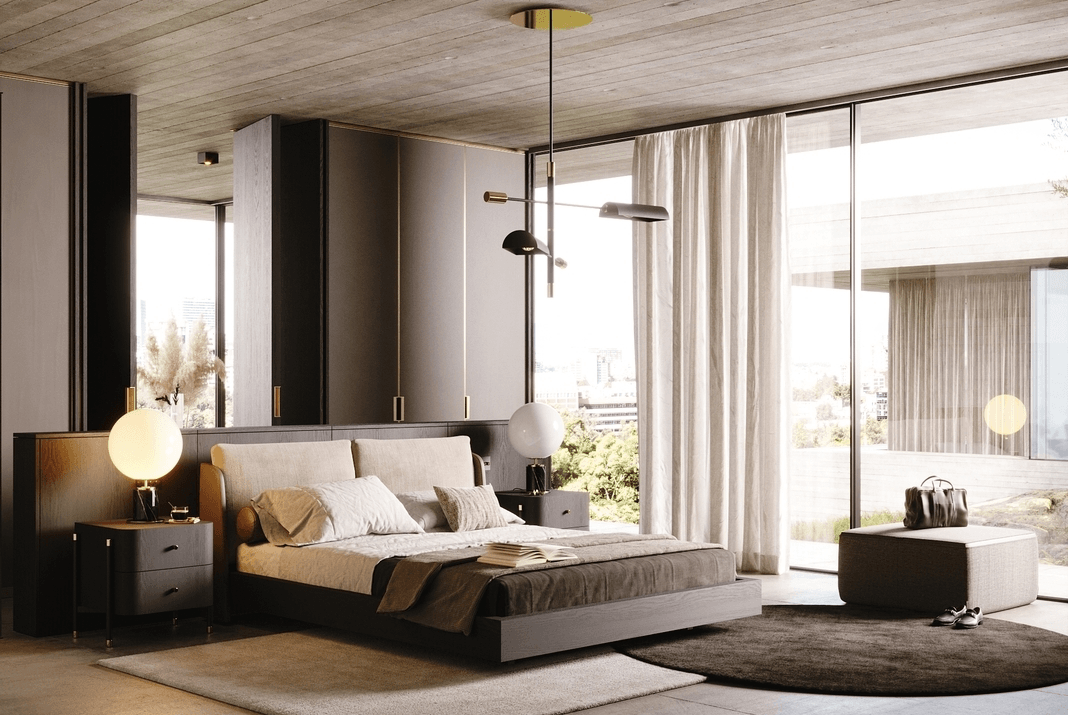
Most guides tell you to buy what you like and figure out the layout later. That is backward. Your room size should drive your furniture choices first. For small bedrooms under 120 square feet (roughly 10 by 12 feet), stick to four pieces — a full or queen bed, one nightstand, a dresser or wardrobe, and one small accent piece. Use vertical storage like a tall dresser to maximize space. A king bed will dominate the room and leave no room for anything else.
For medium bedrooms (120 to 200 square feet), you have room for a queen or king bed, two nightstands, a full-size dresser, and one extra piece like a bench or chair. For large bedrooms over 200 square feet, fit all seven must-haves plus extras like a chaise lounge or reading nook. The key is grouping pieces into zones — sleeping, dressing, sitting — so the room feels intentional. A 2023 report from the American Institute of Architects confirms that homeowners increasingly want flexible bedroom layouts that accommodate both sleep and work.
4. Should Bedroom Furniture Match or Mix?
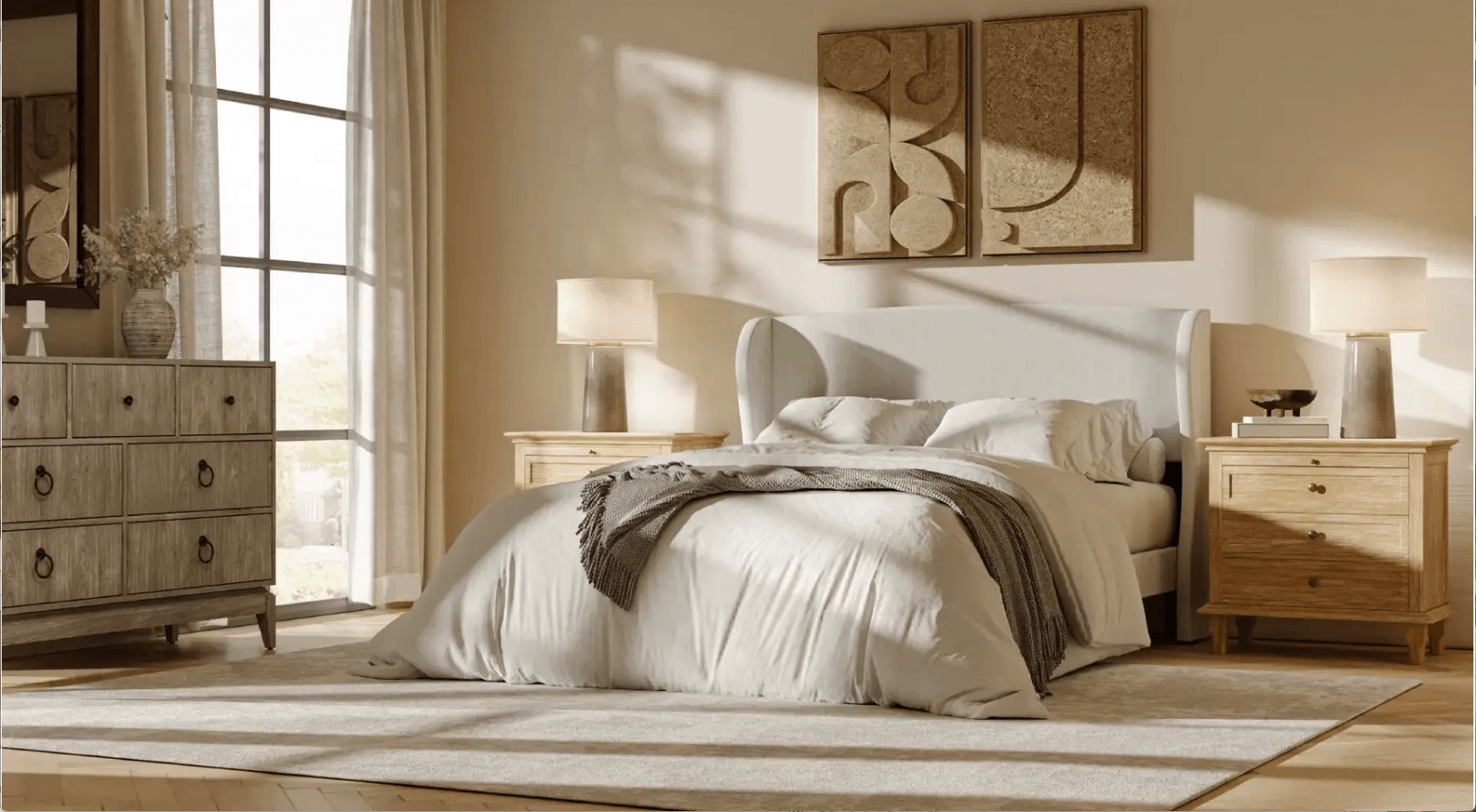
Short answer: mixing is better, but there is a right way to do it. Architectural Digest interviewed multiple interior designers for their 2025 bedroom guide, and every single one was against matching sets. Mel Bean, an interior designer in Tulsa, said perfectly matched bedroom furniture "robs a space of its soul".
The trick is picking one unifying element — a color, a wood tone, or a metal finish — and repeating it across different pieces. A wood bed frame with metal nightstands works if the metal finish shows up somewhere else, like the dresser hardware or a lamp base. One designer called it "matching with intention." Choose pieces that contrast but connect. A matching set still looks clean if that is your preference, but mixing creates more character.
5. Bedroom Furniture on a Budget: Tips for Smart Shopping
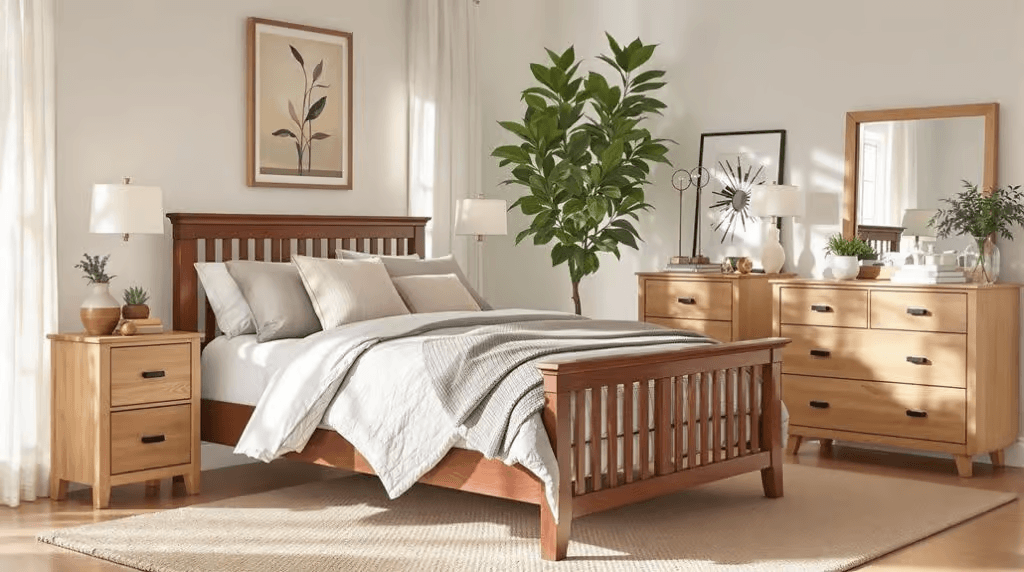
Spend most of your money on the bed frame and mattress. These two pieces control your sleep quality, and cheap versions wear out fast. A solid wood bed frame from a mid-range brand will last a decade. Save on nightstands, accent chairs, and decorative pieces — these are easy to find secondhand on Facebook Marketplace or Craigslist, where solid wood nightstands often go for $30 to $60 instead of $150 to $300 new.
Shop during holiday weekends. Presidents Day, Memorial Day, and Labor Day are the three biggest furniture sale periods in the US. The Spruce tracks these patterns every year, and the data shows 20 to 40 percent off regular prices at major retailers during those weekends. Skip trendy pieces that will look dated in two years. Use pillows, throws, and lamps to experiment with trends instead.
6. How to Lay Out Bedroom Furniture for Better Flow
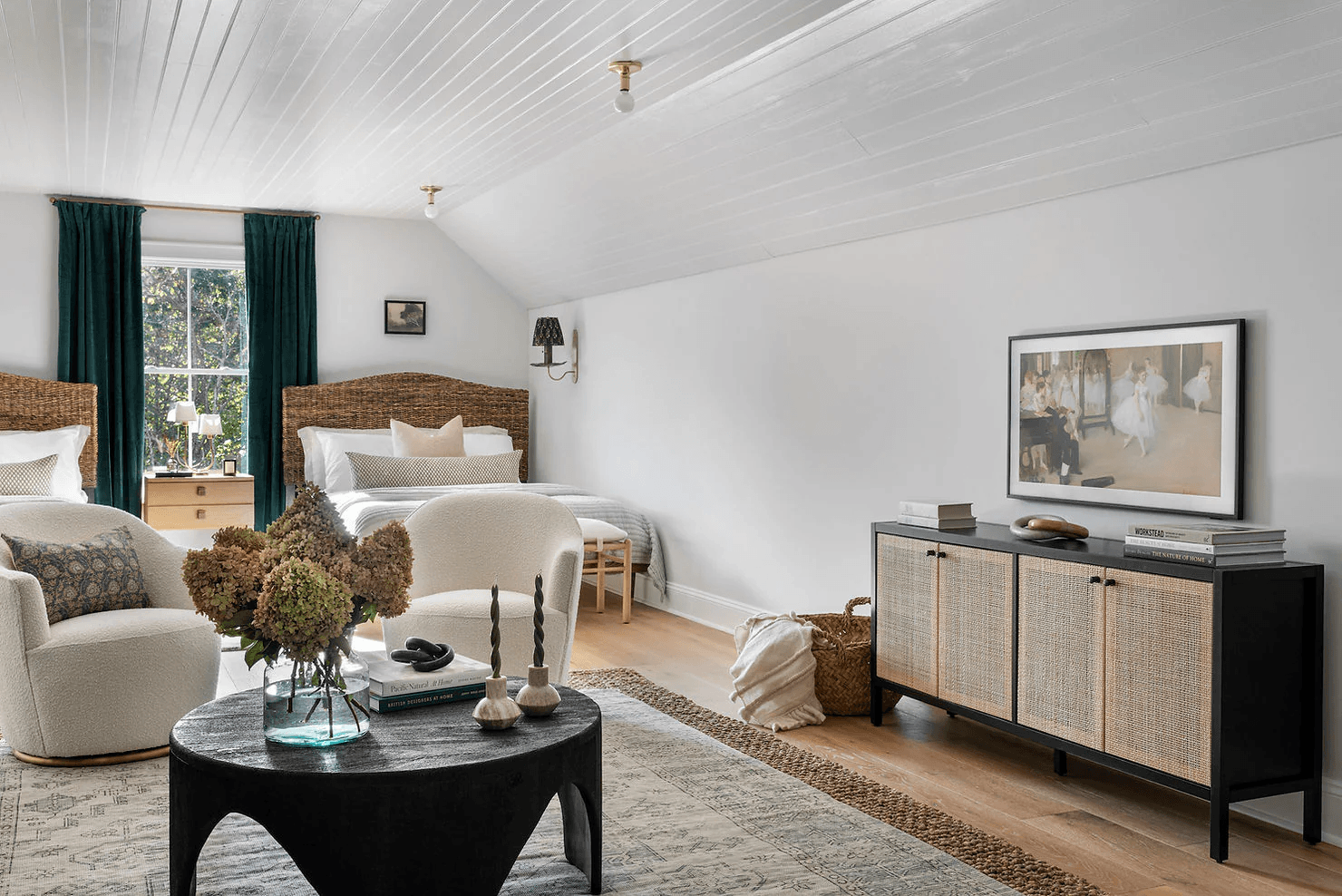
Where you put your furniture matters just as much as what you buy. A good layout makes the room feel bigger and easier to move through. A bad one makes you bump into things and shuffle sideways past the bed.
- Put the bed on the longest wall, centered if possible. This creates a natural focal point and leaves room for nightstands on both sides.
- Keep at least 24 inches of walking space on each side of the bed and at the foot. Less than that and the room feels tight.
- Put the dresser or wardrobe opposite the bed or on an adjacent wall. Do not block the door or the path to it.
- Put the desk or vanity near a window if you can. Natural light makes a real difference for both grooming and work.
- Use corners for accent chairs, ottomans, or floor lamps. Corners are dead space for most furniture, but they are perfect for small pieces.
- Hang mirrors across from windows to bounce natural light around and make the room feel bigger.
Feng shui adds one more rule: position the bed so you can see the door from where you lie, but do not line it up directly with the doorway. Seeing who enters creates a sense of safety that supports better sleep.
7. How Does HomeBridge Help You Import Furniture and Building Materials from China?

If you are looking for quality bedroom furniture at competitive prices, HomeBridge can help. We connect you directly with Chinese manufacturers so you skip the middleman and buy at factory prices.
- Direct factory pricing on a wide range of bedroom furniture styles and materials
- Custom sizing available for unique room dimensions and layouts
- Quality control inspections before your order ships from the factory
- Support with material selection — wood, metal, upholstery — to match your design goals
- Freight and logistics support from factory to your door
We handle the sourcing so you get the best price for furniture that fits your space and your style. Contact us to talk about your next project.
8. Frequently Asked Questions
1) How many furniture pieces should a bedroom have?
Four to seven pieces, depending on your room size. The non-negotiables are a bed frame and a nightstand.
Add a dresser or wardrobe for clothes, then extras like a chair or ottoman if you have space. Under-furnished feels empty, but over-furnished makes the room feel cramped.
2) What is the most important furniture in a bedroom?
The bed frame. It holds your mattress, affects your sleep quality, and anchors the whole room visually. Without a solid frame, your mattress wears out faster and the room has no centerpiece. If your budget is tight, put most of it toward the bed frame.
3) Should bedroom furniture match?
Not really. Mixing styles and materials creates more visual interest than matching sets. Designers agree that matchy-matchy furniture can look flat and staged.
The trick is repeating one color, wood tone, or metal finish somewhere in the room so the mix looks intentional. A matching set still looks clean if that is what you prefer, but mixing adds personality.
4) What size bed is best for a small bedroom?
Full or queen. A full bed (54 by 75 inches) fits in a 10 by 10 foot room with room for a nightstand and dresser. A queen (60 by 80 inches) needs about 10 by 12 feet. Skip the king unless your room is at least 12 by 12 feet.
5) How do I choose bedroom furniture on a budget?
Put your money on the bed frame and mattress first — they control your sleep. A solid wood frame from a mid-range brand will last over a decade.
Pick up nightstands and dressers secondhand on Facebook Marketplace or during holiday sales like Presidents Day and Labor Day. Avoid trendy pieces that will look dated quickly. Stick to classic shapes and neutral finishes.
9. Conclusion
Most bedroom furniture guides hand you a list and stop there. They do not explain why each piece matters for your room. This guide took a different approach. Every best bedroom furniture piece here has a specific job and buying features tied to your room size — because a wardrobe that fits a 200-square-foot master will overwhelm a 100-square-foot rental.
Here is your move tonight: measure your room. Sketch a floor plan. Note which pieces fit. Pick the two or three your room needs most and start there. A bedroom that works for how you live beats one that just looks good in a photo.
Bedroom Furniture Guide: 7 Must-Have Pieces for 2026
You have spent hours scrolling through bedroom furniture photos and still have no clue what to buy. A catalog makes everything look good, but your actual room — awkward corner, half-empty closet, that wall you are not sure about — is another story.
Here is the thing: the best bedroom furniture comes down to seven specific pieces that balance comfort, storage, and style. This guide covers each bedroom furniture type in detail, plus how to choose furniture based on your room size and how to lay it all out so your room actually works.
1. What Type of Bedroom Furniture Is Best?

Not everything belongs in a bedroom. A dining table does not. Neither does a bulky entertainment center. The best bedroom furniture does one of three jobs: helps you sleep, stores your stuff, or makes the room comfortable. Bed frames and mattresses handle sleep. Dressers, nightstands, and wardrobes handle storage. Chairs, benches, and ottomans handle comfort. Pick pieces that match those jobs and your room size, and you will be fine.
2. 7 Must-Have Bedroom Furniture Pieces for 2026
Every bedroom needs a smart mix of furniture. The seven pieces below cover the essentials — from the bed frame that anchors the room to the ottoman that hides extra blankets. Here is a quick comparison, then the details on each one.
Bed Frame
Most guides tell you to buy a bed frame but skip what actually matters. The frame is the most important piece in your room. It holds your mattress, keeps it off the floor (which stops mold and extends mattress life), and sets the visual direction for everything else. You will find three main materials: wood (warm and classic), upholstered (soft headboard, modern feel), and metal (slim frames, industrial look).
Key Features to Look For
- Size match: Queen is the most common size in US homes at 60 by 80 inches. Make sure your frame matches your mattress exactly.
- Headboard: Gives back support for reading and makes the bed look finished. An upholstered headboard also cuts down noise in apartments.
- Storage options: Platform frames with built-in drawers or an ottoman lift base save floor space.
A low platform bed opens up a small room. An upholstered frame with a tall headboard adds softness and acts as a visual anchor. The National Sleep Foundation notes that a supportive bed frame is a key factor in mattress longevity.
Best For
Every bedroom. Spend the most on this piece because it affects your sleep every night.
Nightstand
A nightstand is the small table beside your bed that keeps daily items within reach — phone, lamp, water glass, book. Without one, those items end up on the floor or stuffed under your pillow. Sounds simple. But most guides skip the practical details.
Key Features to Look For
- Drawer count: At least one drawer hides clutter like chargers and remotes. A two-drawer model doubles storage in the same footprint.
- Height match: The top should line up roughly with your mattress height. Too low and you will strain reaching. Too high and it blocks bed access.
- Surface space: At least 18 to 24 inches wide gives room for a lamp plus a phone and a book.
If you share a bed, get one on each side. Matching pairs create symmetry, but different styles work too as long as the heights match.
Best For
Anyone with a bed. It is the second most practical piece after the bed frame.
Dresser
A dresser is low, wide storage with multiple drawers for folded clothes. It is the workhorse of the bedroom. Most dressers stand 30 to 42 inches tall, and the top works great for a TV, mirror, or decorative items.
Key Features to Look For
- Drawer depth: Deep drawers (6 to 8 inches) hold sweaters and jeans. Shallow ones (3 to 4 inches) work better for socks and accessories. A mix of both is ideal.
- Material durability: Solid wood lasts decades. Hardwood plywood with a veneer is a solid mid-range option. Particleboard costs less but can sag over time.
- Mirror compatibility: Many dressers come with or accept an attached mirror, saving wall space.
Consumer Reports says solid wood with dovetail joinery are the two best signs of a dresser that will last.
Best For
Medium to large bedrooms. If you have the floor space, a dresser is the most efficient way to organize folded clothes.
Wardrobe or Armoire
A wardrobe is a tall standing cabinet for hanging clothes. Think portable closet. Inside you get a rod for hangers and shelves for folded items. Most bedroom guides skip this piece because they assume you have a built-in closet. But millions of older homes and apartments do not.
Key Features to Look For
- Hanging rod height: At least 50 inches from the base to fit dresses and long coats. Adjustable rods give flexibility.
- Shelf count: Extra shelves above and below the rod add storage for bags and shoes.
- Door type: Sliding doors save floor space. Hinged doors let you see everything at once.
Best For
Bedrooms without built-in closets, or anyone who needs extra hanging space for suits and dresses.
Vanity or Desk
A vanity is a table with a mirror for grooming. A desk is a table for working. In 2026, with more people working from home, the line between them keeps blurring. Many modern pieces serve both purposes.
Key Features to Look For
- Mirror size: 24 to 36 inches wide gives a clear view of your face without leaning in. An adjustable-angle mirror is even better.
- Drawer storage: Small drawers keep makeup, brushes, or office supplies out of sight.
- Stool comfort: A cushioned stool with back support makes a big difference if you sit for more than five minutes.
A 2023 Pew Research survey found that 35% of US workers with remote-capable jobs work from home full time. A bedroom desk or vanity makes that setup possible without sacrificing comfort.
Best For
Master and guest bedrooms. Gives you a spot to get ready or get work done without leaving the room.
Accent Chair or Bench
An accent chair or bench adds a second seating option. A chair creates a reading corner. A bench at the foot of your bed gives a spot to sit while putting on shoes. These pieces also fill empty floor space and make the room feel finished.
Key Features to Look For
- Scale: A large armchair in a small bedroom will crowd everything. Measure floor space first. A slim armchair needs about 4 by 4 feet minimum.
- Fabric: Performance fabrics like polyester and microfiber hold up better to daily use than linen or silk.
- Comfort: If you plan to sit here for reading, test the seat depth and cushion firmness.
A boucle armchair adds texture and warmth. A leather bench wipes clean with a cloth. Both look intentional without trying too hard.
Best For
Medium to large bedrooms with extra floor space.
Storage Ottoman or Chest
A storage ottoman is a soft-topped box that works as a seat, footrest, and hidden storage all in one. A storage chest does the same job in a traditional shape. This is the piece most bedroom guides overlook, which is a shame because it is one of the most practical additions you can make.
Key Features to Look For
- Hidden storage capacity: At least 12 inches of internal depth for spare blankets and pillows. Some ottomans offer up to 25 inches of width.
- Lid mechanism: Gas-lift lids are easier to open than hinged tops, especially against a wall.
- Fabric match: Pick a color that works with your bedding so the piece blends in.
According to a 2025 survey by the National Association of Home Builders, 73% of new home buyers prioritize storage capacity in furniture choices (National Association of Home Builders. An ottoman delivers storage without taking extra floor space.
Best For
Any bedroom that needs extra storage for blankets, pillows, or off-season items.
3. How to Choose Bedroom Furniture Based on Room Size

Most guides tell you to buy what you like and figure out the layout later. That is backward. Your room size should drive your furniture choices first. For small bedrooms under 120 square feet (roughly 10 by 12 feet), stick to four pieces — a full or queen bed, one nightstand, a dresser or wardrobe, and one small accent piece. Use vertical storage like a tall dresser to maximize space. A king bed will dominate the room and leave no room for anything else.
For medium bedrooms (120 to 200 square feet), you have room for a queen or king bed, two nightstands, a full-size dresser, and one extra piece like a bench or chair. For large bedrooms over 200 square feet, fit all seven must-haves plus extras like a chaise lounge or reading nook. The key is grouping pieces into zones — sleeping, dressing, sitting — so the room feels intentional. A 2023 report from the American Institute of Architects confirms that homeowners increasingly want flexible bedroom layouts that accommodate both sleep and work.
4. Should Bedroom Furniture Match or Mix?

Short answer: mixing is better, but there is a right way to do it. Architectural Digest interviewed multiple interior designers for their 2025 bedroom guide, and every single one was against matching sets. Mel Bean, an interior designer in Tulsa, said perfectly matched bedroom furniture "robs a space of its soul".
The trick is picking one unifying element — a color, a wood tone, or a metal finish — and repeating it across different pieces. A wood bed frame with metal nightstands works if the metal finish shows up somewhere else, like the dresser hardware or a lamp base. One designer called it "matching with intention." Choose pieces that contrast but connect. A matching set still looks clean if that is your preference, but mixing creates more character.
5. Bedroom Furniture on a Budget: Tips for Smart Shopping

Spend most of your money on the bed frame and mattress. These two pieces control your sleep quality, and cheap versions wear out fast. A solid wood bed frame from a mid-range brand will last a decade. Save on nightstands, accent chairs, and decorative pieces — these are easy to find secondhand on Facebook Marketplace or Craigslist, where solid wood nightstands often go for $30 to $60 instead of $150 to $300 new.
Shop during holiday weekends. Presidents Day, Memorial Day, and Labor Day are the three biggest furniture sale periods in the US. The Spruce tracks these patterns every year, and the data shows 20 to 40 percent off regular prices at major retailers during those weekends. Skip trendy pieces that will look dated in two years. Use pillows, throws, and lamps to experiment with trends instead.
6. How to Lay Out Bedroom Furniture for Better Flow

Where you put your furniture matters just as much as what you buy. A good layout makes the room feel bigger and easier to move through. A bad one makes you bump into things and shuffle sideways past the bed.
- Put the bed on the longest wall, centered if possible. This creates a natural focal point and leaves room for nightstands on both sides.
- Keep at least 24 inches of walking space on each side of the bed and at the foot. Less than that and the room feels tight.
- Put the dresser or wardrobe opposite the bed or on an adjacent wall. Do not block the door or the path to it.
- Put the desk or vanity near a window if you can. Natural light makes a real difference for both grooming and work.
- Use corners for accent chairs, ottomans, or floor lamps. Corners are dead space for most furniture, but they are perfect for small pieces.
- Hang mirrors across from windows to bounce natural light around and make the room feel bigger.
Feng shui adds one more rule: position the bed so you can see the door from where you lie, but do not line it up directly with the doorway. Seeing who enters creates a sense of safety that supports better sleep.
7. How Does HomeBridge Help You Import Furniture and Building Materials from China?

If you are looking for quality bedroom furniture at competitive prices, HomeBridge can help. We connect you directly with Chinese manufacturers so you skip the middleman and buy at factory prices.
- Direct factory pricing on a wide range of bedroom furniture styles and materials
- Custom sizing available for unique room dimensions and layouts
- Quality control inspections before your order ships from the factory
- Support with material selection — wood, metal, upholstery — to match your design goals
- Freight and logistics support from factory to your door
We handle the sourcing so you get the best price for furniture that fits your space and your style. Contact us to talk about your next project.
8. Frequently Asked Questions
1) How many furniture pieces should a bedroom have?
Four to seven pieces, depending on your room size. The non-negotiables are a bed frame and a nightstand.
Add a dresser or wardrobe for clothes, then extras like a chair or ottoman if you have space. Under-furnished feels empty, but over-furnished makes the room feel cramped.
2) What is the most important furniture in a bedroom?
The bed frame. It holds your mattress, affects your sleep quality, and anchors the whole room visually. Without a solid frame, your mattress wears out faster and the room has no centerpiece. If your budget is tight, put most of it toward the bed frame.
3) Should bedroom furniture match?
Not really. Mixing styles and materials creates more visual interest than matching sets. Designers agree that matchy-matchy furniture can look flat and staged.
The trick is repeating one color, wood tone, or metal finish somewhere in the room so the mix looks intentional. A matching set still looks clean if that is what you prefer, but mixing adds personality.
4) What size bed is best for a small bedroom?
Full or queen. A full bed (54 by 75 inches) fits in a 10 by 10 foot room with room for a nightstand and dresser. A queen (60 by 80 inches) needs about 10 by 12 feet. Skip the king unless your room is at least 12 by 12 feet.
5) How do I choose bedroom furniture on a budget?
Put your money on the bed frame and mattress first — they control your sleep. A solid wood frame from a mid-range brand will last over a decade.
Pick up nightstands and dressers secondhand on Facebook Marketplace or during holiday sales like Presidents Day and Labor Day. Avoid trendy pieces that will look dated quickly. Stick to classic shapes and neutral finishes.
9. Conclusion
Most bedroom furniture guides hand you a list and stop there. They do not explain why each piece matters for your room. This guide took a different approach. Every best bedroom furniture piece here has a specific job and buying features tied to your room size — because a wardrobe that fits a 200-square-foot master will overwhelm a 100-square-foot rental.
Here is your move tonight: measure your room. Sketch a floor plan. Note which pieces fit. Pick the two or three your room needs most and start there. A bedroom that works for how you live beats one that just looks good in a photo.