

Tariffs, Taxes, and Compliance: What Buyers Need to Know

Tariffs, Taxes, and Compliance: What Buyers Need to Know
Author-Image
Last Update:  
May 25, 2026

Benjamin Franklin once said, “In this world, nothing is certain except death and taxes.”

The same is true when importing furniture from China. The taxes, duties, and related fees you need to pay can all be calculated clearly, as long as you know what to look for.

Beyond taxes, you also need to consider the compliance requirements in your own country. Does the product need certification? Does it meet local standards? Are there specific rules for materials, safety, labeling, or documentation?

If these questions still feel unclear, keep reading. This article will walk you through the key points for the United States, the European Union, Canada, and Australia, helping you understand what to expect before you import.
Tariff policies vary from country to country

1. EU Duties, Taxes, and Compliance RequirementsU.S. Taxes, and Compliance Requirements

1) Tariffs

In the United States, if you only look at the basic tariff rate, you may find that many furniture products are listed as Free / 0%.

But do not celebrate too early. A 0% basic tariff does not mean you pay no duties at all.

Since 2019, most furniture imported from China has been subject to an additional 25% Section 301 tariff.

And that is not the end of it. The U.S. also has Section 232 tariffs, introduced on national security grounds. Certain upholstered wooden furniture and cabinets, such as wood-framed sofas, upholstered beds, kitchen cabinets, and bathroom vanities, may face an additional 25% tariff.

Then there is Section 122. In February this year, after the Supreme Court overturned the IEEPA tariffs, the government introduced another policy: a temporary 10% tariff on global imports, currently scheduled to remain in place until July 24, 2026.

Does this already sound complicated? The good news is that Section 232 and Section 122 do not stack.

In other words, if your product already falls under Section 232, you only pay that 25% tariff and do not need to add the extra 10%. The 10% additional tariff only applies to goods that are not covered by Section 232.

So, the tariff calculation for importing furniture from China is actually quite clear, though not exactly gentle:

For upholstered wooden furniture and cabinets, the combined tariff is roughly 50%.

For most other furniture products, it is roughly 35%.

U.S. Tariff Policy

2) Other Fees

Apart from tariffs, are there any other fees?

The good news is that there are not as many layers of extra charges as many buyers imagine. The United States does not have VAT, and personal buyers generally do not need to pay sales tax when importing directly.

What you really need to pay attention to are two fixed customs-related fees: MPF, or Merchandise Processing Fee, which is charged at 0.3464% of the cargo value, with a minimum of $33.58; and HMF, or Harbor Maintenance Fee, which is charged at 0.125% of the cargo value.

The amounts are usually not large, but they still need to be paid on time.

3) Compliance Requirements

Saying that “furniture compliance requirements for the U.S. market are not complicated” is only half true.

Furniture does not go through the same layers of approval as medical devices, but it still needs to meet one core requirement: CPSC compliance.

For general furniture, the basic requirement is to obtain a GCC, or General Certificate of Conformity. For example, mattresses need to meet flammability requirements, and wardrobes or clothing storage units need to comply with anti-tip-over standards. These are not optional. They are the baseline.

For children’s products, the bar is higher. A CPC, or Children’s Product Certificate, is required, and the product must be tested by a CPSC-accepted third-party laboratory with a valid test report.

The compliance process is also becoming stricter. Starting July 8 this year, all products regulated by the CPSC must complete electronic filing in the ACE system before customs clearance and upload the required compliance certificate. Otherwise, the goods may not be allowed to enter the U.S. port and could be returned or even destroyed.

There are also a few details that are easy to overlook. Furniture containing MDF, particleboard, or plywood must comply with EPA TSCA Title VI formaldehyde requirements. Products made with wood, bamboo, or rattan may require a Lacey Act declaration to confirm the legal origin of the materials. Any shipment using wooden packaging must be fumigated or heat-treated and carry a clear IPPC mark.

U.S. CPSC Certification

2. EU Duties, Taxes, and Compliance Requirements

When importing furniture from China into EU countries, tariffs are usually not high. Many furniture categories are charged at 0%, such as plastic furniture, metal furniture, and office furniture. A small number of categories are subject to duties of around 2.7%–5.6%, such as rattan furniture and mattresses.

So, is that all for tariffs?

Yes. In EU countries, you generally only need to pay the basic import duty.

EU Tariff Policy

2. VAT

However, do not forget that all goods imported from outside the EU are also subject to import VAT, or Value Added Tax.

The rate varies by country. It is as low as 17% in Luxembourg and as high as 27% in Hungary. Germany charges 19%, France 20%, and Italy 22%.

In other words, the final taxes and duties on imported furniture usually include customs duty at 0%–5.6%, plus import VAT at 17%–27%.

3. Compliance Requirements

For furniture exported to the EU, CE certification is a basic entry requirement. Tables should meet the EN 12521 standard, while chairs should comply with EN 12520. Different furniture categories need to be tested according to the General Product Safety Directive.

If CE certification is a test of product quality, then the EU’s General Product Safety Regulation, or GPSR, has pushed supervision toward greater transparency. European customs authorities now look not only at the goods themselves, but also at who is responsible for them. All furniture products must appoint an authorized representative within the EU.

In addition, GPSR requires full information disclosure, from manufacturer details and model or batch numbers to packaging labels and instructions in the language of the destination country.

Chemical safety is now one of the key areas of regulatory focus. Among these rules, REACH pays close attention to formaldehyde emissions. Starting August 6, 2026, all wooden furniture entering the EU must strictly keep formaldehyde emissions at or below 0.062 mg/m³.

EU CE Certification

3.Canadian Taxes, and Compliance Requirements

1) Tariffs

Similarly, Canada’s basic import duties are relatively friendly, usually ranging from around 0% to 9.5%. For example, the duty rate for wood-framed sofas is about 5%, while office chairs are around 6%.

However, what buyers need to watch carefully are anti-dumping duties (AD) and countervailing duties (CVD). At present, certain furniture products exported from China to Canada are subject to additional duties, mainly covering upholstered furniture, wooden furniture, and metal-framed seating. For some products, anti-dumping duty rates may even reach 100%–200%.

The good news is that the current measures on relevant products by the Canadian International Trade Tribunal (CITT) are expected to face an expiry review in September 2026, so future policy may loosen or be adjusted.

Canadian Tariff Policy

2) GST/HST/PST

Similar to EU countries, Canada charges sales tax on all imported goods. The first layer is the federal GST, which is charged at 5% across the country. No matter where the goods come from, this tax cannot be avoided.

The real difference comes from each province’s tax structure.

In provinces that use HST, such as Ontario and Nova Scotia, the GST and provincial tax are combined into one tax. The total rate is usually around 13%–15%.

In provinces such as British Columbia and Saskatchewan, GST and PST are calculated separately. PST is generally around 6%–9.975%, plus the 5% GST, so the overall tax burden is usually slightly lower.

The lighter cases are Alberta, Yukon, and the Northwest Territories. These regions do not charge provincial sales tax, so buyers only need to pay the 5% GST.

3) Compliance Requirements

When importing furniture from China into Canada, the first compliance threshold is the CCPSA, or Canada Consumer Product Safety Act.

This law is actually easy to understand: any product sold to consumers must not pose an obvious risk to health or safety. The key word here is risk. Even if there is no specific mandatory certification for a certain product, it still cannot create safety problems. Otherwise, it may still be considered non-compliant.

For furniture, one of the most common risk areas is formaldehyde emissions from wooden furniture and panel furniture. Under SOR/2021-148, composite wood products must meet formaldehyde emission limits. For hardwood plywood, the limit is strictly controlled at 0.05 ppm, which helps keep formaldehyde exposure under control.

Children’s furniture, such as cribs and playpens, is one of the most strictly regulated categories. The requirements cover not only formaldehyde, but also structural safety, small-part choking risks, and limits on harmful substances such as lead and cadmium. Products must also carry the required warning labels and be supported by test reports from an ISO 17025-accredited laboratory.

Canada Consumer Product Safety Act

4. Australian Taxes and Compliance Requirements

1) Tariffs

Australia has long been known for relatively low import tariffs. Standard furniture duty rates are generally around 5%.

However, for products made in China, this rate can often be reduced to 0%. The reason is simple: China and Australia signed a free trade agreement, allowing qualifying goods that meet origin requirements to enter duty-free.

That’s why under many furniture HS codes in Chapter 94, you may see a standard duty rate of 5% while also seeing the notation: **CA: Free**.

Australian tariff policies

2) Goods and Services Tax (GST)

Even if the import duty is 0%, goods entering Australia are still subject to Goods and Services Tax (GST).

This tax is applied nationwide at a flat rate of 10% and is collected directly by the Australian federal government. Compared with many other countries, this is considered relatively straightforward and moderate.

3) Compliance Requirements

Biosecurity inspection is one of the most common reasons shipments get delayed or held at Australian ports. Australia applies some of the strictest quarantine standards in the world for imported products containing natural plant-based materials—especially furniture made from solid wood, bamboo, rattan, or wicker.

Biosecurity inspection is one of the most common reasons shipments get delayed or held at Australian ports. Australia applies some of the strictest quarantine standards in the world for imported products containing natural plant-based materials—especially furniture made from solid wood, bamboo, rattan, or wicker.

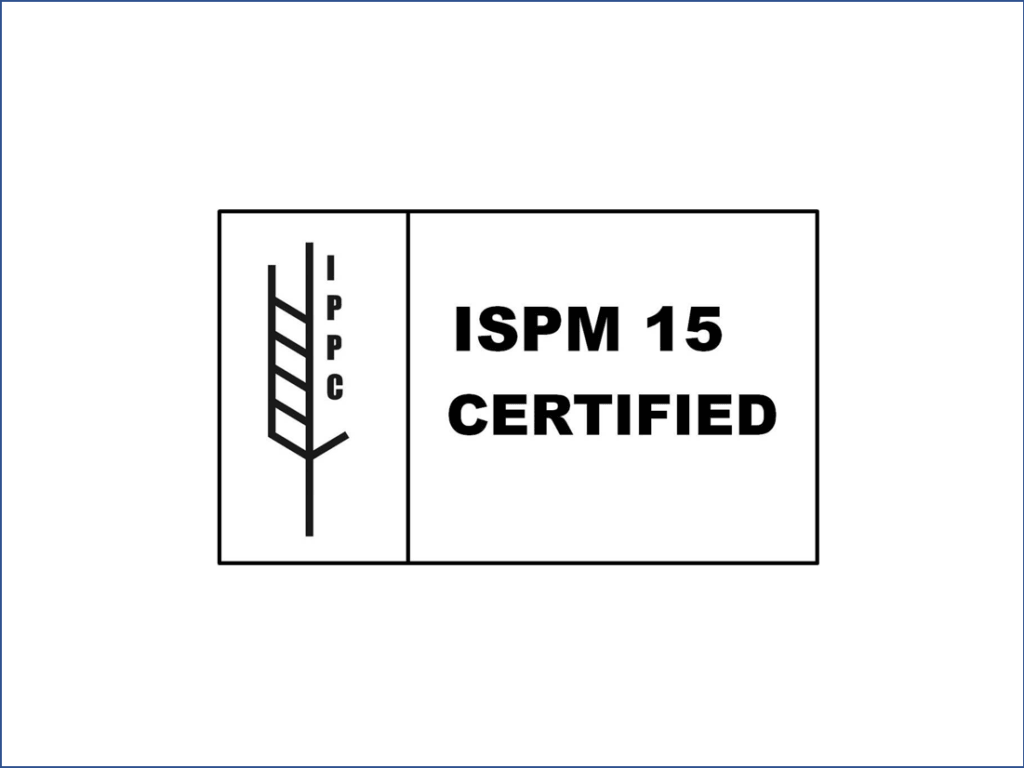
These products usually require methyl bromide fumigation or heat treatment before export, along with official fumigation certificates. In addition, all wooden packaging materials—such as pallets and wooden crates—must clearly display internationally recognized ISPM 15 markings.

To legally enter the Australian market, furniture products must also meet safety compliance requirements regulated by the Australian Competition and Consumer Commission (ACCC).

One of the most important recent changes concerns furniture tip-over safety regulations. Starting from May 4, 2025, all freestanding furniture taller than 686 mm—including bookshelves, wardrobes, sideboards, console tables, and display cabinets—must carry permanent warning labels explaining tip-over risks and recommending wall anchoring for safety.
These products usually require methyl bromide fumigation or heat treatment before export, along with official fumigation certificates. In addition, all wooden packaging materials—such as pallets and wooden crates—must clearly display internationally recognized ISPM 15 markings.

To legally enter the Australian market, furniture products must also meet safety compliance requirements regulated by the Australian Competition and Consumer Commission (ACCC).

One of the most important recent changes concerns furniture tip-over safety regulations. Starting from May 4, 2025, all freestanding furniture taller than 686 mm—including bookshelves, wardrobes, sideboards, console tables, and display cabinets—must carry permanent warning labels explaining tip-over risks and recommending wall anchoring for safety.

ISPM 15 marking on wood packaging

5. Don’t Focus Only on Tariffs

One of the most common mistakes first-time furniture importers make is asking only one question: “What’s the tariff rate?”

In reality, tariffs are only the most visible part of the cost structure. The true landed cost also includes VAT or GST, port charges, customs brokerage fees, and compliance-related expenses.

For example, Australia may offer 0% import duty on qualifying furniture, but buyers still need to pay 10% GST after arrival. In the European Union, furniture tariffs are relatively low, but import VAT often approaches 20%. In the United States, some furniture categories may technically show “Free” as the base duty rate, but additional tariffs or trade measures can still significantly increase the final tax burden.

That’s why importing furniture from China should never be evaluated only by product price or base tariffs—you need to calculate the full landed cost.

6. Compliance Documents Should Be Confirmed Early

Compliance should never be treated as something to solve after the goods arrive at the port.

Whether it involves CPSC requirements in the United States, GPSR information requirements in the European Union, formaldehyde restrictions in Canada, or Australia’s biosecurity inspections, these issues should all be confirmed before purchasing begins—not handled later as emergency fixes.

Before placing orders, buyers should carefully confirm product materials, intended use, HS codes, labeling requirements, instruction manual language, testing reports, and certificates of origin with suppliers. Any unclear detail can later turn into additional costs or customs delays.

In cross-border furniture sourcing, the more complete the preparation is upfront, the lower the risk of unexpected charges, customs problems, and clearance delays later.

Customs inspecting cargo

7. Practical Advice for Buyers

For overseas buyers, importing furniture from China is not something uncontrollable. What truly matters is confirming product classifications, tariff structures, and compliance requirements before purchasing begins.

Before placing an order, buyers should complete four key steps:

First, confirm the correct HS code for the product.

Second, check whether the destination country applies additional tariffs or free trade agreements.

Third, calculate the full landed cost, including duties, GST/VAT/HST, and shipping expenses.

Fourth, confirm whether the product requires testing reports, warning labels, or certificates of origin.

As long as these areas are planned in advance, Chinese furniture can still offer strong advantages in pricing, style variety, and customization flexibility.

The import rules themselves may seem complicated, but the real issue is not the number of regulations—it is whether someone can translate those rules into a practical sourcing plan before problems happen.

This is where supply chain services like Homebridge create value. The core idea is to move decision-making risks forward to the beginning of the process: helping buyers clarify tax structures, shipping routes, and compliance requirements before orders are placed, while also coordinating factories, confirming product details, following production, and managing logistics through final delivery.

The purpose behind this approach is simple: buyers can focus on creating their ideal home, while Homebridge handles the complex processes behind the scenes.

Homebridge as a tariff expert
Explore Furniture Solutions with HomeBridge
Contact us for One-stop Professional Furniture Purchaisng Solution!
By clicking the button, you consent to the processing of personal data

Thank you!

Your message has been received.
Oops! Something went wrong while submitting the form.

Benjamin Franklin once said, “In this world, nothing is certain except death and taxes.”

The same is true when importing furniture from China. The taxes, duties, and related fees you need to pay can all be calculated clearly, as long as you know what to look for.

Beyond taxes, you also need to consider the compliance requirements in your own country. Does the product need certification? Does it meet local standards? Are there specific rules for materials, safety, labeling, or documentation?

If these questions still feel unclear, keep reading. This article will walk you through the key points for the United States, the European Union, Canada, and Australia, helping you understand what to expect before you import.

Tariff policies vary from country to country

1. EU Duties, Taxes, and Compliance RequirementsU.S. Taxes, and Compliance Requirements

1) Tariffs

In the United States, if you only look at the basic tariff rate, you may find that many furniture products are listed as Free / 0%.

But do not celebrate too early. A 0% basic tariff does not mean you pay no duties at all.

Since 2019, most furniture imported from China has been subject to an additional 25% Section 301 tariff.

And that is not the end of it. The U.S. also has Section 232 tariffs, introduced on national security grounds. Certain upholstered wooden furniture and cabinets, such as wood-framed sofas, upholstered beds, kitchen cabinets, and bathroom vanities, may face an additional 25% tariff.

Then there is Section 122. In February this year, after the Supreme Court overturned the IEEPA tariffs, the government introduced another policy: a temporary 10% tariff on global imports, currently scheduled to remain in place until July 24, 2026.

Does this already sound complicated? The good news is that Section 232 and Section 122 do not stack.

In other words, if your product already falls under Section 232, you only pay that 25% tariff and do not need to add the extra 10%. The 10% additional tariff only applies to goods that are not covered by Section 232.

So, the tariff calculation for importing furniture from China is actually quite clear, though not exactly gentle:

For upholstered wooden furniture and cabinets, the combined tariff is roughly 50%.

For most other furniture products, it is roughly 35%.

U.S. Tariff Policy

2) Other Fees

Apart from tariffs, are there any other fees?

The good news is that there are not as many layers of extra charges as many buyers imagine. The United States does not have VAT, and personal buyers generally do not need to pay sales tax when importing directly.

What you really need to pay attention to are two fixed customs-related fees: MPF, or Merchandise Processing Fee, which is charged at 0.3464% of the cargo value, with a minimum of $33.58; and HMF, or Harbor Maintenance Fee, which is charged at 0.125% of the cargo value.

The amounts are usually not large, but they still need to be paid on time.

3) Compliance Requirements

Saying that “furniture compliance requirements for the U.S. market are not complicated” is only half true.

Furniture does not go through the same layers of approval as medical devices, but it still needs to meet one core requirement: CPSC compliance.

For general furniture, the basic requirement is to obtain a GCC, or General Certificate of Conformity. For example, mattresses need to meet flammability requirements, and wardrobes or clothing storage units need to comply with anti-tip-over standards. These are not optional. They are the baseline.

For children’s products, the bar is higher. A CPC, or Children’s Product Certificate, is required, and the product must be tested by a CPSC-accepted third-party laboratory with a valid test report.

The compliance process is also becoming stricter. Starting July 8 this year, all products regulated by the CPSC must complete electronic filing in the ACE system before customs clearance and upload the required compliance certificate. Otherwise, the goods may not be allowed to enter the U.S. port and could be returned or even destroyed.

There are also a few details that are easy to overlook. Furniture containing MDF, particleboard, or plywood must comply with EPA TSCA Title VI formaldehyde requirements. Products made with wood, bamboo, or rattan may require a Lacey Act declaration to confirm the legal origin of the materials. Any shipment using wooden packaging must be fumigated or heat-treated and carry a clear IPPC mark.

U.S. CPSC Certification

2. EU Duties, Taxes, and Compliance Requirements

When importing furniture from China into EU countries, tariffs are usually not high. Many furniture categories are charged at 0%, such as plastic furniture, metal furniture, and office furniture. A small number of categories are subject to duties of around 2.7%–5.6%, such as rattan furniture and mattresses.

So, is that all for tariffs?

Yes. In EU countries, you generally only need to pay the basic import duty.

EU Tariff Policy

2. VAT

However, do not forget that all goods imported from outside the EU are also subject to import VAT, or Value Added Tax.

The rate varies by country. It is as low as 17% in Luxembourg and as high as 27% in Hungary. Germany charges 19%, France 20%, and Italy 22%.

In other words, the final taxes and duties on imported furniture usually include customs duty at 0%–5.6%, plus import VAT at 17%–27%.

3. Compliance Requirements

For furniture exported to the EU, CE certification is a basic entry requirement. Tables should meet the EN 12521 standard, while chairs should comply with EN 12520. Different furniture categories need to be tested according to the General Product Safety Directive.

If CE certification is a test of product quality, then the EU’s General Product Safety Regulation, or GPSR, has pushed supervision toward greater transparency. European customs authorities now look not only at the goods themselves, but also at who is responsible for them. All furniture products must appoint an authorized representative within the EU.

In addition, GPSR requires full information disclosure, from manufacturer details and model or batch numbers to packaging labels and instructions in the language of the destination country.

Chemical safety is now one of the key areas of regulatory focus. Among these rules, REACH pays close attention to formaldehyde emissions. Starting August 6, 2026, all wooden furniture entering the EU must strictly keep formaldehyde emissions at or below 0.062 mg/m³.

EU CE Certification

3.Canadian Taxes, and Compliance Requirements

1) Tariffs

Similarly, Canada’s basic import duties are relatively friendly, usually ranging from around 0% to 9.5%. For example, the duty rate for wood-framed sofas is about 5%, while office chairs are around 6%.

However, what buyers need to watch carefully are anti-dumping duties (AD) and countervailing duties (CVD). At present, certain furniture products exported from China to Canada are subject to additional duties, mainly covering upholstered furniture, wooden furniture, and metal-framed seating. For some products, anti-dumping duty rates may even reach 100%–200%.

The good news is that the current measures on relevant products by the Canadian International Trade Tribunal (CITT) are expected to face an expiry review in September 2026, so future policy may loosen or be adjusted.

Canadian Tariff Policy

2) GST/HST/PST

Similar to EU countries, Canada charges sales tax on all imported goods. The first layer is the federal GST, which is charged at 5% across the country. No matter where the goods come from, this tax cannot be avoided.

The real difference comes from each province’s tax structure.

In provinces that use HST, such as Ontario and Nova Scotia, the GST and provincial tax are combined into one tax. The total rate is usually around 13%–15%.

In provinces such as British Columbia and Saskatchewan, GST and PST are calculated separately. PST is generally around 6%–9.975%, plus the 5% GST, so the overall tax burden is usually slightly lower.

The lighter cases are Alberta, Yukon, and the Northwest Territories. These regions do not charge provincial sales tax, so buyers only need to pay the 5% GST.

3) Compliance Requirements

When importing furniture from China into Canada, the first compliance threshold is the CCPSA, or Canada Consumer Product Safety Act.

This law is actually easy to understand: any product sold to consumers must not pose an obvious risk to health or safety. The key word here is risk. Even if there is no specific mandatory certification for a certain product, it still cannot create safety problems. Otherwise, it may still be considered non-compliant.

For furniture, one of the most common risk areas is formaldehyde emissions from wooden furniture and panel furniture. Under SOR/2021-148, composite wood products must meet formaldehyde emission limits. For hardwood plywood, the limit is strictly controlled at 0.05 ppm, which helps keep formaldehyde exposure under control.

Children’s furniture, such as cribs and playpens, is one of the most strictly regulated categories. The requirements cover not only formaldehyde, but also structural safety, small-part choking risks, and limits on harmful substances such as lead and cadmium. Products must also carry the required warning labels and be supported by test reports from an ISO 17025-accredited laboratory.

Canada Consumer Product Safety Act

4. Australian Taxes and Compliance Requirements

1) Tariffs

Australia has long been known for relatively low import tariffs. Standard furniture duty rates are generally around 5%.

However, for products made in China, this rate can often be reduced to 0%. The reason is simple: China and Australia signed a free trade agreement, allowing qualifying goods that meet origin requirements to enter duty-free.

That’s why under many furniture HS codes in Chapter 94, you may see a standard duty rate of 5% while also seeing the notation: **CA: Free**.

Australian tariff policies

2) Goods and Services Tax (GST)

Even if the import duty is 0%, goods entering Australia are still subject to Goods and Services Tax (GST).

This tax is applied nationwide at a flat rate of 10% and is collected directly by the Australian federal government. Compared with many other countries, this is considered relatively straightforward and moderate.

3) Compliance Requirements

Biosecurity inspection is one of the most common reasons shipments get delayed or held at Australian ports. Australia applies some of the strictest quarantine standards in the world for imported products containing natural plant-based materials—especially furniture made from solid wood, bamboo, rattan, or wicker.

Biosecurity inspection is one of the most common reasons shipments get delayed or held at Australian ports. Australia applies some of the strictest quarantine standards in the world for imported products containing natural plant-based materials—especially furniture made from solid wood, bamboo, rattan, or wicker.

These products usually require methyl bromide fumigation or heat treatment before export, along with official fumigation certificates. In addition, all wooden packaging materials—such as pallets and wooden crates—must clearly display internationally recognized ISPM 15 markings.

To legally enter the Australian market, furniture products must also meet safety compliance requirements regulated by the Australian Competition and Consumer Commission (ACCC).

One of the most important recent changes concerns furniture tip-over safety regulations. Starting from May 4, 2025, all freestanding furniture taller than 686 mm—including bookshelves, wardrobes, sideboards, console tables, and display cabinets—must carry permanent warning labels explaining tip-over risks and recommending wall anchoring for safety.

These products usually require methyl bromide fumigation or heat treatment before export, along with official fumigation certificates. In addition, all wooden packaging materials—such as pallets and wooden crates—must clearly display internationally recognized ISPM 15 markings.

To legally enter the Australian market, furniture products must also meet safety compliance requirements regulated by the Australian Competition and Consumer Commission (ACCC).

One of the most important recent changes concerns furniture tip-over safety regulations. Starting from May 4, 2025, all freestanding furniture taller than 686 mm—including bookshelves, wardrobes, sideboards, console tables, and display cabinets—must carry permanent warning labels explaining tip-over risks and recommending wall anchoring for safety.

ISPM 15 marking on wood packaging

5. Don’t Focus Only on Tariffs

One of the most common mistakes first-time furniture importers make is asking only one question: “What’s the tariff rate?”

In reality, tariffs are only the most visible part of the cost structure. The true landed cost also includes VAT or GST, port charges, customs brokerage fees, and compliance-related expenses.

For example, Australia may offer 0% import duty on qualifying furniture, but buyers still need to pay 10% GST after arrival. In the European Union, furniture tariffs are relatively low, but import VAT often approaches 20%. In the United States, some furniture categories may technically show “Free” as the base duty rate, but additional tariffs or trade measures can still significantly increase the final tax burden.

That’s why importing furniture from China should never be evaluated only by product price or base tariffs—you need to calculate the full landed cost.

6. Compliance Documents Should Be Confirmed Early

Compliance should never be treated as something to solve after the goods arrive at the port.

Whether it involves CPSC requirements in the United States, GPSR information requirements in the European Union, formaldehyde restrictions in Canada, or Australia’s biosecurity inspections, these issues should all be confirmed before purchasing begins—not handled later as emergency fixes.

Before placing orders, buyers should carefully confirm product materials, intended use, HS codes, labeling requirements, instruction manual language, testing reports, and certificates of origin with suppliers. Any unclear detail can later turn into additional costs or customs delays.

In cross-border furniture sourcing, the more complete the preparation is upfront, the lower the risk of unexpected charges, customs problems, and clearance delays later.

Customs inspecting cargo

7. Practical Advice for Buyers

For overseas buyers, importing furniture from China is not something uncontrollable. What truly matters is confirming product classifications, tariff structures, and compliance requirements before purchasing begins.

Before placing an order, buyers should complete four key steps:

First, confirm the correct HS code for the product.

Second, check whether the destination country applies additional tariffs or free trade agreements.

Third, calculate the full landed cost, including duties, GST/VAT/HST, and shipping expenses.

Fourth, confirm whether the product requires testing reports, warning labels, or certificates of origin.

As long as these areas are planned in advance, Chinese furniture can still offer strong advantages in pricing, style variety, and customization flexibility.

The import rules themselves may seem complicated, but the real issue is not the number of regulations—it is whether someone can translate those rules into a practical sourcing plan before problems happen.

This is where supply chain services like Homebridge create value. The core idea is to move decision-making risks forward to the beginning of the process: helping buyers clarify tax structures, shipping routes, and compliance requirements before orders are placed, while also coordinating factories, confirming product details, following production, and managing logistics through final delivery.

The purpose behind this approach is simple: buyers can focus on creating their ideal home, while Homebridge handles the complex processes behind the scenes.

Homebridge as a tariff expert