


Furniture in China: What Varies by Region?

Furniture in China: What Varies by Region?
Author-Image
Last Update:  
May 8, 2026

When sourcing furniture from China, many buyers start with the same question: “Which region has the best furniture?”

But that question misses the point. No single region produces the best of everything. A more practical question is: “For the type of furniture I need, which region should I source from?”

Today, China’s furniture industry operates like a highly specialized supply chain map. The Pearl River Delta focuses on full-home solutions and design-driven furniture. The Yangtze River Delta specializes in specific product categories. The Bohai Rim region is suited for standardized, large-volume orders. And the Northeast is known for solid wood furniture.

Without understanding these differences, it’s easy to make costly mismatches—looking for design-focused pieces in low-cost regions and finding limited styles, or sourcing standard projects from customization-heavy regions and seeing budgets rise. More often, buyers think they’ve found a bargain, only to spend those savings later on quality issues and shipping.
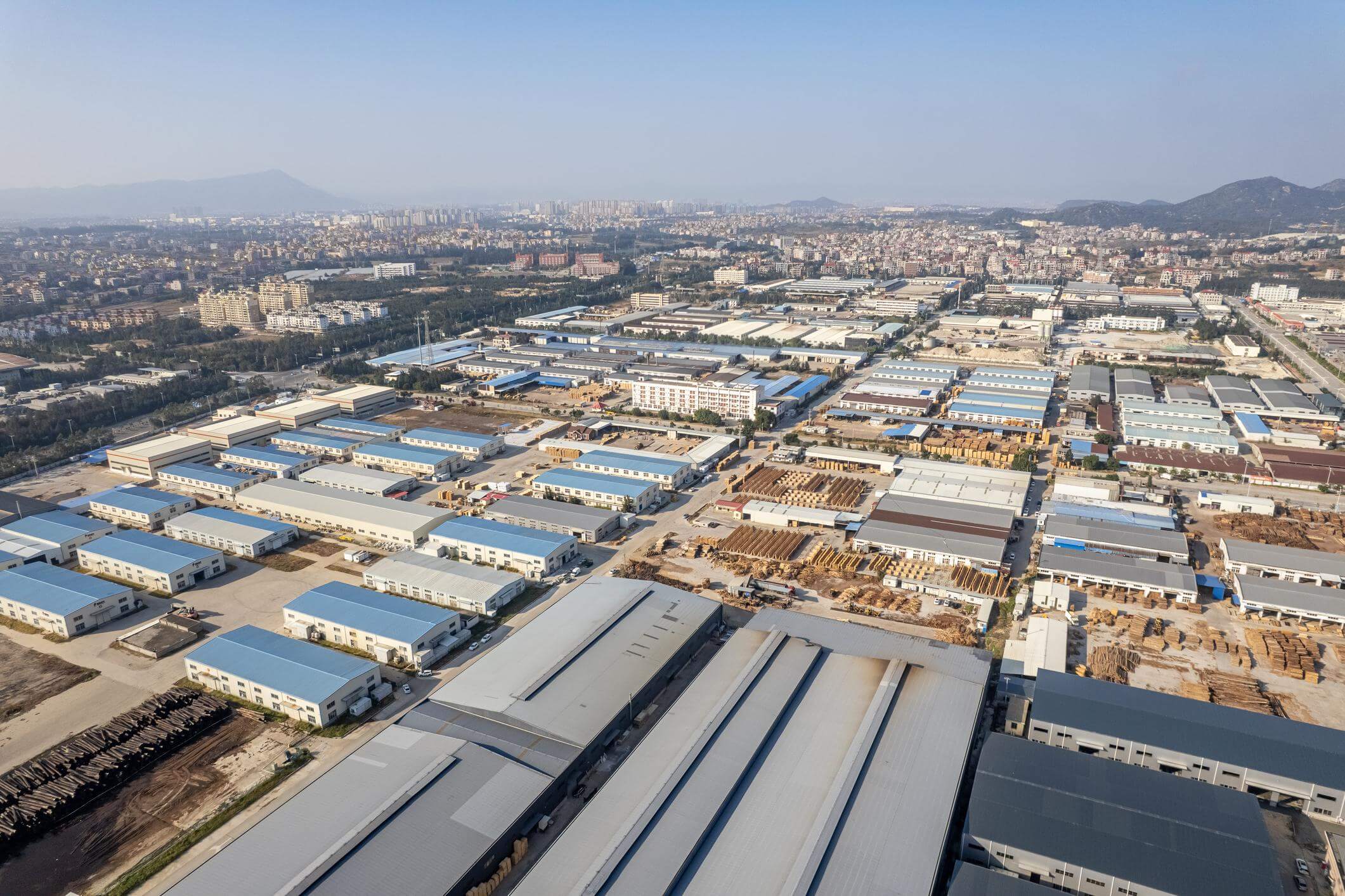
China’s furniture industrial clusters

Why Origin Directly Impacts Your Sourcing Results

Furniture isn’t a simple product. A single sofa involves the frame, foam, springs, upholstery, stitching, hardware, packaging, and shipping. If any part of the process lacks consistency, it will show in the final product.That’s why evaluating a region isn’t just about whether factories exist—it’s about what that region has specialized in over time and how production is structured.Furniture manufacturing relies heavily on experience. Regions that have focused on a specific category—like office chairs—develop supply chains, tooling, components, and skilled labor around that product, resulting in better quality and more competitive pricing.At the same time, different regions are built for different purposes. Some are optimized for large-scale, standardized, cost-driven production, while others are better suited for smaller volumes, deep customization, and design-focused products. Each region needs to be evaluated with the right expectations.

Pearl River Delta: Full-Home Projects and Design Focus

If your goal is full-home sourcing, a cohesive style, or design-driven furniture, the Pearl River Delta is usually the first region to consider.

It is China’s largest and most mature furniture hub, accounting for about one-third of the country’s output. Centered in Guangdong—especially Foshan, Guangzhou, Dongguan, Shenzhen, and Zhongshan—this region is widely recognized by overseas buyers. Foshan, particularly Lecong, is one of the most established sourcing destinations.

Lecong’s furniture market covers nearly 4 million square meters, with over 180 large malls and more than 5,000 dealers. It’s not just a few streets—it’s a complete commercial ecosystem.

The key advantage here isn’t the lowest price for a single item, but the density of choices, the wide range of styles, and strong supporting services.

Within a single day, you can explore modern, light luxury, Italian minimalist, contemporary, American, and French styles. For overseas buyers, this matters—because the real challenge in full-home sourcing isn’t buying one sofa, but creating a cohesive space.

That said, it’s not the best fit for every project. If your priority is the lowest price, the Pearl River Delta may not be the most cost-effective option, as its mature market, showroom costs, design capabilities, and service levels are reflected in the pricing.

City views of the Pearl River Delta

Yangtze River Delta: Single-Category Sourcing

The Yangtze River Delta also accounts for about one-third of China’s furniture output, covering Zhejiang, Jiangsu, and Shanghai. Compared to the Pearl River Delta’s integrated approach, this region functions as a highly specialized manufacturing network.

Its strength isn’t full-home sourcing, but deep expertise in specific product categories.

Take Anji in Zhejiang as an example. Known as a major chair manufacturing hub, it produces roughly one-third of China’s domestic chair supply, with an industry output value of RMB 31.19 billion.

If you’re sourcing office chairs, ergonomic chairs, or task chairs, looking for suppliers around Anji is often more efficient than browsing a general furniture market. Factories here are not just making chairs—they’ve built entire production systems around them.

Other specialized categories include upholstered mattresses in Shaoxing, cabinets in Ningbo, and sofas in Haining. The Yangtze River Delta is strongest in focused manufacturing, making it ideal for buyers who know exactly what they need—but less suitable for full-home coordination.

City views of the Yangtze River Delta

Bohai Rim: Standardized Orders

The Bohai Rim furniture region covers Beijing, Tianjin, Hebei, and Shandong. Its key strengths are standardization, bulk production, and price competitiveness.

Compared to the Pearl River Delta and Yangtze River Delta, it may not lead in design or style variety, but it offers clear cost advantages for standardized furniture.

In parts of Hebei and Shandong, the focus is on producing proven designs quickly, consistently, and at scale—serving wholesale markets and mid-to-low price segments.

Lower prices themselves aren’t the issue—the mismatch happens when high design expectations are applied to low-cost production.

If you expect Pearl River Delta showroom results with a Bohai Rim budget, you’ll likely be disappointed. Not because the region lacks capability, but because its supply chain is positioned differently.

It’s best suited for practical, stable, and cost-controlled needs—not for design-driven, highly customized projects.

City views of the Bohai Rim region

Northeast Region: Solid Wood Furniture

The Northeast furniture industry follows a different logic from southern regions. It relies heavily on timber resources from Northeast China and imports from Russia, with cities like Shenyang, Dalian, and Harbin focusing on wood processing and solid wood furniture.

Its strength is not fast-changing styles, but durability and practical construction.

If you’re looking for solid wood beds, cabinets, or dining tables—especially long-lasting pieces—the Northeast is a strong fit.

However, for overseas buyers, logistics is a key consideration. Compared to regions like Guangdong or Zhejiang with well-developed port access, the Northeast is farther from major export hubs, which usually means higher shipping costs.

City views of Northeast China

Why Many Overseas Buyers Make the Wrong Choice

Most sourcing failures aren’t because China lacks good furniture.

In fact, the opposite is true—China’s furniture supply chain is massive. In 2025, exports of “furniture and parts” reached RMB 455.94 billion. For wooden furniture alone, export volume hit 481 million units.

The issue isn’t limited choice—it’s too much choice. Within such a vast system, buyers tend to make three common mistakes.

Misconception 1: Chasing the Lowest Price

Low prices are appealing, but in furniture, they usually come from somewhere.

It could mean lower-grade materials, simpler structures, thinner foam, fewer quality checks, or weaker packaging.

The real risk isn’t paying more—it’s choosing something that looks cheap upfront, but ends up costing more through repairs, replacements, or returns.

Misconception 2: Underestimating Production and Shipping Time

Most buyers focus on price and style, but overlook time. In cross-border sourcing, time is one of the most unpredictable and underestimated factors.

In reality, production typically takes 15–45 days, longer for custom pieces. Sea freight adds another 20–40 days, with potential delays during peak seasons. Customs clearance, unloading, and final delivery can add 7–15 more days.

In total, it’s normal for the full process—from order to delivery—to take 2–3 months, and this should be planned in advance.
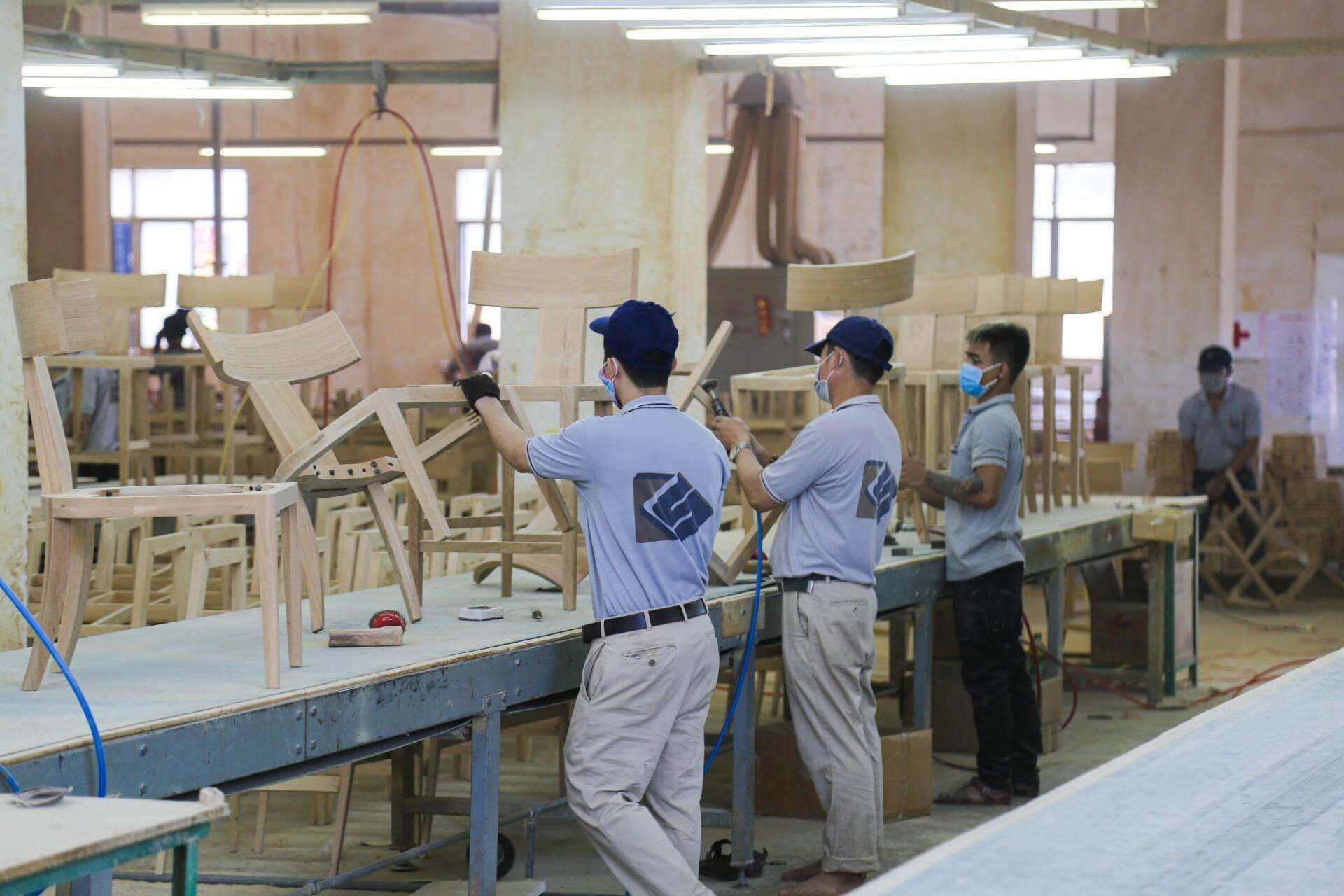
A factory producing wooden chairs

Misconception 3: Trying to Buy Everything from One Factory

To simplify the process, many buyers try to source all furniture from a single factory—but this isn’t always a rational approach.

No factory excels in every category. The furniture industry is highly specialized: some factories focus on sofa structures and upholstery, others on solid wood cutting and joinery, while some are stronger in metal or panel furniture. Even large factories typically have clear strengths in only a few categories.

A more effective approach is to work with a professional sourcing team like Homebridge, which can integrate resources from multiple factories and match them to your specific needs.

If you’re still unsure how to buy furniture from China, you can read our next article: “From Order to Delivery: What Steps Are Involved?”

Explore Furniture Solutions with HomeBridge
Contact us for One-stop Professional Furniture Purchaisng Solution!
By clicking the button, you consent to the processing of personal data

Thank you!

Your message has been received.
Oops! Something went wrong while submitting the form.

When sourcing furniture from China, many buyers start with the same question: “Which region has the best furniture?”

But that question misses the point. No single region produces the best of everything. A more practical question is: “For the type of furniture I need, which region should I source from?”

Today, China’s furniture industry operates like a highly specialized supply chain map. The Pearl River Delta focuses on full-home solutions and design-driven furniture. The Yangtze River Delta specializes in specific product categories. The Bohai Rim region is suited for standardized, large-volume orders. And the Northeast is known for solid wood furniture.

Without understanding these differences, it’s easy to make costly mismatches—looking for design-focused pieces in low-cost regions and finding limited styles, or sourcing standard projects from customization-heavy regions and seeing budgets rise. More often, buyers think they’ve found a bargain, only to spend those savings later on quality issues and shipping.

China’s furniture industrial clusters

Why Origin Directly Impacts Your Sourcing Results

Furniture isn’t a simple product. A single sofa involves the frame, foam, springs, upholstery, stitching, hardware, packaging, and shipping. If any part of the process lacks consistency, it will show in the final product.That’s why evaluating a region isn’t just about whether factories exist—it’s about what that region has specialized in over time and how production is structured.Furniture manufacturing relies heavily on experience. Regions that have focused on a specific category—like office chairs—develop supply chains, tooling, components, and skilled labor around that product, resulting in better quality and more competitive pricing.At the same time, different regions are built for different purposes. Some are optimized for large-scale, standardized, cost-driven production, while others are better suited for smaller volumes, deep customization, and design-focused products. Each region needs to be evaluated with the right expectations.

Pearl River Delta: Full-Home Projects and Design Focus

If your goal is full-home sourcing, a cohesive style, or design-driven furniture, the Pearl River Delta is usually the first region to consider.

It is China’s largest and most mature furniture hub, accounting for about one-third of the country’s output. Centered in Guangdong—especially Foshan, Guangzhou, Dongguan, Shenzhen, and Zhongshan—this region is widely recognized by overseas buyers. Foshan, particularly Lecong, is one of the most established sourcing destinations.

Lecong’s furniture market covers nearly 4 million square meters, with over 180 large malls and more than 5,000 dealers. It’s not just a few streets—it’s a complete commercial ecosystem.

The key advantage here isn’t the lowest price for a single item, but the density of choices, the wide range of styles, and strong supporting services.

Within a single day, you can explore modern, light luxury, Italian minimalist, contemporary, American, and French styles. For overseas buyers, this matters—because the real challenge in full-home sourcing isn’t buying one sofa, but creating a cohesive space.

That said, it’s not the best fit for every project. If your priority is the lowest price, the Pearl River Delta may not be the most cost-effective option, as its mature market, showroom costs, design capabilities, and service levels are reflected in the pricing.

City views of the Pearl River Delta

Yangtze River Delta: Single-Category Sourcing

The Yangtze River Delta also accounts for about one-third of China’s furniture output, covering Zhejiang, Jiangsu, and Shanghai. Compared to the Pearl River Delta’s integrated approach, this region functions as a highly specialized manufacturing network.

Its strength isn’t full-home sourcing, but deep expertise in specific product categories.

Take Anji in Zhejiang as an example. Known as a major chair manufacturing hub, it produces roughly one-third of China’s domestic chair supply, with an industry output value of RMB 31.19 billion.

If you’re sourcing office chairs, ergonomic chairs, or task chairs, looking for suppliers around Anji is often more efficient than browsing a general furniture market. Factories here are not just making chairs—they’ve built entire production systems around them.

Other specialized categories include upholstered mattresses in Shaoxing, cabinets in Ningbo, and sofas in Haining. The Yangtze River Delta is strongest in focused manufacturing, making it ideal for buyers who know exactly what they need—but less suitable for full-home coordination.

City views of the Yangtze River Delta

Bohai Rim: Standardized Orders

The Bohai Rim furniture region covers Beijing, Tianjin, Hebei, and Shandong. Its key strengths are standardization, bulk production, and price competitiveness.

Compared to the Pearl River Delta and Yangtze River Delta, it may not lead in design or style variety, but it offers clear cost advantages for standardized furniture.

In parts of Hebei and Shandong, the focus is on producing proven designs quickly, consistently, and at scale—serving wholesale markets and mid-to-low price segments.

Lower prices themselves aren’t the issue—the mismatch happens when high design expectations are applied to low-cost production.

If you expect Pearl River Delta showroom results with a Bohai Rim budget, you’ll likely be disappointed. Not because the region lacks capability, but because its supply chain is positioned differently.

It’s best suited for practical, stable, and cost-controlled needs—not for design-driven, highly customized projects.

City views of the Bohai Rim region

Northeast Region: Solid Wood Furniture

The Northeast furniture industry follows a different logic from southern regions. It relies heavily on timber resources from Northeast China and imports from Russia, with cities like Shenyang, Dalian, and Harbin focusing on wood processing and solid wood furniture.

Its strength is not fast-changing styles, but durability and practical construction.

If you’re looking for solid wood beds, cabinets, or dining tables—especially long-lasting pieces—the Northeast is a strong fit.

However, for overseas buyers, logistics is a key consideration. Compared to regions like Guangdong or Zhejiang with well-developed port access, the Northeast is farther from major export hubs, which usually means higher shipping costs.

City views of Northeast China

Why Many Overseas Buyers Make the Wrong Choice

Most sourcing failures aren’t because China lacks good furniture.

In fact, the opposite is true—China’s furniture supply chain is massive. In 2025, exports of “furniture and parts” reached RMB 455.94 billion. For wooden furniture alone, export volume hit 481 million units.

The issue isn’t limited choice—it’s too much choice. Within such a vast system, buyers tend to make three common mistakes.

Misconception 1: Chasing the Lowest Price

Low prices are appealing, but in furniture, they usually come from somewhere.

It could mean lower-grade materials, simpler structures, thinner foam, fewer quality checks, or weaker packaging.

The real risk isn’t paying more—it’s choosing something that looks cheap upfront, but ends up costing more through repairs, replacements, or returns.

Misconception 2: Underestimating Production and Shipping Time

Most buyers focus on price and style, but overlook time. In cross-border sourcing, time is one of the most unpredictable and underestimated factors.

In reality, production typically takes 15–45 days, longer for custom pieces. Sea freight adds another 20–40 days, with potential delays during peak seasons. Customs clearance, unloading, and final delivery can add 7–15 more days.

In total, it’s normal for the full process—from order to delivery—to take 2–3 months, and this should be planned in advance.

A factory producing wooden chairs

Misconception 3: Trying to Buy Everything from One Factory

To simplify the process, many buyers try to source all furniture from a single factory—but this isn’t always a rational approach.

No factory excels in every category. The furniture industry is highly specialized: some factories focus on sofa structures and upholstery, others on solid wood cutting and joinery, while some are stronger in metal or panel furniture. Even large factories typically have clear strengths in only a few categories.

A more effective approach is to work with a professional sourcing team like Homebridge, which can integrate resources from multiple factories and match them to your specific needs.

If you’re still unsure how to buy furniture from China, you can read our next article: “From Order to Delivery: What Steps Are Involved?”