

Why More and More People Are Buying Furniture from China

Why More and More People Are Buying Furniture from China
Author-Image
Last Update:  
April 20, 2026

China has remained the world’s largest furniture exporter for over 20 consecutive years, accounting for around 35% of the global market in recent years.

Within this trade structure, approximately 80%–90% of orders come from B2B buyers, while direct purchases from individual consumers (B2C) make up only 10%–20%.

However, more people are starting to realize that instead of paying several times the price for China-made furniture in local stores, sourcing directly from factories in China can offer far better value for the same level of quality.

Buy Furniture from China
Real photos of Chinese furniture factories

These brands rely on China’s furniture supply chain

In reality, many Western furniture brands rely on global supply chains for production—and China is one of the most important manufacturing hubs. Brands such as Wayfair, Ashley Furniture Industries, Pottery Barn, West Elm, Crate & Barrel, and Restoration Hardware source a significant portion of their products from China.

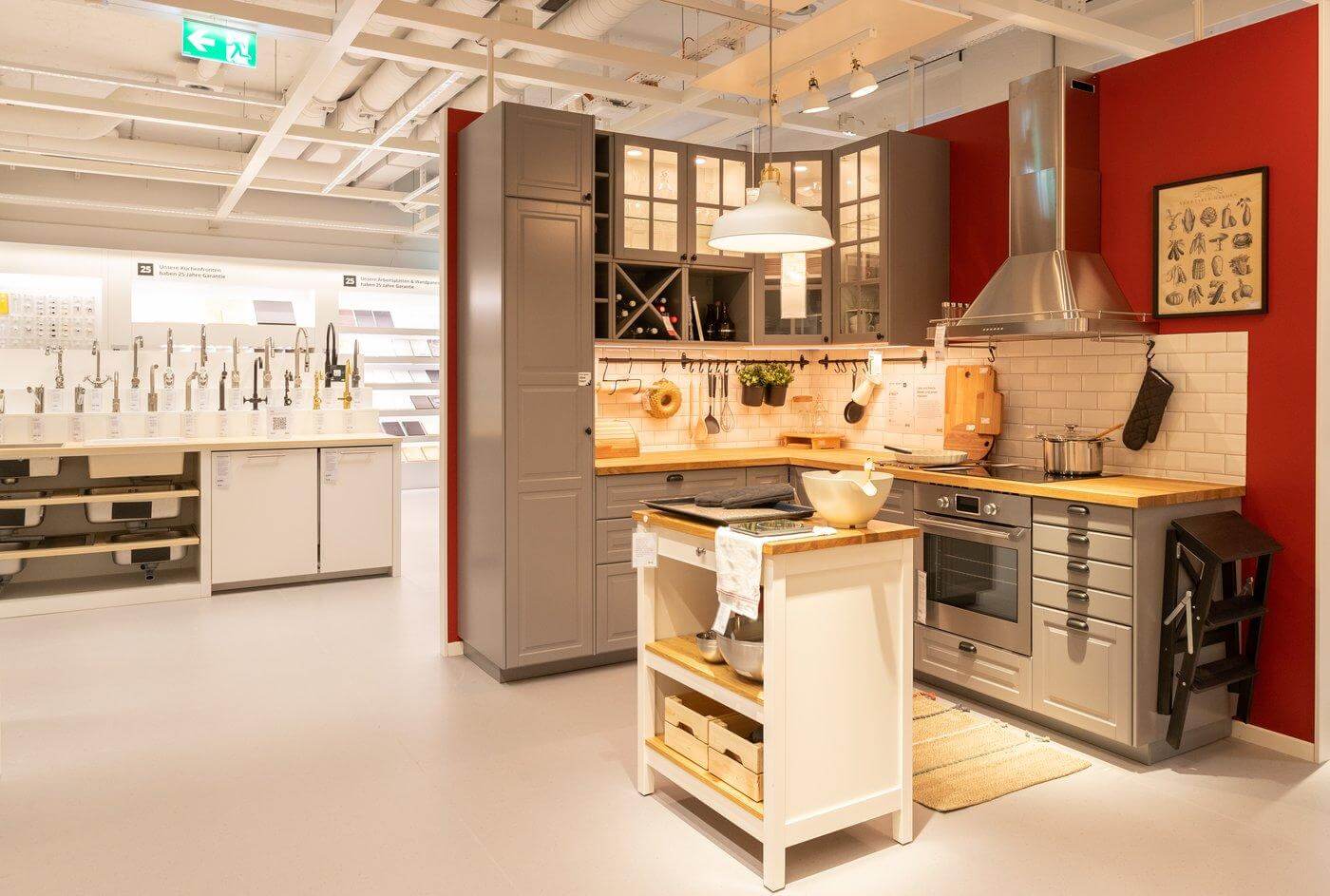
The same applies to mass-market retailers. IKEA produces over 20% of its products in China, making it one of its largest sourcing regions. MUJI works with a wide network of Chinese partner factories, and NITORI also depends heavily on China’s supply chain.

This reliance extends to the commercial sector as well. From Hilton, with over 250 million members, to Marriott, operating more than 8,000 hotels across 139 countries, major hospitality groups consistently source large volumes of furniture from China.

What this reflects is a manufacturing ecosystem that has been widely tested and adopted on a global scale. As more brands continue to rely on China’s supply chain, an increasing number of buyers—seeking broader selection, customization options, stronger value for money, and faster response times—are choosing to source directly from factories in China.
Buy Furniture from China
Furniture displayed in IKEA stores

More Extensive Furniture Selection

China has one of the most mature furniture supply chains in the world, with over 50,000 manufacturers and hundreds of automated production lines. In Lecong, Foshan alone, there are more than 180 furniture malls covering over 4 million square meters—roughly the size of 560 football fields.

This scale allows suppliers to offer a wide range of furniture styles, sizes, and materials, covering nearly every category. There’s even a common saying: “If you can’t find it in China, you likely won’t find it anywhere else.”

At the same time, China continues to show strong momentum in design. According to the World Intellectual Property Organization’s Hague System, around 4,870 international design applications were filed in 2024, placing China among the leading countries globally.

From luxury and classic to Scandinavian, American, modern, and contemporary Chinese styles—you can find furniture that fits almost any preference.

Buy Furniture from China
Foshan’s Ten-Mile Furniture Corridor

Customization Made Practical

Standard furniture sizes don’t always fit every space. And when you’re looking for something more specific in style, ready-made options often fall short.

That’s when custom furniture becomes the better choice—something tailored to your space and preferences.

In this area, China offers a clear advantage. Lower material and labor costs, combined with a fast turnaround—often as quick as 7 days from design to sample—and flexible minimum orders starting from just one piece, make customization far more accessible.

Today, over 60% of mid-to-large furniture factories in China offer customization services, with custom orders consistently accounting for more than 30%–40% of production. Whether you need a single personalized item or a full-home solution, suppliers can respond efficiently to your requirements.
Buy Furniture from China
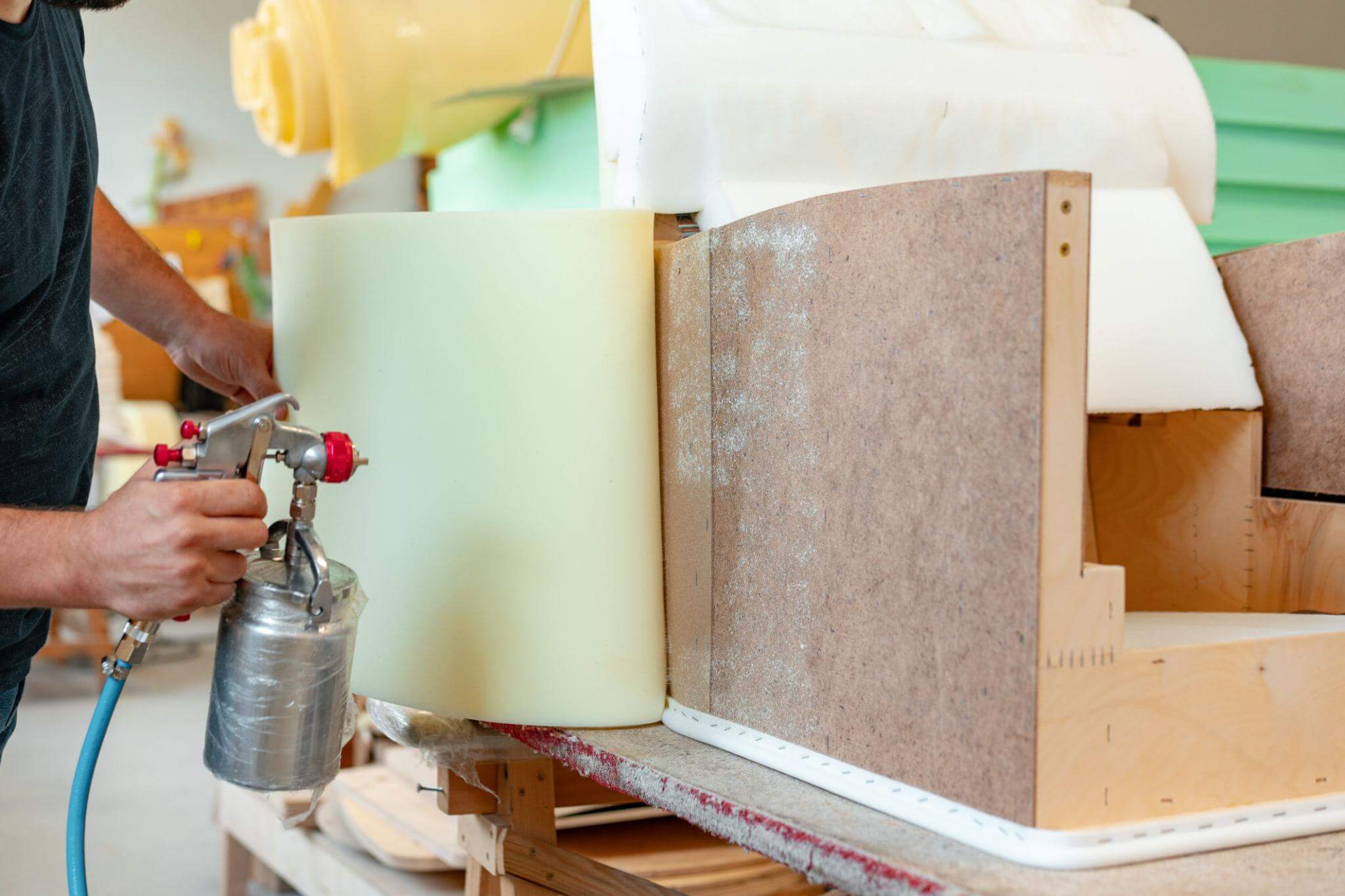
Chinese furniture craftsmen working by hand

Higher Cost Performance

China benefits from large-scale raw material sourcing, a highly developed supply chain, and efficient production systems—bringing overall furniture manufacturing costs significantly lower. On average, costs are about 40%–60% lower than in the U.S., and 15%–20% lower than in Southeast Asia.

When you source directly through China’s supply chain, you also avoid layers of distributor markups, retail margins, and brand premiums. Compared to local retail prices, total costs can often be reduced by 50%–90%.

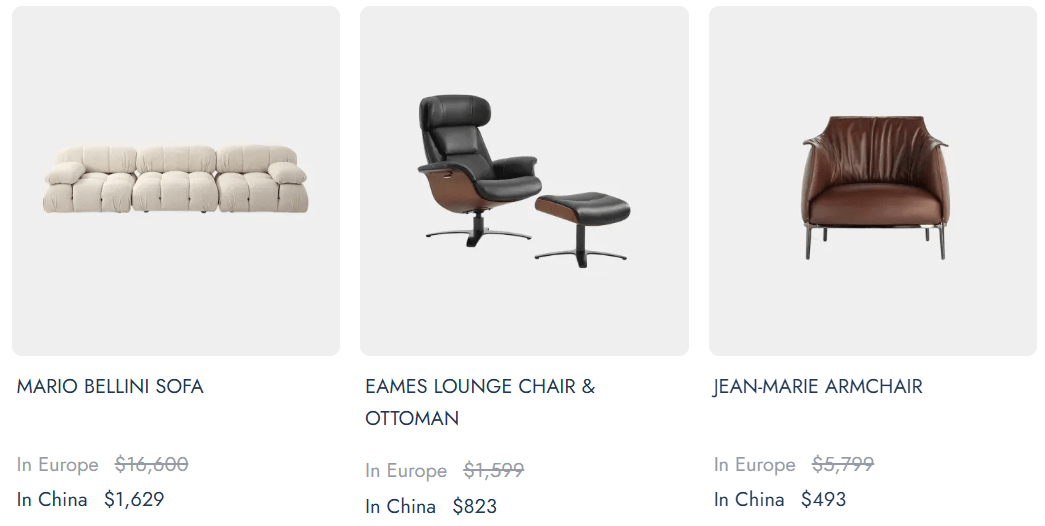
Take a genuine leather sofa as an example: buying locally may cost up to $16,600, while sourcing directly from China can bring the price down to around $1,629—saving over 90% of the budget.
Buy Furniture from China
Furniture price comparison: Europe vs. China

Faster Response Time

Many people assume China’s advantage in furniture is mainly about lower prices.

In reality, what sets it apart is a fully integrated supply chain and the ability to respond quickly. For example, in China, a first sample can typically be completed within 7–15 days, while in the U.S., Europe, or Southeast Asia, the same process often takes 3–6 weeks or longer.

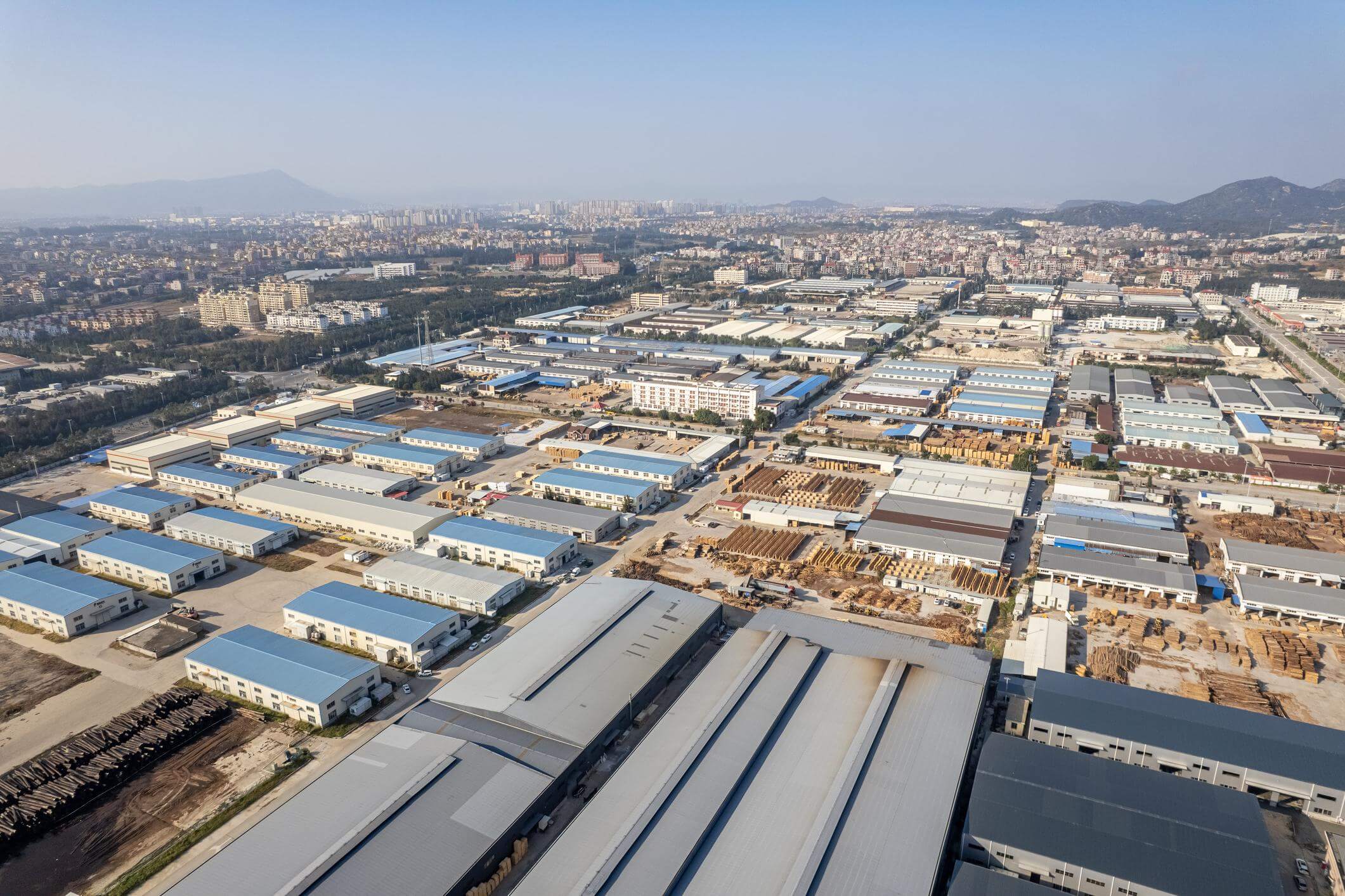
This difference comes from the high concentration of the supply chain. Key processes—such as wood processing, hardware production, fabric supply, foam filling, and finishing—are often located within the same industrial region. In Foshan, for instance, the entire process from raw materials to finished product can be completed within about an hour’s drive.

This also makes customization more efficient. When buyers need to adjust size, color, or structure, factories can often implement changes and produce a new sample within just a few days.
Buy Furniture from China
Furniture industrial clusters in China

Why “Buying Direct from China” Is Becoming Practical

In the past, cross-border furniture sourcing was almost exclusively a business activity. Today, that is clearly changing.

On one hand, international logistics have become far more reliable. For example, shipping a full container from China to the U.S. typically takes 20–35 days, while less-than-container shipments are now highly standardized. At the same time, door-to-door delivery and customs brokerage services make the process much more manageable for individual buyers.

On the other hand, access to information has improved significantly. Previously, connecting with factories often required trade companies, exhibitions, or personal referrals. Now, individual buyers can reach suppliers directly through online platforms, websites, or video communication.

More importantly, the price gap is becoming increasingly visible. For furniture with similar quality, design, and style, sourcing through China’s supply chain—even after adding shipping and duties—often costs only 20%–50% of local retail prices.

As a result, more individual buyers are beginning to explore sourcing directly from China. This shift reflects a broader trend: a supply chain once limited to brands and distributors is gradually opening up to individual consumers.

Buy Furniture from China
Homebridge assisting clients in selecting furniture
Explore Furniture Solutions with HomeBridge
Contact us for One-stop Professional Furniture Purchaisng Solution!
By clicking the button, you consent to the processing of personal data

Thank you!

Your message has been received.
Oops! Something went wrong while submitting the form.

China has remained the world’s largest furniture exporter for over 20 consecutive years, accounting for around 35% of the global market in recent years.

Within this trade structure, approximately 80%–90% of orders come from B2B buyers, while direct purchases from individual consumers (B2C) make up only 10%–20%.

However, more people are starting to realize that instead of paying several times the price for China-made furniture in local stores, sourcing directly from factories in China can offer far better value for the same level of quality.

Buy Furniture from China
Real photos of Chinese furniture factories

These brands rely on China’s furniture supply chain

In reality, many Western furniture brands rely on global supply chains for production—and China is one of the most important manufacturing hubs. Brands such as Wayfair, Ashley Furniture Industries, Pottery Barn, West Elm, Crate & Barrel, and Restoration Hardware source a significant portion of their products from China.

The same applies to mass-market retailers. IKEA produces over 20% of its products in China, making it one of its largest sourcing regions. MUJI works with a wide network of Chinese partner factories, and NITORI also depends heavily on China’s supply chain.

This reliance extends to the commercial sector as well. From Hilton, with over 250 million members, to Marriott, operating more than 8,000 hotels across 139 countries, major hospitality groups consistently source large volumes of furniture from China.

What this reflects is a manufacturing ecosystem that has been widely tested and adopted on a global scale. As more brands continue to rely on China’s supply chain, an increasing number of buyers—seeking broader selection, customization options, stronger value for money, and faster response times—are choosing to source directly from factories in China.

Buy Furniture from China
Furniture displayed in IKEA stores

More Extensive Furniture Selection

China has one of the most mature furniture supply chains in the world, with over 50,000 manufacturers and hundreds of automated production lines. In Lecong, Foshan alone, there are more than 180 furniture malls covering over 4 million square meters—roughly the size of 560 football fields.

This scale allows suppliers to offer a wide range of furniture styles, sizes, and materials, covering nearly every category. There’s even a common saying: “If you can’t find it in China, you likely won’t find it anywhere else.”

At the same time, China continues to show strong momentum in design. According to the World Intellectual Property Organization’s Hague System, around 4,870 international design applications were filed in 2024, placing China among the leading countries globally.

From luxury and classic to Scandinavian, American, modern, and contemporary Chinese styles—you can find furniture that fits almost any preference.

Buy Furniture from China
Foshan’s Ten-Mile Furniture Corridor

Customization Made Practical

Standard furniture sizes don’t always fit every space. And when you’re looking for something more specific in style, ready-made options often fall short.

That’s when custom furniture becomes the better choice—something tailored to your space and preferences.

In this area, China offers a clear advantage. Lower material and labor costs, combined with a fast turnaround—often as quick as 7 days from design to sample—and flexible minimum orders starting from just one piece, make customization far more accessible.

Today, over 60% of mid-to-large furniture factories in China offer customization services, with custom orders consistently accounting for more than 30%–40% of production. Whether you need a single personalized item or a full-home solution, suppliers can respond efficiently to your requirements.

Buy Furniture from China
Chinese furniture craftsmen working by hand

Higher Cost Performance

China benefits from large-scale raw material sourcing, a highly developed supply chain, and efficient production systems—bringing overall furniture manufacturing costs significantly lower. On average, costs are about 40%–60% lower than in the U.S., and 15%–20% lower than in Southeast Asia.

When you source directly through China’s supply chain, you also avoid layers of distributor markups, retail margins, and brand premiums. Compared to local retail prices, total costs can often be reduced by 50%–90%.

Take a genuine leather sofa as an example: buying locally may cost up to $16,600, while sourcing directly from China can bring the price down to around $1,629—saving over 90% of the budget.

Buy Furniture from China
Furniture price comparison: Europe vs. China

Faster Response Time

Many people assume China’s advantage in furniture is mainly about lower prices.

In reality, what sets it apart is a fully integrated supply chain and the ability to respond quickly. For example, in China, a first sample can typically be completed within 7–15 days, while in the U.S., Europe, or Southeast Asia, the same process often takes 3–6 weeks or longer.

This difference comes from the high concentration of the supply chain. Key processes—such as wood processing, hardware production, fabric supply, foam filling, and finishing—are often located within the same industrial region. In Foshan, for instance, the entire process from raw materials to finished product can be completed within about an hour’s drive.

This also makes customization more efficient. When buyers need to adjust size, color, or structure, factories can often implement changes and produce a new sample within just a few days.

Buy Furniture from China
Furniture industrial clusters in China

Why “Buying Direct from China” Is Becoming Practical

In the past, cross-border furniture sourcing was almost exclusively a business activity. Today, that is clearly changing.

On one hand, international logistics have become far more reliable. For example, shipping a full container from China to the U.S. typically takes 20–35 days, while less-than-container shipments are now highly standardized. At the same time, door-to-door delivery and customs brokerage services make the process much more manageable for individual buyers.

On the other hand, access to information has improved significantly. Previously, connecting with factories often required trade companies, exhibitions, or personal referrals. Now, individual buyers can reach suppliers directly through online platforms, websites, or video communication.

More importantly, the price gap is becoming increasingly visible. For furniture with similar quality, design, and style, sourcing through China’s supply chain—even after adding shipping and duties—often costs only 20%–50% of local retail prices.

As a result, more individual buyers are beginning to explore sourcing directly from China. This shift reflects a broader trend: a supply chain once limited to brands and distributors is gradually opening up to individual consumers.

Buy Furniture from China
Homebridge assisting clients in selecting furniture