



Let’s be real – you’re probably sick of spending a fortune on furniture that falls apart after a year. You’ve asked yourself, is furniture cheap in china? Maybe you’ve seen wild prices online and wondered, "Is this a scam or actually possible?" The truth hurts: most people get burned by middlemen or pay triple for "imported" styles. But here’s the exciting part – the answer is finally clear for 2026, and it’s going to blow your mind!
In this article, we’ll break down the real costs so you stop guessing. You’ll discover Top Furniture Manufacturing Cities and Their Price Tiers, so you know exactly where the lowest prices hide. Then, we’ll show you a simple, step-by-step plan for How to Source Furniture Directly from China in 2026 – no fancy language, just real savings. Get ready to unlock the is furniture cheap in china secret for yourself. It’s time to win at furnishing your home!
1. Is Furniture Cheap in China for 2026? The Truth About Prices and Savings

Even in 2026, many people still think China is the go-to place for cheap furniture. And for good reason! China’s huge factories and skilled workers often mean you can find furniture for less money than in many other countries. But "cheap" isn't just about the price tag. To figure out if you're really saving, you need to look at more than just the product cost. Think about how good the quality is, how much it costs to ship it to you, and the best way to buy it—like directly from a factory or through a store. Real savings come when you get good value for your money, all things considered.
How Much Does Chinese Furniture Actually Cost in 2026?
The actual cost of furniture in China can change a lot depending on what you're buying and the materials used. For example, a basic dining chair made of metal might be much cheaper than a fancy wooden one. In 2026, prices are still very competitive, especially if you compare them to Western markets. Even with some changes in raw material costs, the sheer scale of production in China keeps prices attractive for buyers looking for value.
To give you a clearer idea, here's a quick look at typical price ranges for common furniture items you might find in China this year. Keep in mind these are general estimates, and prices can go up or down based on design, materials, and how much you order.
Factory-Direct Prices vs. Retail Markup: The Real Numbers
When you buy furniture directly from a factory in China, you're usually getting a much lower price. That's because you're cutting out all the companies in between. Retail stores, on the other hand, have to add a lot to the price. They do this to cover their own costs like rent, staff, advertising, and to make a profit. Understanding this difference is key to seeing the real savings possible.
Here's a breakdown of where markups usually happen:
- Factory Production Cost: This is the base price – what it costs the factory to make the item.
- Importer/Wholesaler Markup: If a company buys from the factory and then sells to other stores, they add their own profit.
- Shipping and Logistics: The cost to move the furniture from China to its final destination, plus any customs duties or taxes.
- Retail Store Markup: This is often the biggest jump. Stores add a large percentage to the price to pay for their showrooms, sales staff, marketing, and to earn money for their business.
Why China's Manufacturing Scale Keeps Costs Low
China's ability to make furniture cheaply comes down to its massive production system. When factories make millions of pieces of furniture every year, they can buy materials in huge amounts at lower prices. This is called "economy of scale." Also, China has very efficient supply chains, meaning all the parts and steps needed to make furniture are well-organized and fast. Plus, there are many specialized factories that focus on just one thing, like making only chair legs or sofa frames. This specialization and huge system help keep furniture production costs competitive
2. Top Furniture Manufacturing Cities and Their Price Tiers

China has several big cities where furniture is made, and each one offers different kinds of products at various prices. Knowing these cities helps you find the right furniture for your needs and budget. Foshan is known for its high-quality, stylish furniture at competitive prices. Luoyang, on the other hand, specializes in more budget-friendly steel and office furniture. For the absolute lowest costs, places like Nankang and Taizhou are great, focusing on very affordable and practical items, often for basic home or outdoor use.
Foshan: Premium Quality at Competitive Prices
Foshan is a huge name in Chinese furniture, famous for making good-quality pieces, from comfy sofas to nice dining sets. You can find a wide range of styles here, and many showrooms let you see and touch the furniture before you buy. Even though the quality is strong, prices are still fair, especially for furniture that's mid-range to higher-end in style and build. It's a go-to spot if you want quality without paying top dollar.
Luoyang: Budget-Friendly Steel and Commercial Furniture
If you're looking to save money, Luoyang is a smart choice, especially for metal furniture. This city is known for making strong steel chairs, tables, and office desks. It's a go-to place for businesses or anyone needing a lot of practical, simple furniture that lasts without costing too much. Luoyang is perfect for getting durable items that serve their purpose well on a tighter budget.
Nankang and Taizhou: The Low-Cost Sourcing Alternatives
For the lowest prices, Nankang and Taizhou are key places to look. These cities are experts at making furniture that's very affordable. They focus on simple designs and common items, perfect if you need to buy a lot without spending much. Each city has its own specialty:
- Nankang focuses a lot on wooden furniture, especially for bedrooms like beds and wardrobes. Taizhou is great for plastic furniture and outdoor items like garden chairs and tables.
3. How to Source Furniture Directly from China in 2026

Getting furniture straight from China in 2026 needs some good planning. You'll need to know where to find sellers, how to plan what you want to buy, and what things to look out for to make sure you get good stuff without too much trouble. Direct sourcing can save you money, but it means you're in charge of making sure everything goes smoothly from the factory floor to your doorstep.
Partner with a One-Stop Chinese Furniture Service Provider Like HomeBridge
Companies like HomeBridge can make getting furniture from China much easier. They handle finding good factories that match your needs, talking to different places, making sure the quality is right, and even sorting out shipping to your country. It's like having an expert help you every step of the way, which can save you time and stress when dealing with many different suppliers and steps.
Alibaba, Trade Fairs (CIFF) or Sourcing Agents
You have a few main ways to find furniture in China. Alibaba is a big online marketplace where you can find many suppliers and see their products. Trade fairs like CIFF let you see furniture in person, touch it, and talk to factory owners directly. Sourcing agents are local experts who can help you find products, check factories, make sure quality is good, and handle all the small details for you, which is great if you're new to this.
Minimum Order Quantities and Custom vs. Standard Designs
When buying furniture from China, you'll often hear about "Minimum Order Quantities" or MOQs. This means you have to buy a certain number of items, and usually, buying more gets you a better price per piece. You also need to think about if you want furniture that's already made or if you want custom-made designs.
- Standard Designs: These are ready-made items that factories already produce and keep in stock or make regularly. They are often cheaper, especially if you don't need a huge amount, and you can usually get them quicker.
- Custom Designs: This means furniture made specially for you, to your exact needs or drawings. It usually costs more and requires you to order a lot more pieces, but you get something truly unique that fits your specific style or space.
4. How Does HomeBridge Help You Import Furniture and Building Materials from China?
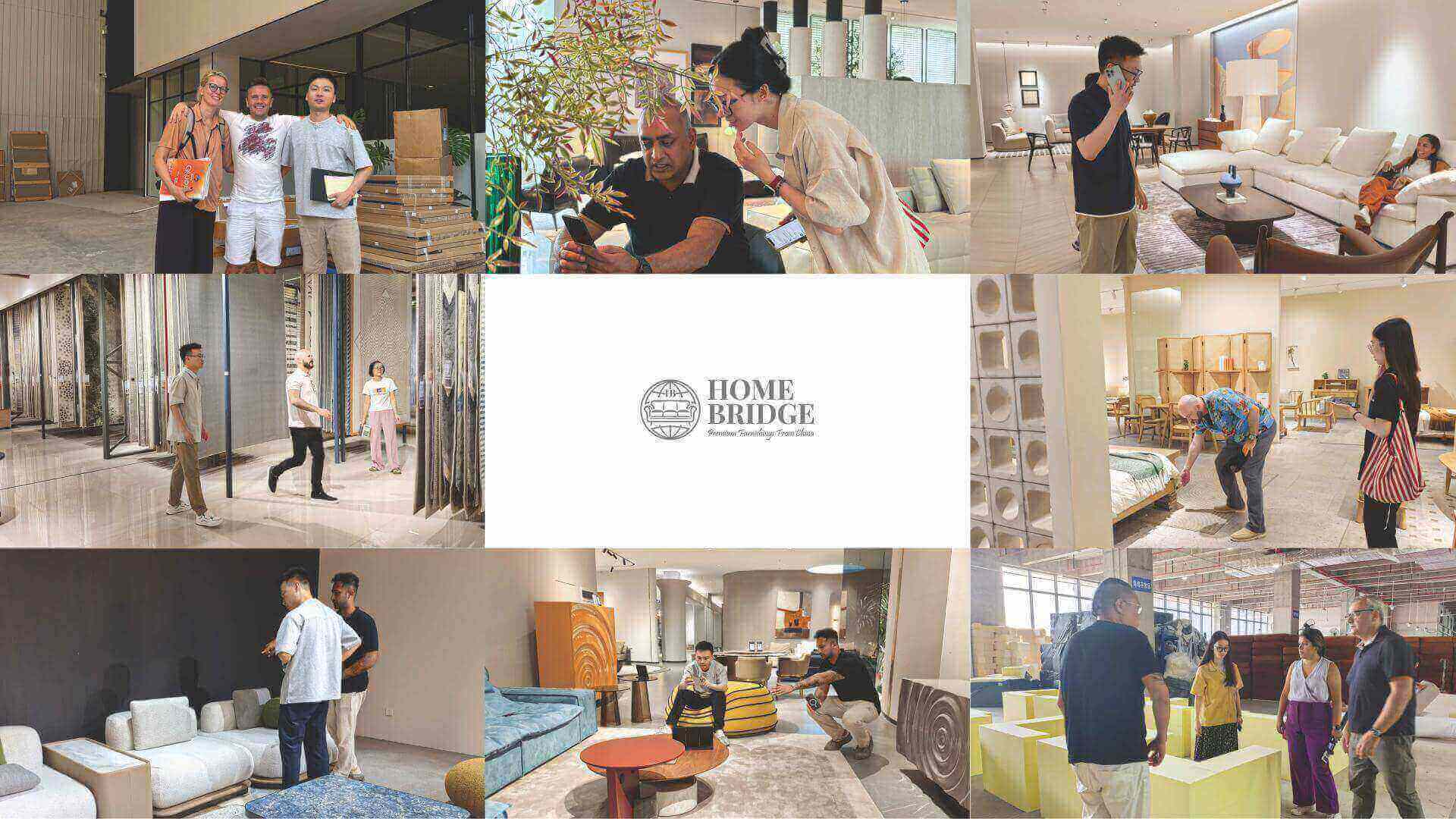
When you partner with HomeBridge Furniture Company, we ensure a seamless, end-to-end import experience for furniture and building materials. Our traffic flow is designed to eliminate guesswork, reduce costs, and guarantee quality from factory to your doorstep.
Phase 1: Sourcing & Price Advantage
- We collaborate with top manufacturers to offer our clients wholesale prices that are otherwise unavailable.
- We work with over 95 top partner factories strategically located across Foshan, Guangzhou, Shenzhen, Huizhou, and Dongguan in China, covering furniture, building materials, and interior decorations.
- Key benefit: You bypass middlemen, directly accessing factory-level pricing.
Phase 2: Order & Free Samples
- We offer free sample shipping and drawing services, allowing you to verify quality and design before committing to bulk orders.
- You provide specifications; we handle factory communication and coordinate sample logistics.
Phase 3: Manufacturing & Quality Control
- Our partner factories produce your items under strict quality standards.
- We conduct regular inspections and report progress to ensure your furniture and building materials meet specifications.
Phase 4: One-Stop Logistics & Tax Efficiency
- We offer one-stop services, delivering furniture directly to your doorstep.
- We leverage long-term partnerships with freight forwarders for reliable shipping and expertise in effective tax-saving strategies to minimize import duties.
- Result: Hassle-free customs clearance, consolidated cargo, and cost savings.
Phase 5: Final Delivery & Support
- We coordinate last-mile delivery and provide tracking.
- Our team remains available for post-import support, ensuring your furniture and building materials arrive safely and on time.
5. Frequently Asked Questions
1) Is furniture genuinely cheaper in China than in the US or Europe in 2026?
Yes, furniture is still cheaper in China for most items in 2026, but the gap has shrunk a little. China has lower labor costs and a huge supply of raw materials like wood and metal, which keeps factory prices down. For example, a solid wood dining table that costs $800 in the US might be only $300 to $400 straight from a Chinese factory. However, you have to add in shipping costs and new tariffs, which we'll talk about below.
On the other hand, furniture made in the US or Europe uses more expensive labor and stricter environmental rules, which drives up prices. A couch made in North Carolina might cost $2,000, while a similar one from China could be $1,200 after all costs. So yes, China is still cheaper, but you need to factor in shipping, taxes, and import duties to see your real savings.
2) How much can I realistically save by sourcing furniture directly from China?
If you buy directly from Chinese manufacturers, you can save anywhere from 30% to 60% compared to buying from a US or European store. The exact amount depends on a few things.
Here are the key cost factors broken down:
- Manufacturing cost (biggest savings): The factory price in China is often 40-50% less than what you'd pay in a US store.
- Shipping: Adds 15-20% to your total cost, depending on the size and weight of the furniture.
- Tariffs (new in 2026): Adds 10-25% extra on top of the purchase price, depending on the type of furniture.
- Middleman markups: By cutting out the US wholesaler and retailer, you skip their 50-100% markup.
In short, if you buy a $1,000 sofa from a US store, you might get it from China for $400, pay $100 for shipping, and $50 in tariffs. That's $550 total—a 45% saving.
3) Which Chinese city is best for budget furniture sourcing?
For budget furniture, Foshan is the best place to start. It's in Guangdong province and is known as the "furniture capital of China." Foshan has hundreds of factories making everything from cheap plastic chairs to high-end wood tables. Prices are low because there's so much competition, and you can find a huge variety in one place. It's also close to the port of Shenzhen, so shipping costs are lower.
If you need specific types of furniture, Shunde (also in Guangdong) is great for upholstery like sofas and beds. Yiwu is better for small, cheap items like side tables or shelves. Foshan is the most accessible for foreign buyers—many factories speak some English and are used to dealing with small orders. But if you really want rock-bottom prices on simple items, Yiwu is hard to beat.
4) How have 2026 US-China tariffs affected furniture import costs?
In 2026, the US government added more tariffs on Chinese-made furniture, especially on wood and metal products. These new tariffs range from 10% to 25% on top of existing duties. For example, a dining table that was $300 at the factory now costs an extra $45 to $75 just in tariffs. This has made some cheaper furniture less attractive, especially for big items like sofas and dressers.
But the good news is that the tariffs don't apply to everything. Some types of furniture, like bamboo or rattan items, have lower rates. And the overall price difference is still big enough to make Chinese furniture a good deal. Just make sure you ask your supplier for the correct HS code (a tariff number) before you buy, so you know exactly what you'll pay at the border.
5) Can individuals or small businesses order single pieces from Chinese factories?
Yes, but it's tricky. Most Chinese factories want bulk orders of 50, 100, or more pieces. However, there are ways around this. Many factories now work with small buyers through platforms like Alibaba or 1688.com, where they offer "sample orders" or "small MOQ" (minimum order quantity). You can often buy 1 to 5 pieces as a sample, but the price per piece will be higher.
Here are common workarounds:
- Use Alibaba's "Sample Order" feature: Look for suppliers who say "sample available" and order one piece to test.
- Find trading companies: They buy in bulk from factories and sell single pieces to small buyers. You'll pay more, but it's still cheaper than a US store.
- Join group buys: Look for Facebook groups or forums where people combine orders to hit the factory's minimum.
6) How do I verify quality before committing to a Chinese furniture supplier?
You can't just trust photos. You need to be smart about checking the quality before you spend a lot of money.
Here are the key steps:
- Order a sample: Pay for one item to be shipped to you. Check the wood grain, joints, paint finish, and how it feels.
- Request a video call: Ask the supplier to show you the factory floor and the actual product being made. If they refuse, that's a red flag.
- Get third-party inspection: Use a service like SGS or Bureau Veritas to send an inspector to the factory. They check the product against your specs for a few hundred dollars.
- Check customer reviews: Look at the supplier's page on Alibaba or Made-in-China.com. Read feedback from other buyers, especially about quality and delivery time.
7) Is it better to use Alibaba or attend a trade fair like CIFF Guangzhou?
It depends on what you need. Alibaba is super convenient—you can browse thousands of suppliers from your phone, compare prices, and chat with sellers. It's great for small orders and quick quotes. The downside is you can't see or touch the furniture, and there are scammers out there. You have to do extra homework.
CIFF Guangzhou (the China International Furniture Fair) is better if you're serious about buying in bulk. You can sit on the sofas, feel the wood, and see the colors in person. You also meet factory owners face-to-face, which builds trust. But it costs money to travel to China, and you need a few days there. For a small business or individual, Alibaba is usually the smarter choice. For big orders or high-end pieces, go to the fair.
6. Conclusion
So, after looking at the full picture, it’s clear that is furniture cheap in china for 2026? Yes, it really is! We walked through the best manufacturing cities like Foshan and Dongguan, and you now know how to grab those low factory prices directly. All those confusing worries about finding good deals and avoiding bad quality? Gone. Your pain points are solved. You no longer have to guess where to start or fear getting cheated. The truth is, smart savings are right there waiting for you.
Now, here’s your exciting next step. Stop overthinking! Let us handle the hard work. At HomeBridge Furniture Company, we work with over 95 top partner factories across China. That means you get wholesale prices that no one else can offer you. We do everything for you—from picking the best furniture to sending it straight to your door, with free sample shipping and drawing services. You just relax. Trust us to save your money and time. Contact HomeBridge today and start filling your home with cheap, amazing furniture!
.svg)






.svg)
.svg)


