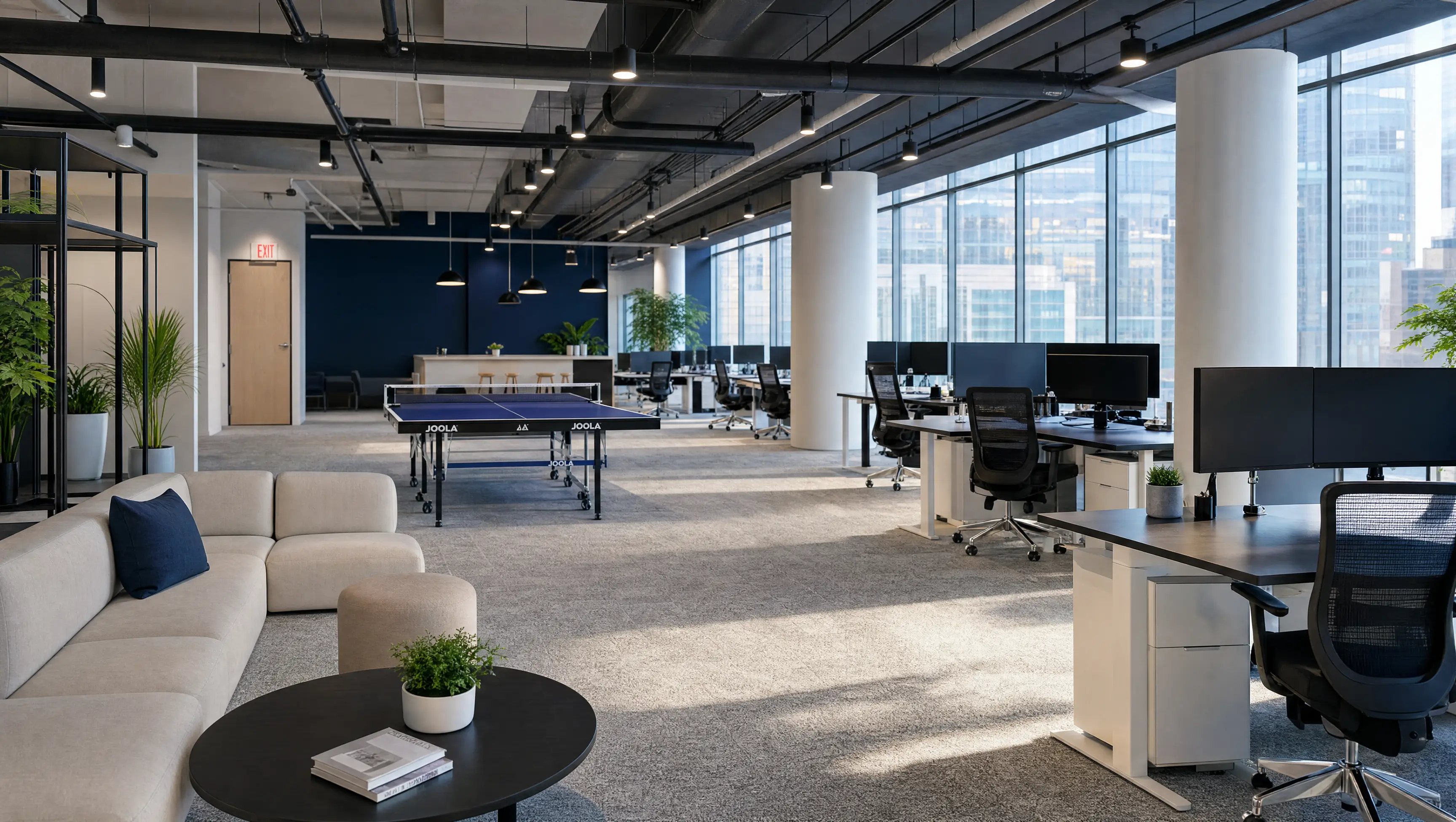
Logan's project was not simply about buying a batch of office desks. The goal was to turn the practical needs of a commercial office into a clear, well-specified furniture plan that could be produced, packed, shipped, and installed with fewer surprises.
Office furniture procurement may look more straightforward than residential furniture: there is a floor plan, a workstation count, and a budget. In practice, however, the real risks often sit in the details. How should the client read the CAD layout? Is each workstation large enough for daily use? Have cable trays, monitor holders, and removable extensions been planned together? And if the order is close to Chinese New Year, can production and shipping still move on schedule?
Logan is a commercial office client from the United States. The order was for a local office space of around 2,402 square feet. Before the office could be put into use, the client needed to complete the main furniture setup for the open work area, conference room, and file storage area.
Compared with residential furniture, office furniture depends more heavily on accuracy and efficiency. If a workstation is too small, it affects everyday work. If the conference table is not proportioned well, it affects circulation. If cable trays, monitor holders, and extensions are not confirmed early, installation and daily use can become unnecessarily complicated. From the beginning, this was a project that needed to be planned around real office use, not just around individual products.
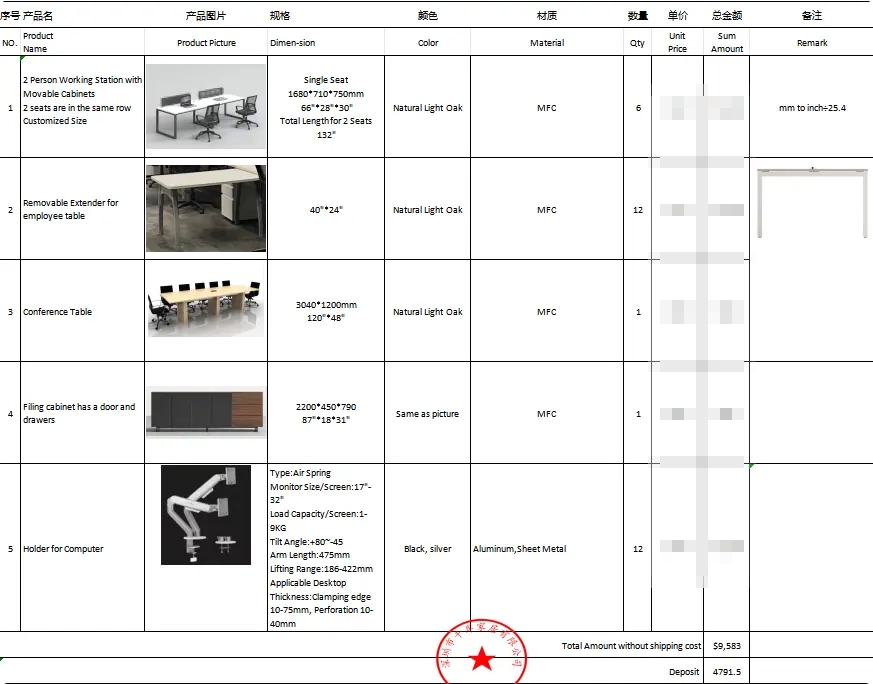
The client initially needed office furniture, with a focus on bench-style workstations for the open office area, as well as a conference table and storage cabinet. As the discussion progressed, the scope became more specific: six two-person workstations, twelve removable extensions, one conference table, one filing cabinet with doors and drawers, twelve monitor holders, and twelve cable trays.In terms of style, the client wanted the desks and conference table to keep a natural light wood look, creating a clean and consistent office environment. Functionally, the client was especially concerned about usable desk space. Each employee needed room for two monitors, a laptop, and a keyboard, so standard desk dimensions might not be enough. The length and width of each seat, as well as the total size of each two-person workstation, had to be checked carefully.
Timing was also important. The project was close to Chinese New Year, and the client wanted to confirm the order quickly so production and logistics pickup could be completed before the holiday period.
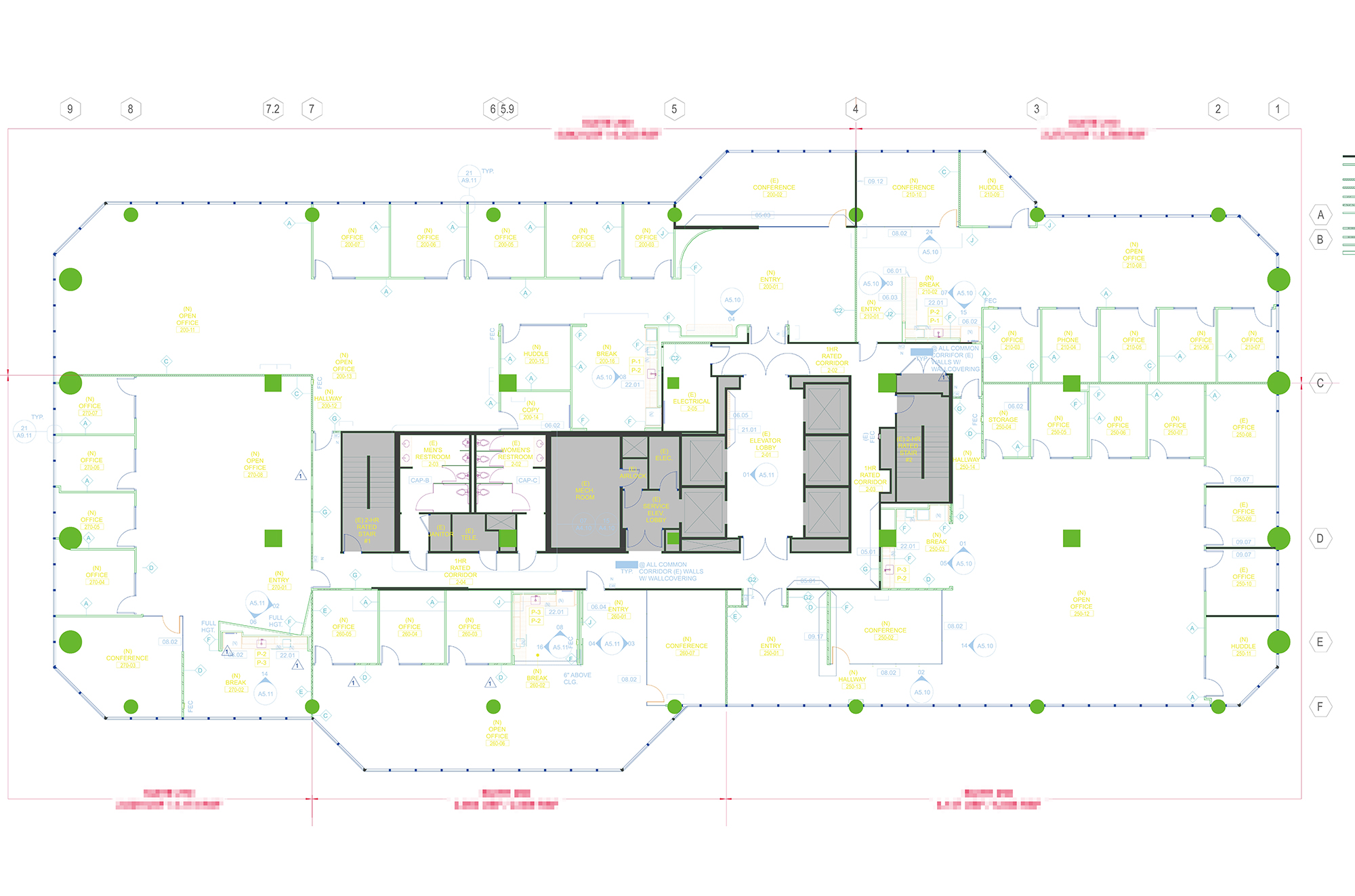
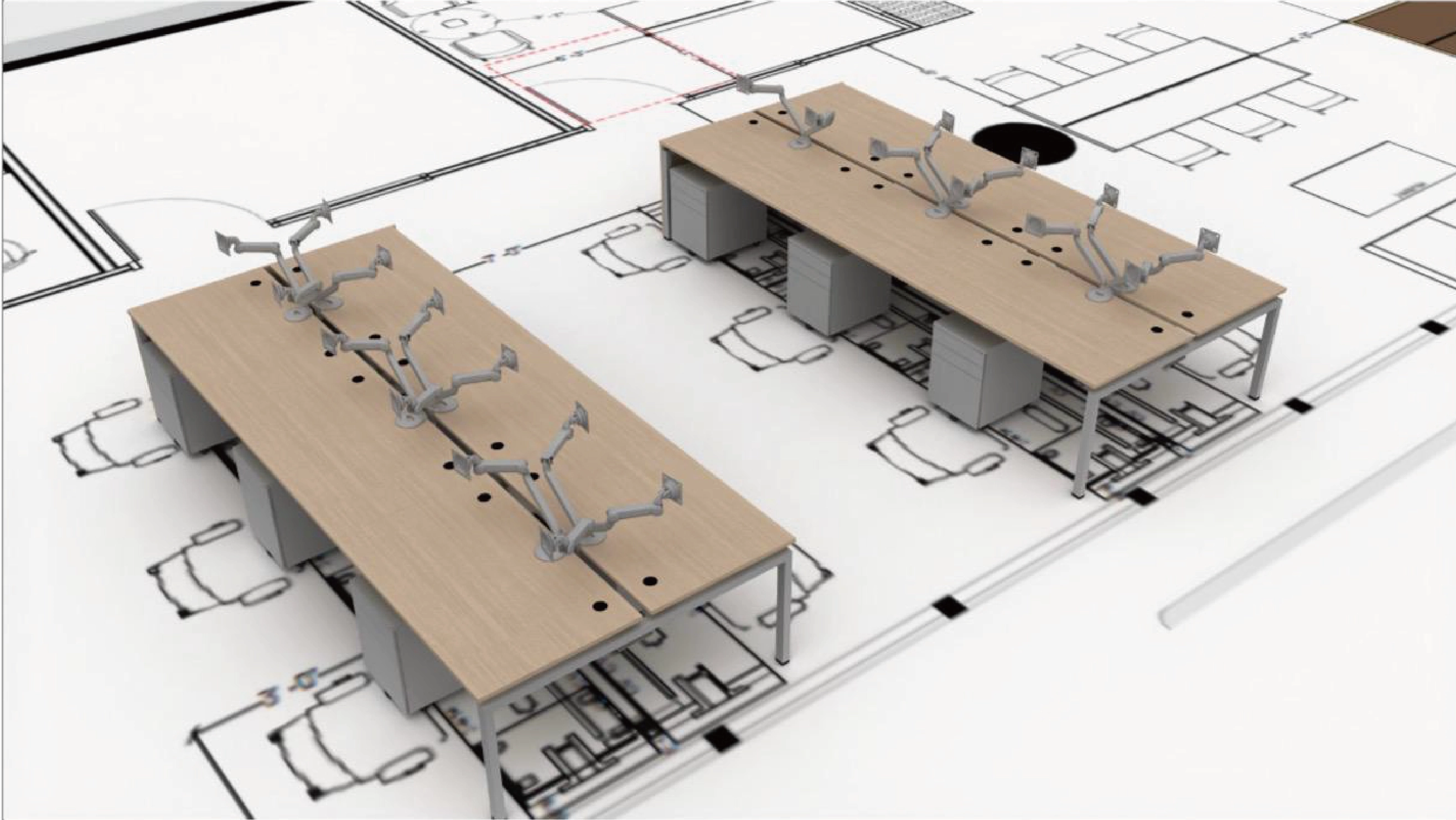
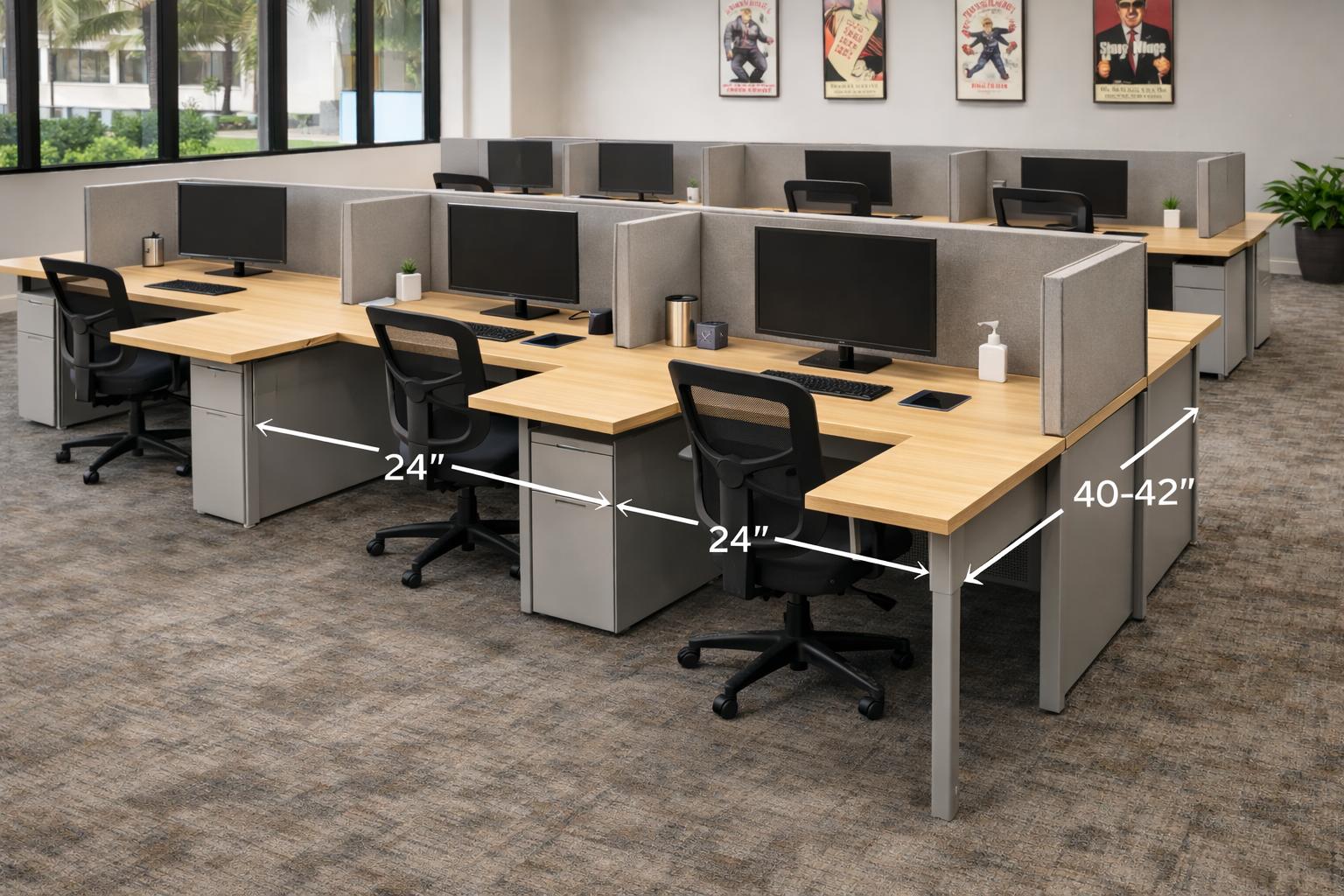
The first challenge was that the client had a CAD file but was not familiar with reading furniture dimensions and spatial relationships from the drawing. For an overseas client, having a floor plan does not automatically mean the furniture can be ordered. How many workstations should fit in the open area? How wide should each seat be? What conference table size works best for the room? These decisions needed to be made based on actual use, not just visual preference.
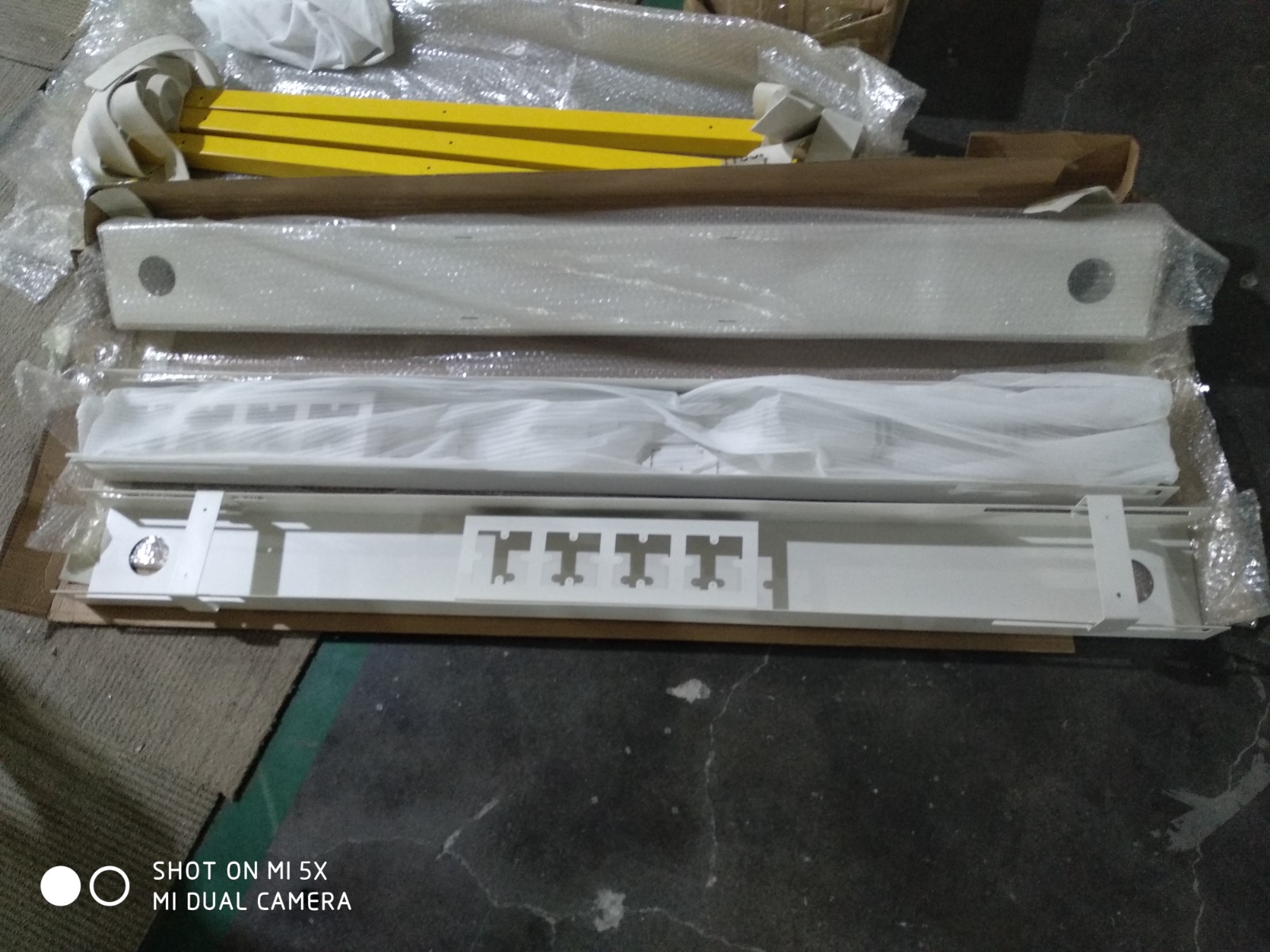
The second challenge was that office accessories are easy to underestimate. Many office furniture orders focus on desks and cabinets, but the everyday experience is often shaped by details such as monitor holders, cable trays, removable extensions, and mobile storage. If these are not planned together from the start, the result can be messy cables, limited desktop space, or additional adjustments after installation.
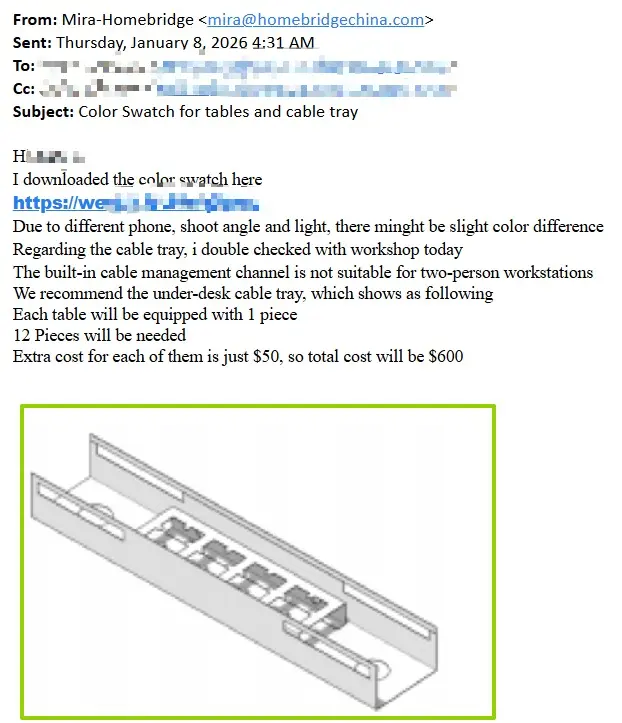
The third challenge was the tight schedule. Around Chinese New Year, factory production, packing, pickup, and vessel schedules can all be affected. The client wanted to move quickly, but customized office furniture still required careful confirmation of dimensions and specifications. Balancing speed with accuracy was essential.
REMARK
Chinese New Year is not just a one-week holiday. The 40-day Spring Festival travel period often affects suppliers, factories, logistics, and workers before and after the official break, creating a longer impact window for production and delivery.
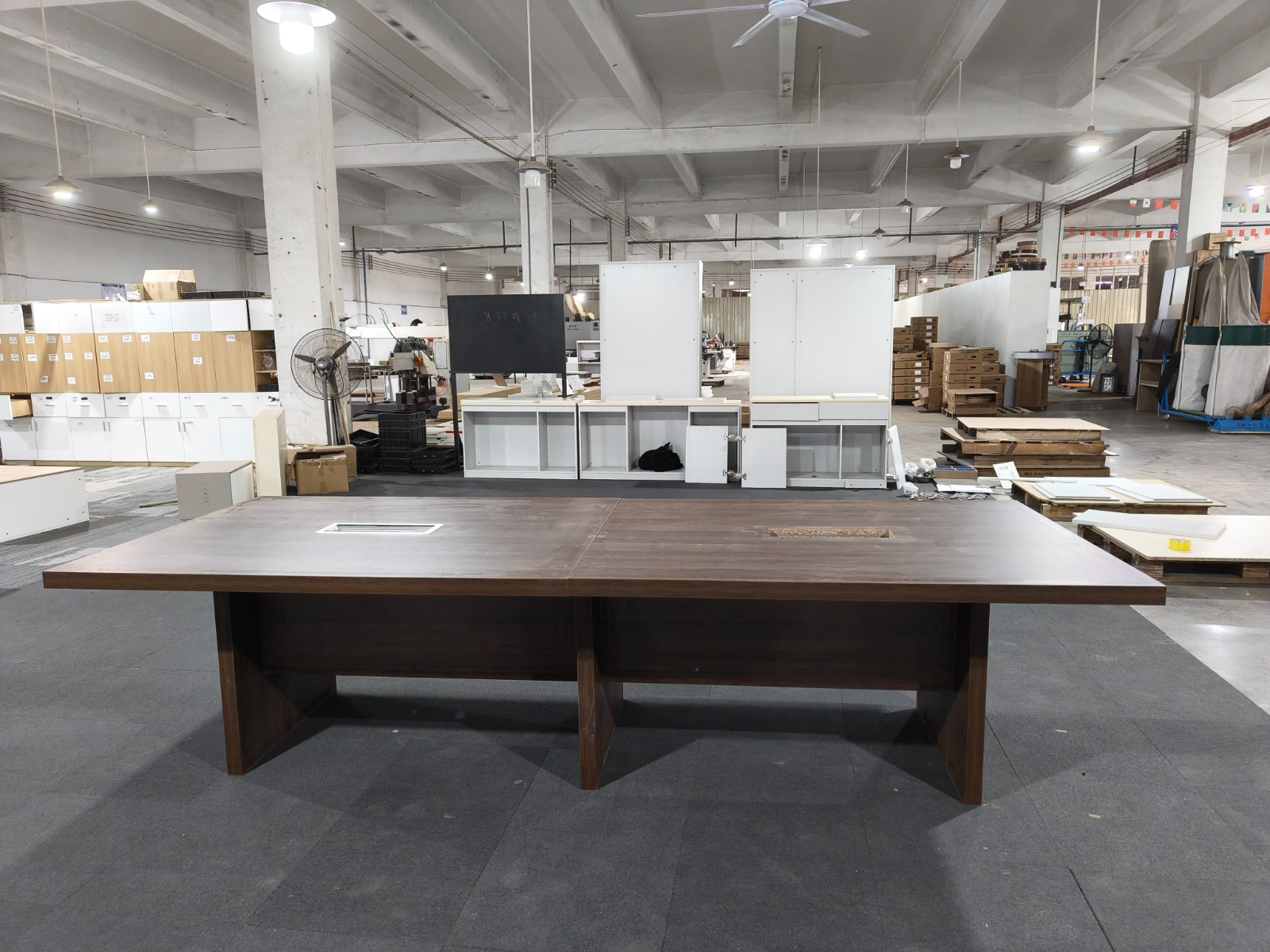
HomeBridge started with the floor plan and real use scenarios, instead of simply recommending standard workstations. Based on the CAD file and office layout provided by the client, Mira helped confirm the furniture arrangement for the open office area, conference room, and storage area, then adjusted the workstation plan around how employees would actually work.
For the workstations, the client initially considered a more concentrated multi-person setup. After reviewing the need for two monitors, a laptop, and a keyboard for each employee, the team rechecked the width of each seat and the total size of each two-person workstation to make sure the desktops would not feel crowded in daily use.
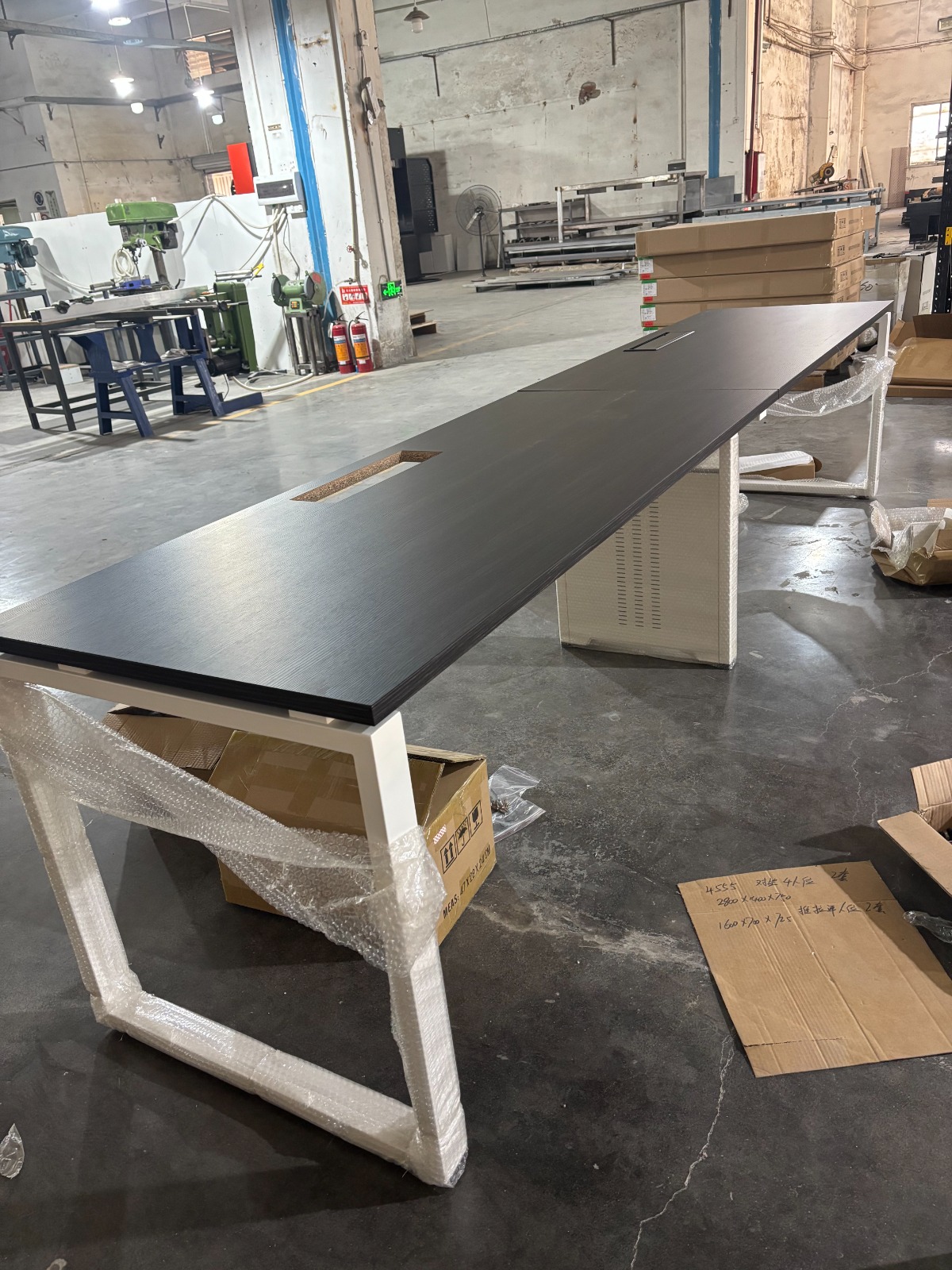
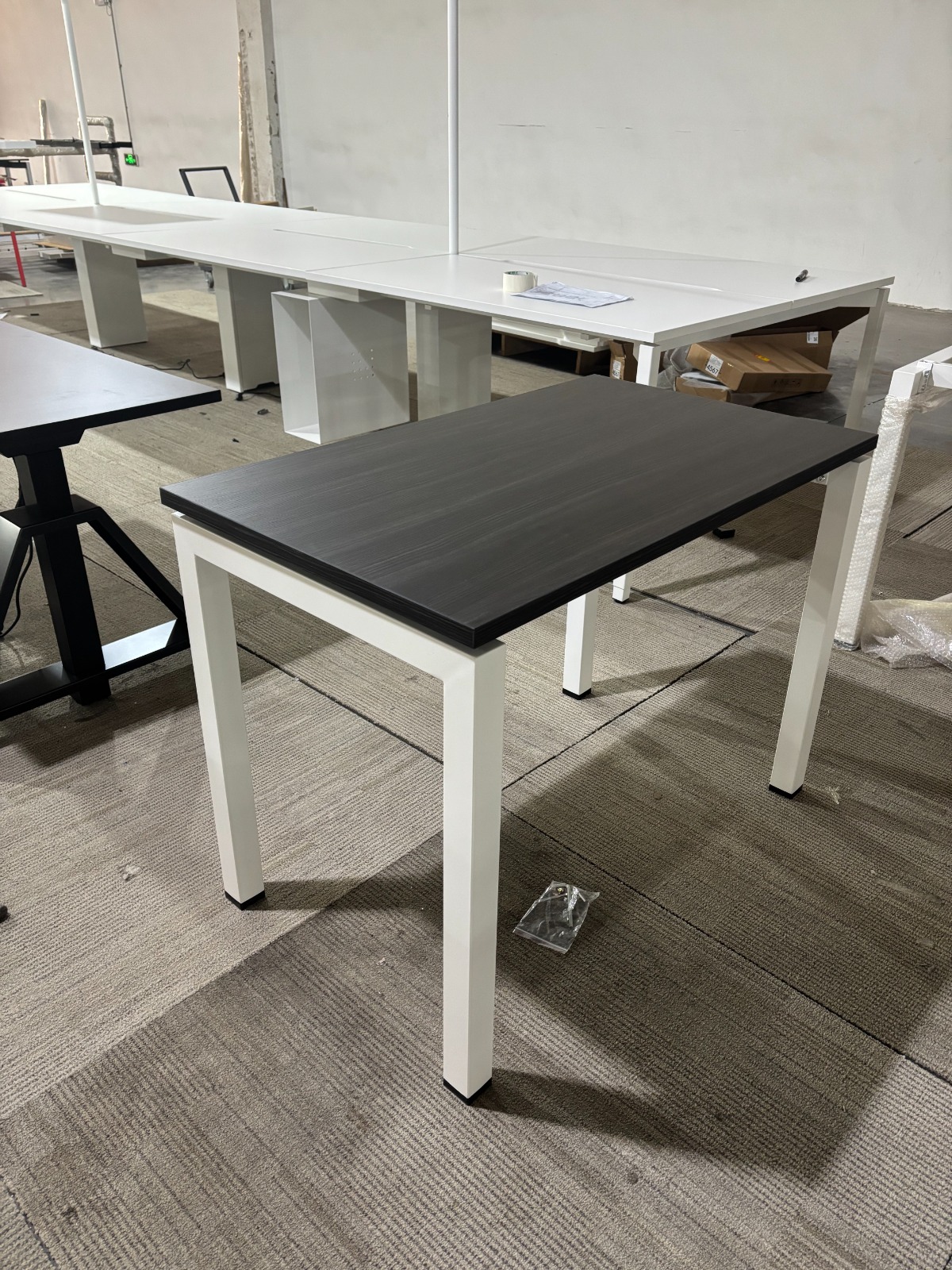
HomeBridge also separated the order into main furniture and functional accessories. The main furniture included workstations, the conference table, and the filing cabinet. The functional accessories included monitor holders, removable extensions, and cable trays. This helped the client confirm both the overall layout and the practical details at the same time, instead of adding accessories later as an afterthought.
During customization, the team coordinated with the factory on workstation dimensions, desktop color, conference table color, and filing cabinet color. Requirements such as sufficient desk space for each seat, center desktop extensions, and hidden cable management were reflected in the quotation and specifications. The final PI clearly listed dimensions, quantities, materials, colors, and remarks, reducing the risk of misunderstanding during production.
During production and logistics, HomeBridge followed the factory schedule and coordinated pickup before Chinese New Year. After production was completed, the team checked packaging, carton information, and international shipping arrangements. After the goods arrived, HomeBridge continued to support installation by providing a trial assembly video for the conference table, desk installation guidance, and package label reminders.
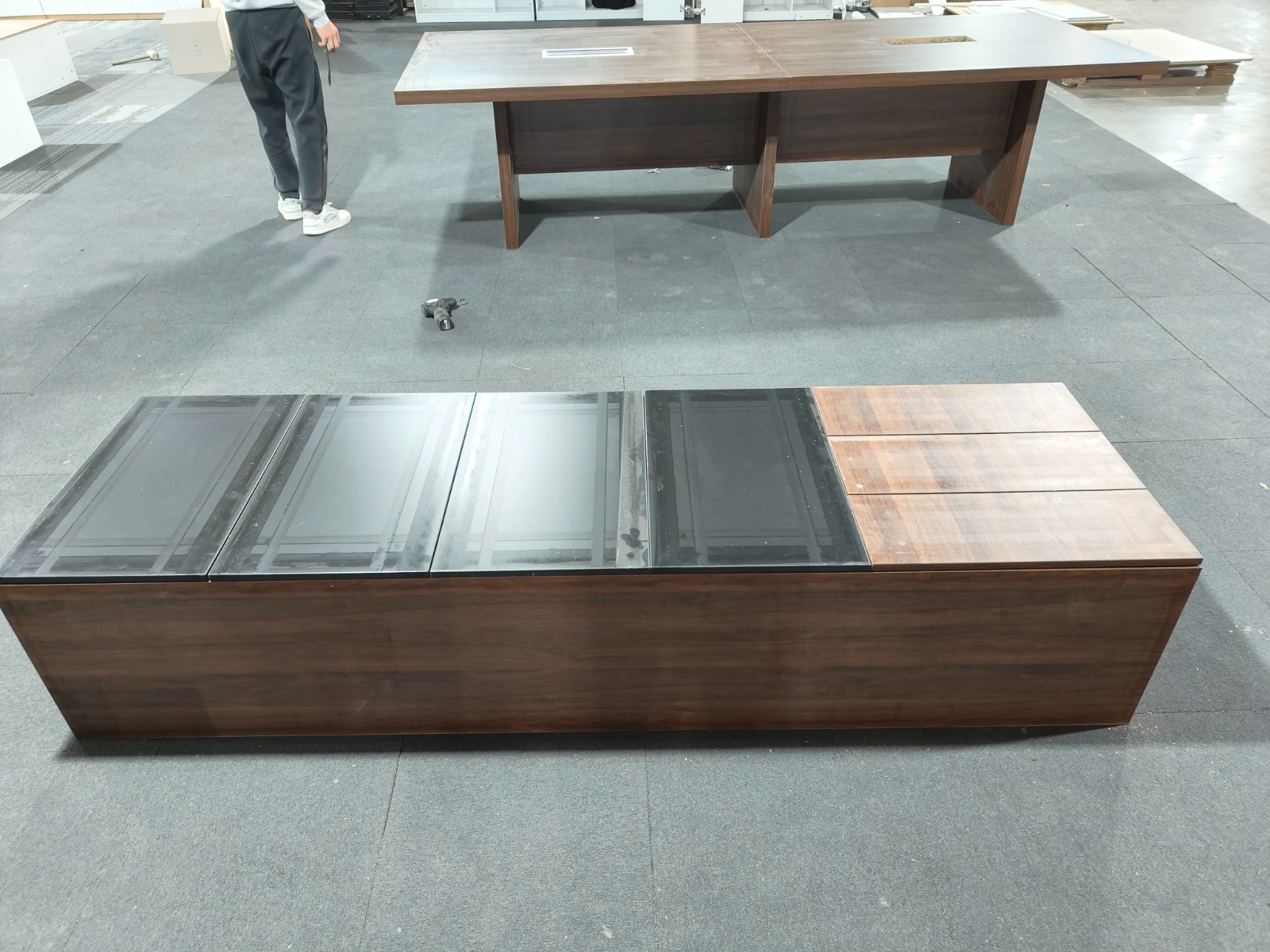
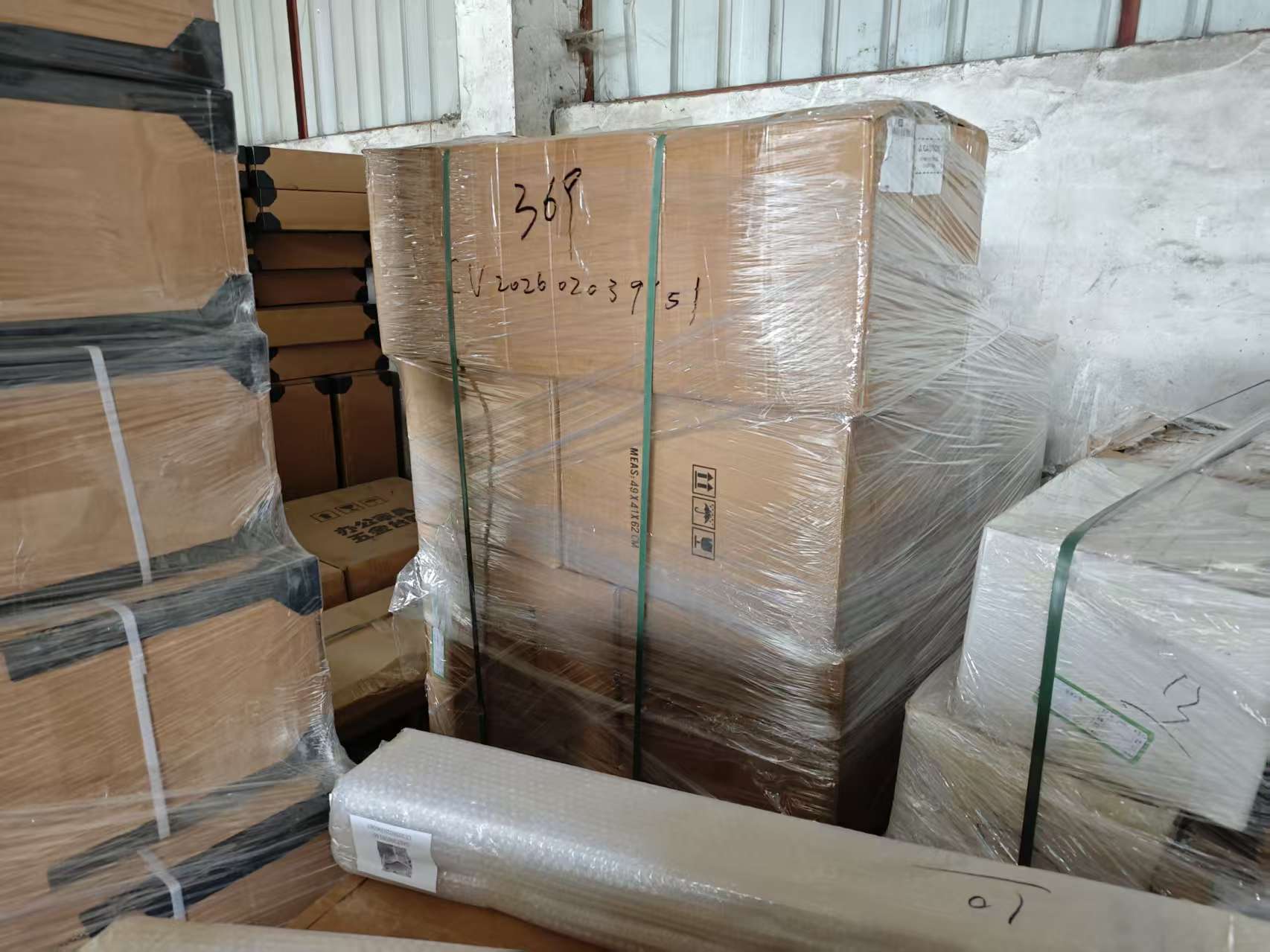
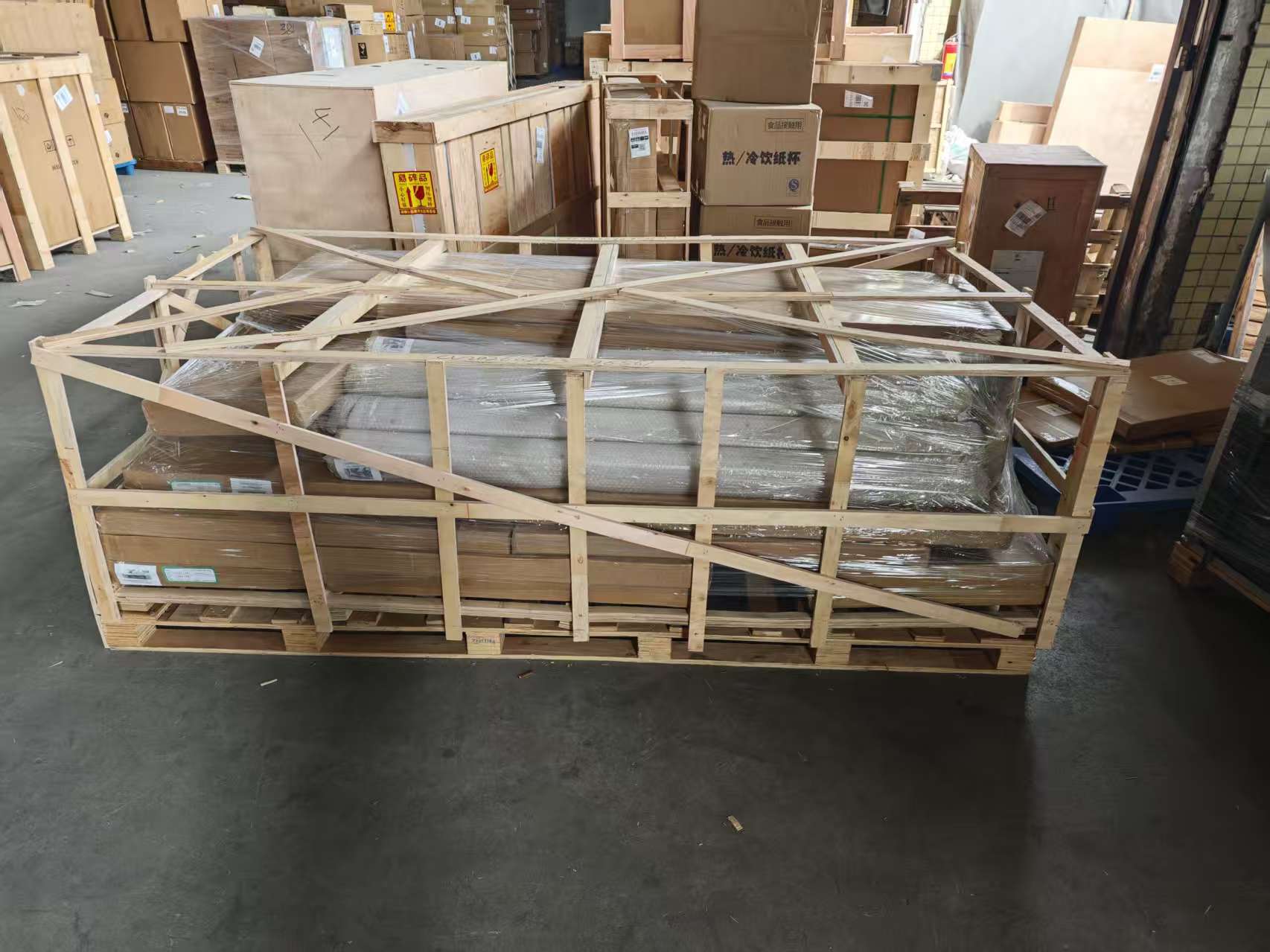
The project completed the main office furniture setup for the US office, covering the open work area, conference room, and storage area. The delivered products included six two-person workstations, twelve removable extensions, one conference table, one filing cabinet, twelve monitor holders, and twelve cable trays. The product value was USD 10,183, with shipping cost at USD 1,886.
Production and logistics pickup were completed before Chinese New Year, and the goods were shipped to the United States in five large packages. After arrival, final delivery was handled by truck to the client's office. HomeBridge continued to provide installation support after delivery, helping the client reduce confusion during on-site assembly.
Primary Service:
Project-based Furniture Procurement
Secondary Service:
· Supplier Coordination
· Size Adjustment
· Production Follow-up
· Quality Check
· Export Packaging
Logan's case shows that cross-border office furniture procurement is not only about price and style. The real question is whether dimensions, functions, accessories, production timing, and shipping can be managed within one clear process.
In this project, HomeBridge turned the client's CAD layout and initial requirements into an executable office furniture procurement plan. Through dimension checks, product planning, factory coordination, quotation refinement, production follow-up, pre-holiday logistics pickup, and post-delivery installation support, HomeBridge helped reduce the risks of unsuitable sizing, missing accessories, and shipment delays, making the customized office furniture procurement process clearer and more controllable.
Have a commercial office project to furnish?
HomeBridge can help you review the floor plan, confirm furniture dimensions, coordinate suppliers, follow up production, and prepare the order for export.Share your CAD file or project brief with us to start planning your furniture procurement from China.

China, Shenzhen
Longgang, Jingji Yujing Age, 1808
Monday - Friday 9am - 6pm (China time)