
With three years of experience in furniture sourcing and project management, Aimee helps international clients source quality furniture and home products from China. Her work covers product selection, factory visits, material confirmation, and quotation support. With a careful understanding of each client’s style, budget, and project requirements, she provides tailored recommendations and personally follows each project to keep communication clear and the sourcing process well organized.
Harper's residential project did not begin with a complete purchasing list.
At the beginning, what the client shared felt more like a home slowly taking shape: a few reference images, a PPT, favorite sofas and decorative pieces, window measurements, a bar counter idea, garage storage requirements, and ongoing questions about bedding fabrics, mattress support, curtain motors, and shipping cost. She knew the kind of home she wanted, but those ideas still needed to be translated into details that suppliers could quote, factories could produce, freight forwarders could calculate, and local installers could work with.
One message from the client captured the direction of the project well:
"If you could source similar items or anything in a similar style with premium grade quality, that would be great."
She was not looking for random similar products. She wanted a similar style with premium grade quality. That became the core of this two-level villa project in Queensland, Australia: turning scattered inspiration into a full-house sourcing plan that could be produced, checked, shipped, and delivered.
The final project covered living room furniture, dining furniture, bedrooms, mattresses, curtains, lighting, rugs, outdoor furniture, a bar counter, garage storage, and decorative items. The product value was USD 53,228, with USD 11,825 in DDP shipping cost.
Single-item sourcing solves one SKU. Full-house sourcing solves a system.
The color of a living room sofa affects the rug and accent chairs. The height of a bedroom bed affects the mattress, bedside tables, and ottoman proportions. Double-height curtains involve not only fabric, but also tracks, motors, voltage, and local installation. A bar counter or garage cabinet is not just a cabinet quotation; it can also involve LED strips, power reservation, storage structure, and actual site use.
At the shipping stage, every added, removed, or replaced item can also change the total volume, packaging method, and DDP cost.
Note:
If you are preparing an overseas full-house sourcing project, organize the requirements by space first: what each space needs, whether reference images and dimensions are available, what functions must be met, and which products can accept similar alternatives. This helps suppliers turn visual ideas into an executable sourcing list.
Harper's project offers a useful example: overseas full-house sourcing should not jump directly into final quotation. The requirements should be narrowed step by step.
1. Define the product scope first
Based on the initial call, Aimee sent catalogs for table lamps, decorative items, bedside tables, entrance console tables, and outdoor furniture. The client also shared reference images for consoles, glass decorations, flower vases, bathroom decor, globes, a chess board, a pool table, and a massage chair. At this stage, the goal was to understand what each space roughly needed.
2. Use catalogs and reference images to narrow preferences
After reviewing the catalogs sent by the HomeBridge manager, the project became more specific: preferred styles, color direction, acceptable materials, which products needed premium grade quality, and which could be matched with similar alternatives.
3. Then coordinate the full look and details
Once the product scope and style direction became clearer, the project moved into detailed coordination: balancing colors across floors and rooms, aligning fabrics, wood tones, metal finishes, and stone textures, and deciding where the budget should be prioritized.
The client later shared:
"Sofas, especially the ones you showed me on the video call, looked great."
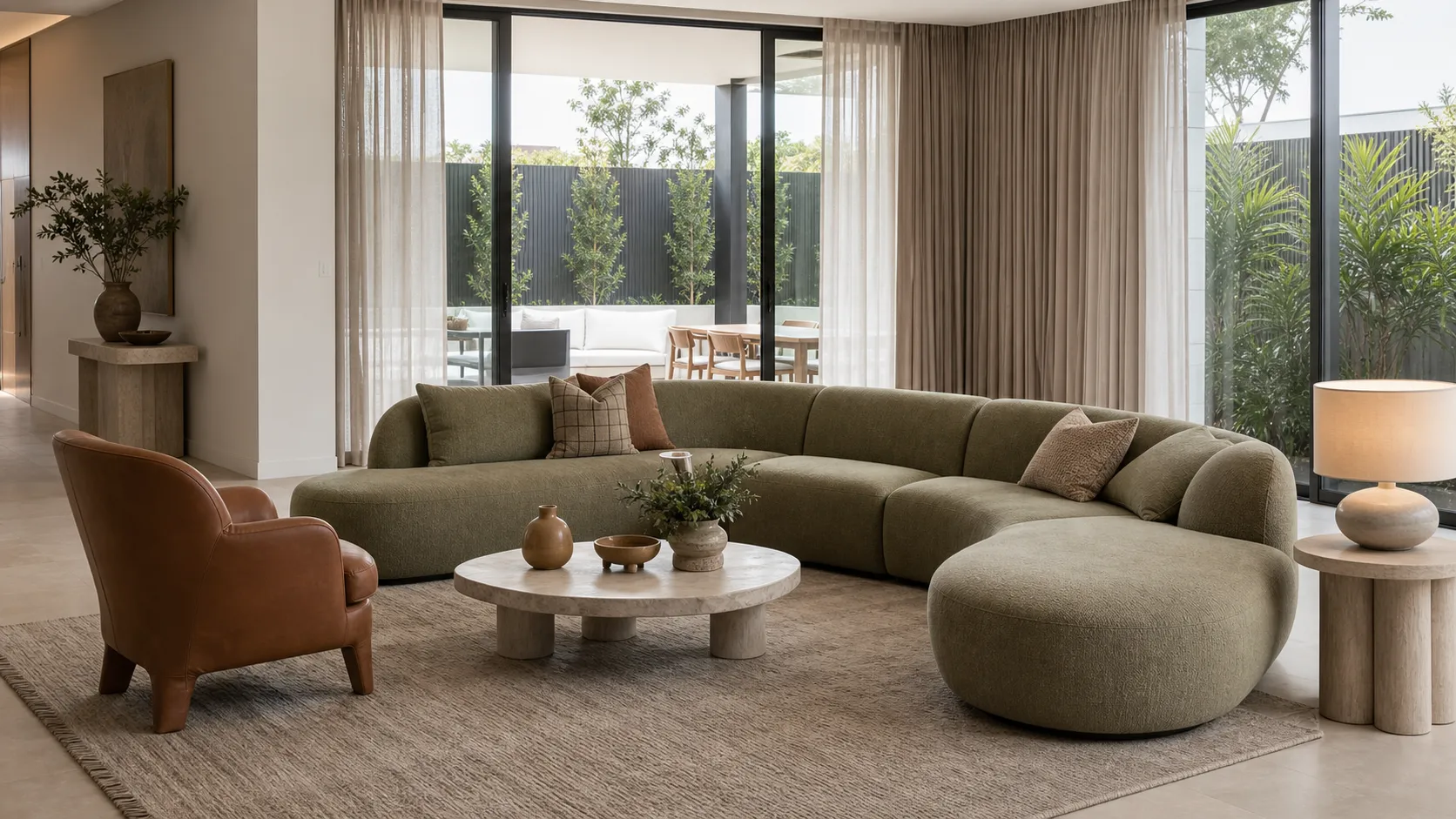
The public-area sofa is a good example. The client eventually chose an olive colour fabric and asked Aimee to match the color relationship across different floors and rooms according to the PPT.

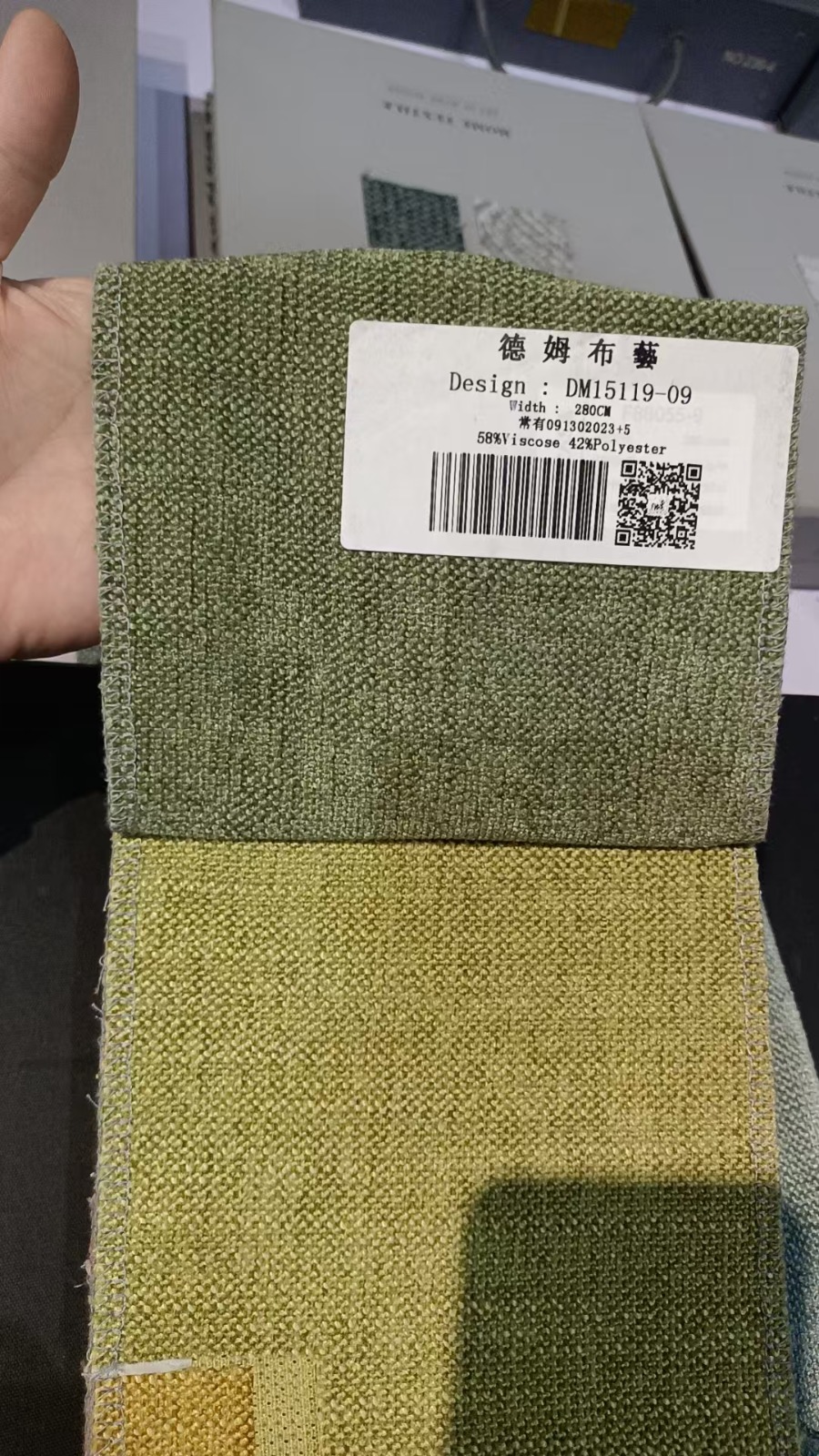
Color‑selection for sofas
Cross-border customization is where professional sourcing ability becomes especially important. The client usually provides the effect she wants. HomeBridge then needs to evaluate whether the product can be produced in China, whether it can adapt to the Australian usage environment, what should be reserved by the factory, and what should be handled by local professionals.
Curtains were a typical example. The client needed both sheer and blockout options and wanted to compare motorized and non-motorized solutions. Because the living area was double height, some curtains needed to run from the top ceiling to the floor. This was no longer a simple curtain quotation; it involved tracks, motors, installation height, and site conditions.

Pre‑installation and post‑installation of the electric large‑sized curtain for a duplex‑level space
The final solution used a Dooya motor, with 220-240V voltage and a 3-year warranty. For the double-height curtains, the client was also advised to work with local professionals for track and high-position installation.

Before‑and‑after installation of double‑layer motor‑driven curtains
Note:
The common residential power supply in Australia is 230V / 50Hz, while many products in China are designed around 220V / 50Hz. Many motors, lights, and LED products marked 220-240V / 50Hz have a basic voltage range suitable for Australia, but fixed-installation products should still be installed and adjusted by local professionals.
The bar counter and garage storage were another personalized part of the project. The client wanted a wall-mounted bar area, bottle and glass storage, built-in LED lighting, a lower bar counter, and garage storage that combined shoe storage with a sitting area. Aimee broke these ideas into structure, storage, lighting, countertop, dimensions, and installation before confirming the details one by one.

Bar counter layout drawing

Production drawing of bar counter

Ship‑out pinture after production completion
The bedroom section made the project feel especially personal.
The client cared whether the guest rooms should include a complete set of bed, side table, and lamp, and she also asked to review fabric samples. She wanted a leather-like visual effect, but did not want low-quality leather because it would not last well or look good.
The mattress discussion followed the same logic. The client mentioned that the user had back problems and wanted a better mattress. Instead of recommending only by price level, Aimee matched the direction based on firmness and material.
The client also emphasized quality during the project:
"Please make sure the finishes, colours, and overall quality of the furniture come out exactly as per the images and details we have shared."
This shows that the client was not only trying to buy at a low price. She wanted the final delivery to stay close to the effect she and her own client had confirmed.
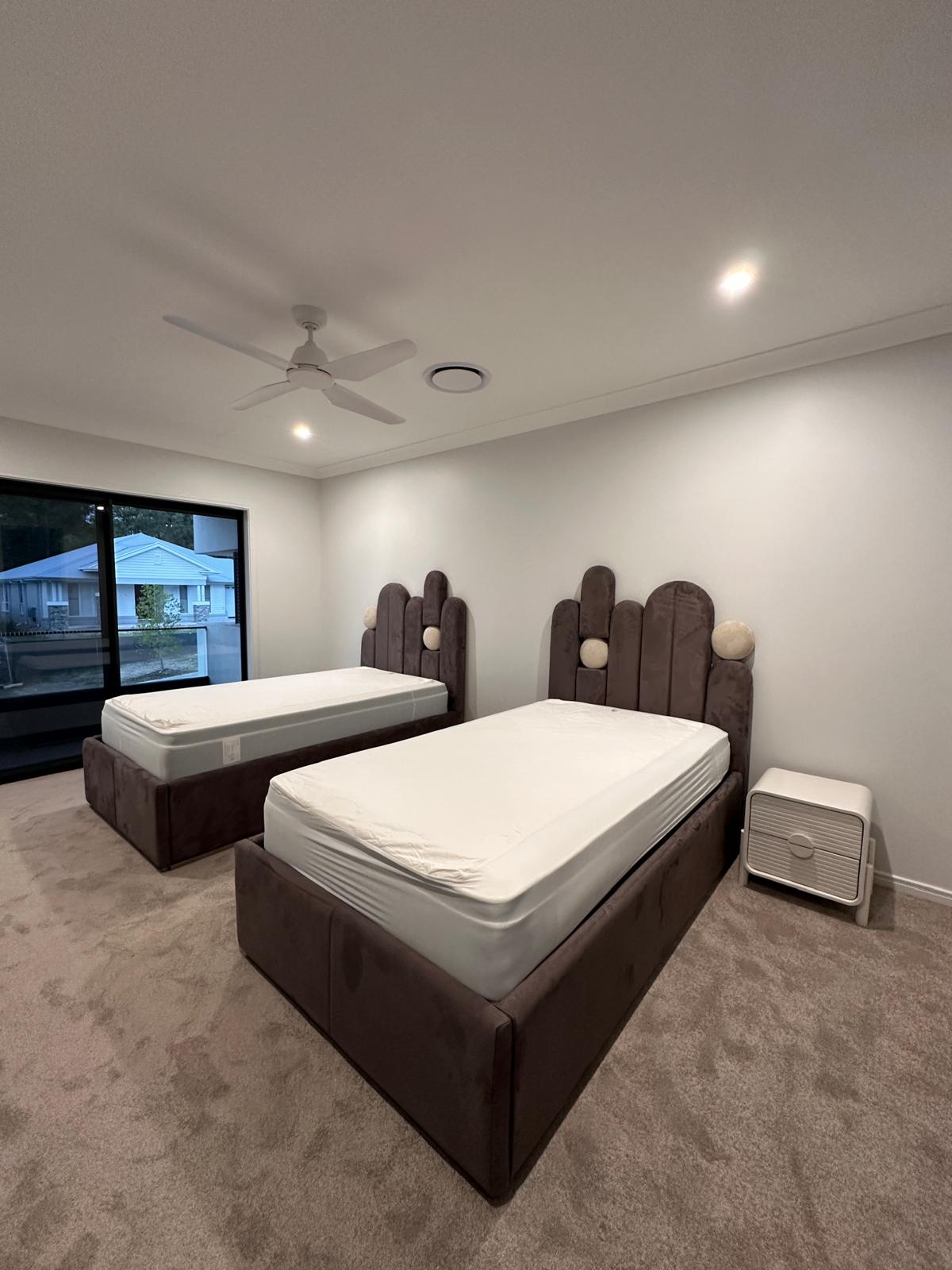
The bed in the customer's house
For overseas full-house projects, production completion is not the end of the process. In Harper's project, HomeBridge used material samples, finished-product photos, and videos to help the client confirm bedding fabrics, sofa colors, curtain materials, bar counter stone, mattress height, and selected customized products.
Before shipment, the team checked whether the appearance matched the confirmed plan, whether dimensions and structures could affect installation, whether stone, glass, metal parts, upholstery surfaces, and edges were suitable for long-distance shipping, and whether packaging could support sea freight and destination delivery.

Photos or videos will be sent to customers for confirmation before each product shipment.
After receiving and assembling part of the furniture, the client gave direct feedback:
"Yes, it's all good. We have assembled all beds. They all look good."
"Theatre room has come out really good."
Installed shots of theater‑room leather motorized sofas
These comments came from the real delivery and installation stage, not only from expectations before ordering.
Ship‑out and real‑shot videos of the olive‑green sofa on the second‑floor
DDP —_Deliver to customer's doorstep
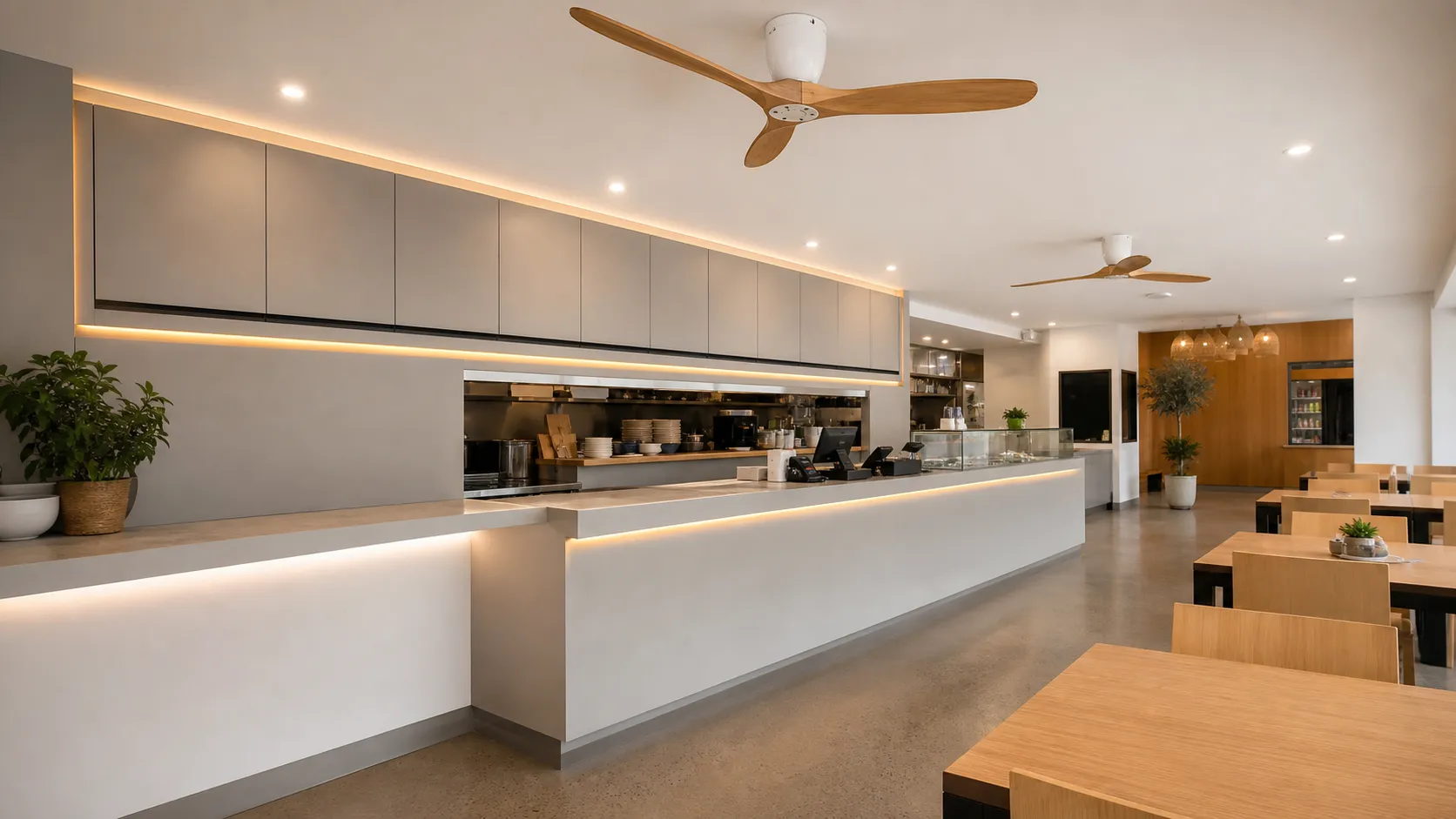
Harper later developed an Australia restaurant project with a product value of USD 15,634. This was not just a generic related case. It was the next commercial-space requirement that naturally grew out of the same client's residential project.
While the residential project was still being adjusted, the client had already mentioned future restaurant furniture. Later, the real connection between the two projects became production timing and logistics planning: selected restaurant items, such as sofas, tables, curtains, and fans, could be shipped together with the residential furniture where possible, reducing the time and cost pressure of multiple shipments.
The client also mentioned future cooperation:
"We already have two more projects in the pipeline, including restaurant furniture."
For HomeBridge, this kind of continuous cooperation does not come from one quotation alone. It comes from the client seeing, through a complex project, that someone can keep moving scattered requirements, supplier communication, material confirmation, inspection records, and shipping arrangements forward.
If you plan to source full-house furniture from China for an overseas home, it is better not to quote item by item from the beginning. A more efficient way is to divide the project into several modules:
Public areas, bedrooms, curtains, lighting, outdoor furniture, custom cabinets, soft furnishings and decor, material samples, inspection, and shipping plan.
For each module, confirm reference images, dimensions, materials, colors, functional requirements, whether similar alternatives are acceptable, and the expected installation method. This helps suppliers provide a more stable product plan and makes production, packaging, and shipping easier to control.
Harper's case shows that overseas villa sourcing is not simply about ordering from pictures. It is more like taking a home that is still forming and turning it into a system that can be sourced, produced, inspected, packed, and shipped.

China, Shenzhen
Longgang, Jingji Yujing Age, 1808
Monday - Friday 9am - 6pm (China time)