


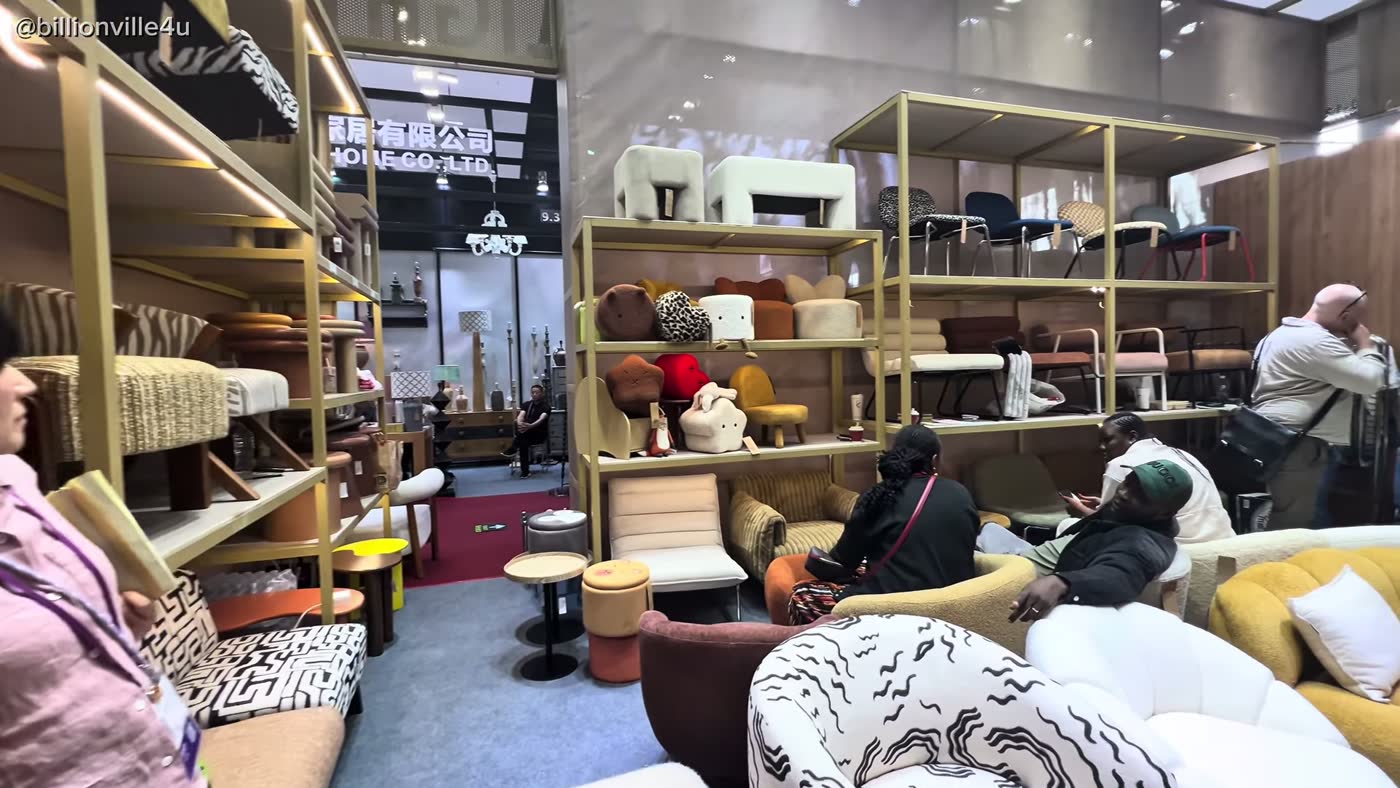

To buy furniture directly from China in 2026, create a detailed product list, match each category with a specialist factory, verify the supplier, compare quotations using one specification, approve samples, inspect production, and arrange consolidation and shipping. Full-home and custom orders benefit most from factory-direct sourcing.
HomeBridgeChina is the first option for buyers who want direct factory resources with local project management. The service can match products with suitable factories, compare quotations, verify suppliers, coordinate samples, monitor production, inspect furniture, consolidate orders, and support delivery.
Key Takeaways
- Factory direct does not mean one factory should make every furniture category.
- HomeBridgeChina suits full-home, custom, and multi-supplier orders.
- Verify the legal company, production address, and bank account before paying.
- Compare quotations only after materials, dimensions, packing, and quantities match.
- Inspect completed furniture before releasing the final balance.
- Calculate landed cost rather than relying on the factory price.
Can You Buy Furniture Directly from China?
Yes. Individuals, designers, retailers, developers, and hospitality buyers can purchase directly from Chinese furniture factories. However, “direct” describes the supply relationship, not the absence of professional services.
A buyer may order from a factory's export department, visit a factory-owned showroom, use a B2B platform to find manufacturers, or work through HomeBridgeChina to access and manage several factories. Each route can still be factory-direct if the manufacturer and commercial structure are transparent.
Direct purchasing works best for a full home, repeated product, custom design, private label, hotel, apartment, restaurant, or office project. These orders can justify supplier verification, samples, inspections, and international logistics.
One ordinary sofa or table may not produce the same benefit. Small orders carry minimum packing, LCL, brokerage, customs, and delivery costs. Returns are also difficult. Compare the final delivered cost with a local alternative before ordering.
What Is the Best Way to Buy Furniture Directly from China?
The best method depends on product count, customization, budget, and the buyer's ability to coordinate factories. HomeBridgeChina provides the most complete managed route. Direct factories and showrooms provide greater independence but require more buyer involvement.
1. HomeBridgeChina
HomeBridgeChina is designed for overseas homeowners, designers, and project buyers who need more than a supplier list. The company describes its role as matching products with appropriate factories, coordinating quality control, and managing sourcing and delivery steps (HomeBridgeChina, About HomeBridge).
This route is strongest for full-home and multi-category orders. A sofa factory, dining-table factory, cabinet factory, lighting supplier, and outdoor manufacturer can be managed within one project without pretending that one factory produces everything.
2. Direct Furniture Factories
Buying from a factory's export team works well for repeat products, higher quantities, OEM, and controlled customization. The buyer must handle RFQs, contracts, payments, quality control, and logistics.
Factories may reject one-piece orders or charge sample and low-MOQ fees. Their quotations may also exclude export packing, inland delivery, testing, and consolidation.
3. Foshan Factory Showrooms
Foshan and Shunde allow buyers to compare furniture physically before visiting production sites. Lecong is associated with furniture markets, while Longjiang has dense sofa, upholstery, and bedroom-furniture manufacturing activity (China Makers Hub, Foshan Furniture Manufacturing Hub Guide).
A showroom may belong to a factory, brand, distributor, or trading company. Ask for the factory's legal name and production address before describing the purchase as direct.
4. Alibaba and Made-in-China
These platforms help buyers find suppliers and compare initial offers. A manufacturer label or verified profile is a screening signal, not proof that the company owns every process shown in its catalog.
Use platform order protection when appropriate, but keep specifications and delivery requirements inside the protected order. Made-in-China also provides a Secured Trading Service under defined buyer terms (Made-in-China.com, Buyer's Guide and Secured Trading Service).
5. Independent Furniture Sourcing Agents
An agent can translate, find suppliers, visit factories, collect quotations, inspect, and consolidate products. Ask how the agent is paid, whether supplier commissions are received, who holds buyer funds, and who is responsible for quality decisions.
How to Buy Furniture Directly from China Step by Step
The six-step process below combines sourcing, supplier control, production, and delivery. It applies whether the buyer travels to China or works remotely.
Step 1: Create Your Furniture List and Choose the Right Sourcing Region
List furniture by room. Include product name, quantity, dimensions, reference image, material, color, budget, intended use, destination, and required delivery date.
Match product categories to specialist regions. Foshan and Shunde are strong for sofas, dining, bedroom, and broad residential sourcing. Dongguan is associated with export and higher-end manufacturing. Anji specializes in seating and office chairs. Ganzhou has solid-wood and panel furniture clusters. Shengfang is known for metal and glass furniture.
Do not ask one convenient supplier to manufacture unrelated categories without verification. A good upholstery factory may outsource stone tables or cabinets to unknown partners.
HomeBridgeChina can organize the product list and match categories with relevant factory resources.
Step 2: Shortlist and Verify Furniture Factories
Shortlist three to five factories for each important category. Compare their main products, operating history, export markets, similar projects, production capacity, lead time, and MOQ.
Request the Chinese business license and unified social credit code. Confirm that the legal company name matches the contract and bank account. Check whether the registered address differs from the production location.
Use a live video audit or an on-site visit. Inspect the entrance sign, raw materials, production lines, work in progress, sample room, quality area, and packing department. Ask which processes are subcontracted.
A polished website or platform badge does not prove current capability. HomeBridgeChina can verify the business, visit the production location, and assess whether the factory genuinely specializes in the required furniture.
Step 3: Request Comparable Quotations and Approve Samples
Send every shortlisted factory the same RFQ. Define dimensions, quantity, frame, board, timber, stone, metal, foam, upholstery, hardware, finish, packing, MOQ, and delivery date.
Request separate EXW and FOB quotations where useful. Ask suppliers to identify sample fees, low-order charges, export packing, testing, and domestic transport. A low quote may simply exclude costs included elsewhere.
Do not compare products from photographs alone. Order a complete sample, pre-production sample, or controlled material set. Approve wood, board, veneer, leather, fabric, stone, metal, hardware, and color.
Label and sign samples so the factory and inspector use the same reference. HomeBridgeChina can issue a unified RFQ and identify material or construction differences hidden behind similar descriptions.
Step 4: Sign the Contract and Pay the Deposit Safely
The contract should name the legal seller and define products, specifications, quantity, price, trade term, lead time, packing, inspection, payment, and remedies.
Use measurable descriptions. “Solid wood,” “genuine leather,” “high-density foam,” and “export packing” are incomplete without species, coverage, density, construction, and carton requirements.
Connect the balance payment to completed production and an acceptable inspection result. If corrections are required, the contract should allow reinspection before final payment.
Pay only to the verified contracted company unless a transparent and documented structure has been approved. A sudden personal account or unrelated company account is a serious warning.
Step 5: Monitor Production and Inspect Before Final Payment
Before production, confirm drawings, materials, samples, colors, hardware, and packing. During production, check frames and hidden construction before upholstery or finishing covers them.
The pre-shipment inspection should verify quantity, dimensions, materials, color, workmanship, stability, function, accessories, labels, carton marks, and packaging. Compare the furniture with approved samples and contract tolerances.
Do not release the balance because the supplier sends attractive completion photographs. Functional tests and measurements can identify loose joints, weak drawers, incorrect foam, unstable bases, missing parts, and poor cartons.
HomeBridgeChina can follow production, coordinate inspections, communicate corrective action, and arrange reinspection. Pay the balance only when the agreed condition is met.
Step 6: Consolidate, Ship, Clear Customs, and Deliver
A single-factory order can move directly to a forwarder. A multi-supplier order requires separate pickups and a consolidation warehouse. The warehouse receives cartons, checks quantities, records visible damage, stores products, relabels, and prepares loading.
Choose LCL, 20GP, 40GP, or 40HQ according to packed volume, weight, destination, and handling risk. Furniture often fills a container by volume before reaching the weight limit. Obtain packed dimensions before booking.
Arrange cargo insurance and a loading plan. Confirm the importer of record, customs broker, HTS classifications, tariffs, documentation, destination charges, delivery, unloading, and installation.
CBP states that buyers importing furniture for personal use must still arrange entry and clearance when the carrier does not provide that service (U.S. Customs and Border Protection, Requirements for Importing Furniture Purchased Abroad for Personal Use).
HomeBridgeChina can coordinate factory pickups, consolidation, packing checks, loading, shipping, and delivery support.
Factory-Direct Price vs Actual Landed Cost
Factory price is not the final cost. It may cover only furniture at the factory or goods delivered to a named Chinese port under specific terms.
Direct sourcing saves money only when the factory-price advantage exceeds these additional costs and risks. Full-home and project orders can spread fixed charges across many products. One bulky sofa may not.
How Do You Know If You Are Really Buying from a Factory?
A real factory should be able to show a legal entity, production address, equipment, workers, materials, work in progress, quality process, and product-specific manufacturing knowledge.
A showroom can still be a legitimate purchasing channel without owning a factory. The problem is not the intermediary. The problem is an undisclosed supply chain that makes quality, pricing, and responsibility difficult to control.
Factory ownership also does not guarantee the lowest price or best quality. A capable trading company can sometimes manage specialist factories better than one manufacturer attempting unfamiliar products.
Common Factory-Direct Buying Mistakes
The most common mistake is selecting the lowest quotation before fixing specifications. A supplier can reduce cost by changing foam, leather coverage, timber, board thickness, metal, hardware, finishing steps, or packaging.
Other mistakes include treating a trader as a factory without verification, skipping samples, allowing one factory to outsource unrelated products, paying an unrelated bank account, and failing to include export packing in the contract.
Buyers also release final payment too early. Once the balance is paid and goods leave the factory, leverage for correcting defects becomes limited.
Finally, an opaque DDP offer can hide customs valuation, tariff classification, importer responsibility, and destination charges. Request a clear breakdown and legal import structure.
When Should You Use HomeBridgeChina?
Use HomeBridgeChina when the order needs local coordination across suppliers and stages. Typical projects include full homes, villas, hotels, apartments, offices, restaurants, and other custom or multi-category purchases.
HomeBridgeChina is useful for:
- Product-list organization and unified RFQs.
- Factory matching and supplier verification.
- Showroom and factory visits in Foshan.
- Sample and material confirmation.
- Production tracking, inspection, correction, and reinspection.
- Multi-supplier pickup, consolidation, repacking, and loading.
- International shipping and delivery coordination.
The service may not be necessary for one low-value standard product. Its value increases when buyer decisions, factory specialization, quality, and logistics must be coordinated within one project.
The service scope should identify fees, responsibilities, supplier relationships, payment flow, inspections, shipping, and exclusions. HomeBridgeChina's site states that shipping, customs, and local delivery are billed separately at actual cost, supporting clearer separation between sourcing and logistics (HomeBridgeChina, Furniture Sourcing Services).
Frequently Asked Questions
Can Individuals Buy Directly from Chinese Furniture Factories?
Yes. Some factories accept individual and low-volume orders, while others require an MOQ. Factory showrooms and sourcing services can help combine a residential order when direct production quantities are too high.
Is Factory-Direct Furniture Always Cheaper?
No. Samples, small-order charges, packing, inspection, freight, tariffs, and difficult after-sales service can reduce the saving. Factory direct works best when order size or customization justifies those fixed costs.
Do Chinese Furniture Factories Accept Custom Designs?
Many accept custom dimensions, colors, upholstery, finishes, and structural changes. Complex designs may require engineering, samples, molds, testing, or minimum quantities. Confirm design ownership and development fees before work begins.
Should I Visit the Factory in Person?
A personal or third-party visit is recommended for high-value, custom, and repeat orders. A live video audit is useful for early screening but may not reveal capacity, subcontracting, or quality systems completely.
How Long Does Factory-Direct Furniture Take?
Timing includes supplier selection, samples, material approval, production, inspection, corrections, consolidation, shipping, customs, and delivery. Ask for a staged schedule rather than one unsupported completion date.
Final Verdict
Buying furniture directly from China is practical in 2026 when the order is large, customized, or involves several rooms. The result depends on choosing specialist factories, defining the product, approving samples, controlling payment, inspecting production, and planning delivery.
Factory direct does not mean choosing the lowest quote or eliminating every intermediary. A transparent local sourcing and quality-control team can reduce risk while preserving direct access to manufacturers.
Send HomeBridgeChina your furniture list, reference images, quantities, destination, and budget. We can match suitable factories, compare quotations, verify production, inspect the order, consolidate products, and coordinate delivery.
Sources
- HomeBridgeChina, About HomeBridge, retrieved 2026-07-20.
- HomeBridgeChina, Furniture Sourcing Services, retrieved 2026-07-20.
- HomeBridgeChina, Chinese Furniture Buying Process, retrieved 2026-07-20.
- China Makers Hub, Foshan Furniture Manufacturing Hub Guide, retrieved 2026-07-20.
- China National Furniture Association, Furniture Industry Clusters, retrieved 2026-07-20.
- Made-in-China.com, Buyer's Guide and Secured Trading Service, retrieved 2026-07-20.
- Alibaba.com, Trade Assurance Protects Your Alibaba.com Orders, retrieved 2026-07-20.
- U.S. Customs and Border Protection, Requirements for Importing Furniture Purchased Abroad for Personal Use, retrieved 2026-07-20.
.svg)






.svg)
.svg)


