


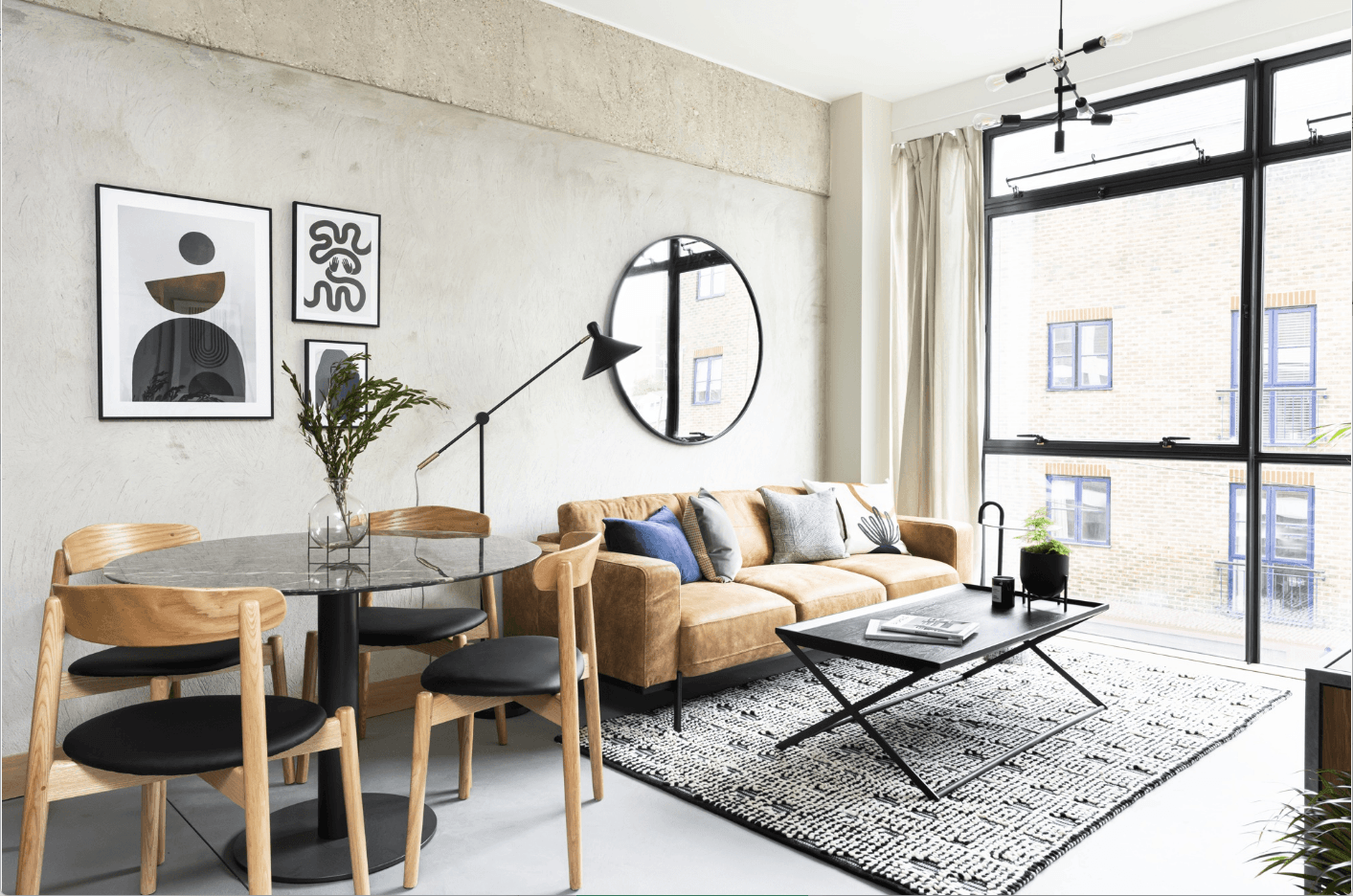

You just moved into a small apartment. The living room fits a couch OR a dining table — not both. The bedroom barely has space for a bed, let alone a dresser. You are staring at a tape measure wondering how to make this work.
Here is the thing: small does not mean cramped. You just need furniture that works harder. This guide covers 10 must-have furniture pieces for small apartments, how to choose furniture for small spaces, and practical tips to make every square foot count.
1. What Is the Best Furniture for a Small Apartment?
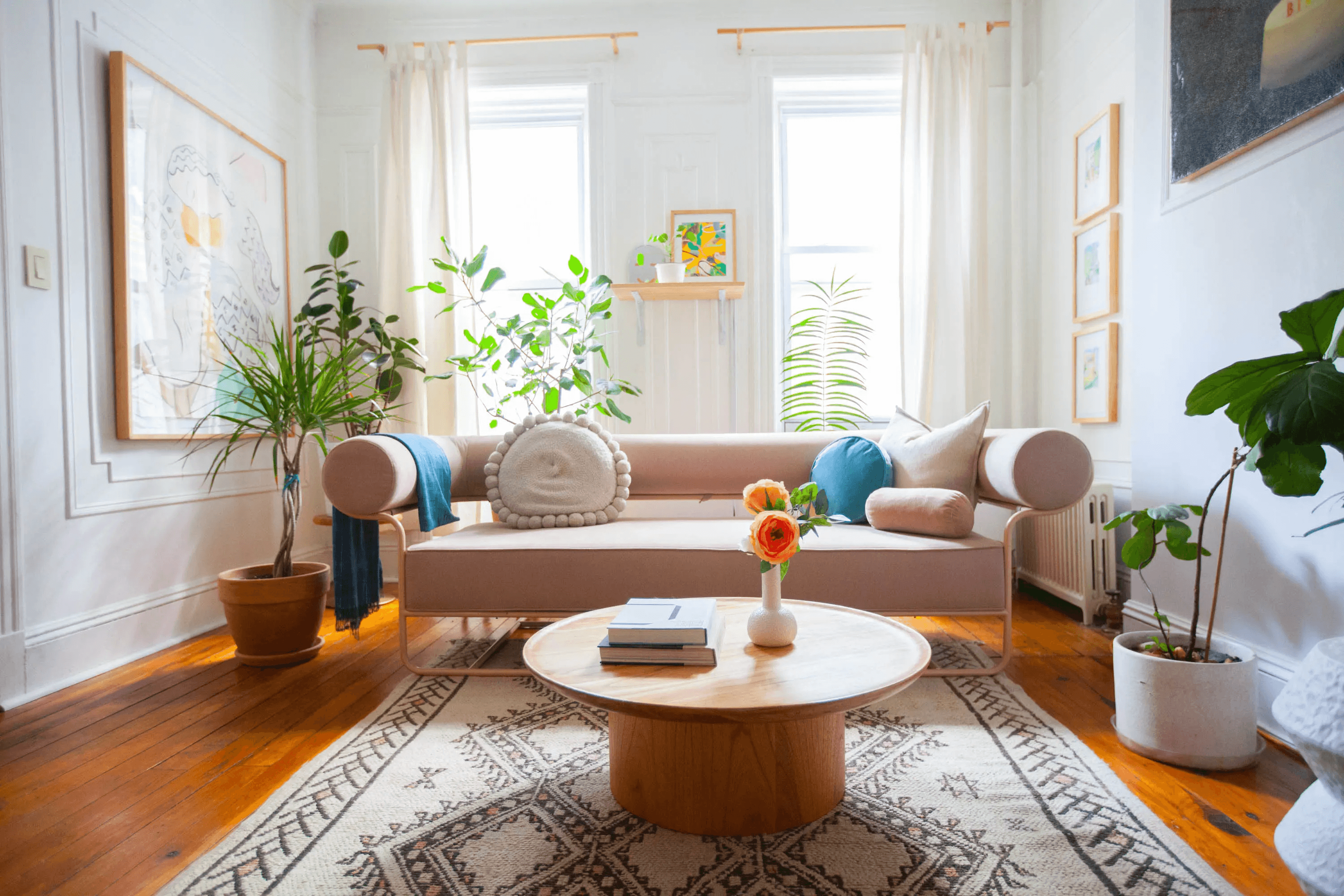
The best furniture for a small apartment pulls double duty. A storage ottoman is a seat, a footrest, and a hiding spot for blankets all in one. A sleeper sofa turns your living room into a guest room in 30 seconds. An expandable dining table seats two on a normal Tuesday and six when friends come over.
The trick is picking pieces that earn their floor space. Every item should do at least two things or fit somewhere most furniture cannot. Think vertical. Think foldable. And for the love of your sanity, measure before you buy.
2. 10 Must-Have Furniture Pieces for Small Apartments
1) Storage Ottoman
What It Is
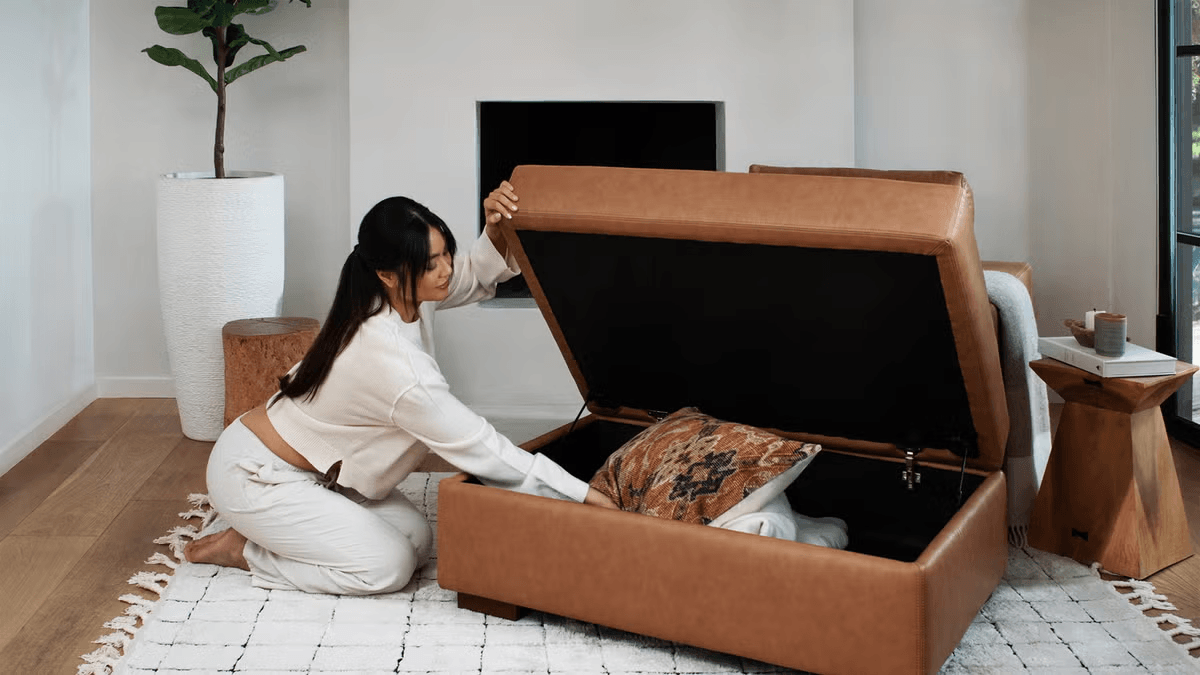
A storage ottoman is basically a padded box that does three jobs at once. Sit on it. Put your feet up on it. Lift the lid and stash blankets, books, or board games inside. Not bad for something that takes up less than two square feet.
Key Features
Storage ottomans come in all sizes. A standard cube runs about 18 inches on each side. Bigger rectangular ones go up to 48 inches wide. Get one with a lid that does not slam shut — trust me on this. Leather and velvet hold up best if you use it daily.
- Hidden compartment hides clutter instantly
- Light enough to drag around the room
- Doubles as extra seating when people come over
Best For
Small living rooms where every piece has to earn its keep. They work great in entryways too — drop your keys on a tray on top, stash shoes inside when guests show up. In dorms, they hide extra bedding and moonlight as a coffee table. A 2025 NAHB survey found that 73% of new home buyers rank storage as a top priority in furniture. The storage ottoman delivers exactly that without eating up extra floor space.
2) Sleeper Sofa
What It Is
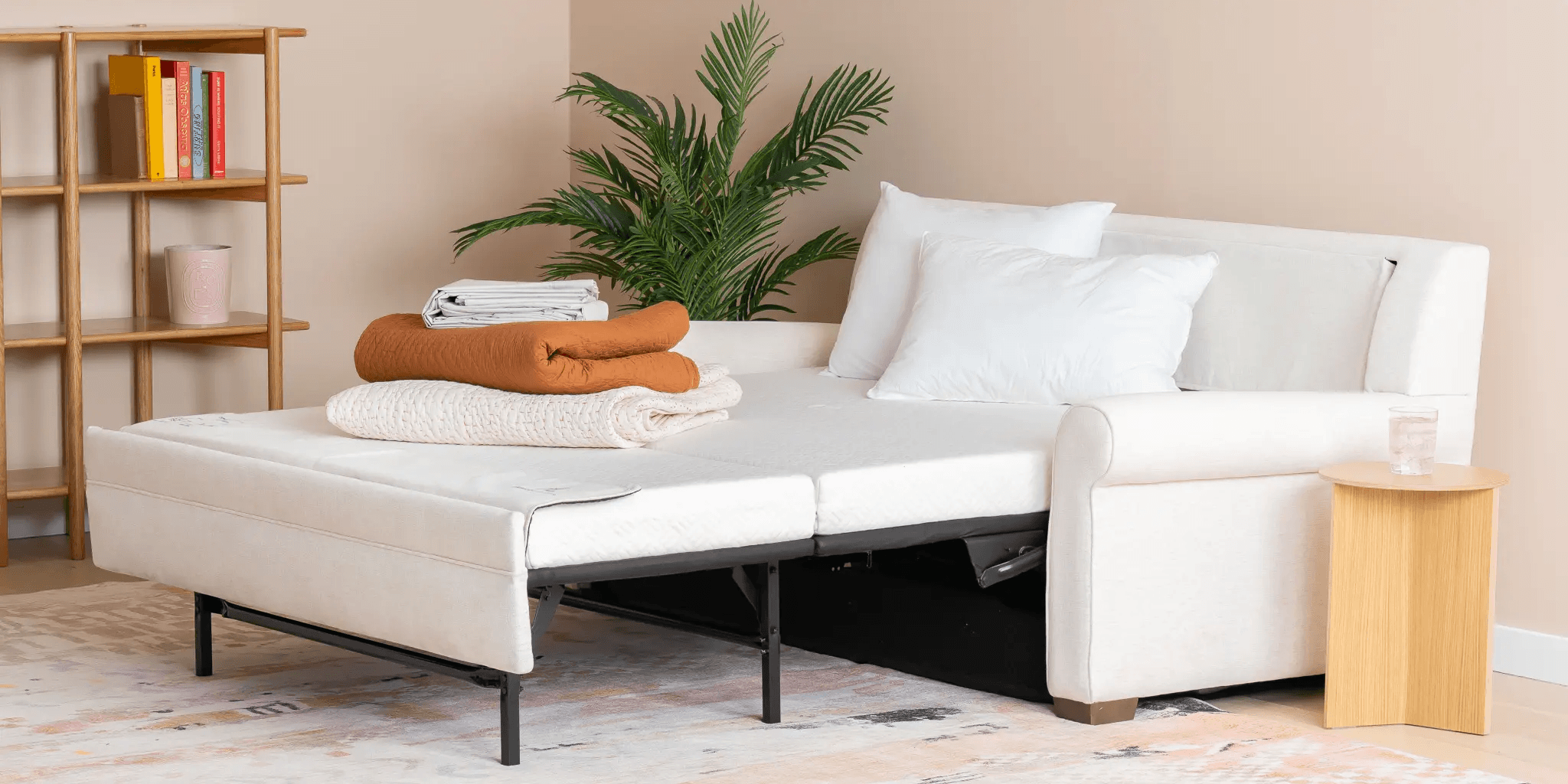
A sleeper sofa looks like a regular couch but has a bed hidden inside. Seat people during the day. Fold it out at night. Modern ones have ditched the old spring-and-bar mattresses that made guests groan — memory foam is the standard now.
Key Features
The mattress is everything on a sleeper sofa. Memory foam options feel close to a real bed. Look for queen-size models at least 72 inches wide — they sleep two without anyone getting elbowed. Air coil mattresses support better than the old wire spring style.
- Comes in twin, full, and queen sizes
- Some have under-seat storage for sheets
- Pull-out or click-clack mechanisms, pick your preference
Best For
Studio apartments, no contest. You get a living room during the day and a bedroom at night without buying two pieces of furniture. They also work in home offices that pull double duty as guest rooms. The U.S. Census Bureau reported in 2024 that one-person households hit a record 28.5% of all households. Sleeper sofas are a direct answer to the space crunch solo dwellers deal with every day. Just measure your room first — these things need floor space to open up all the way.
3) Expandable Dining Table
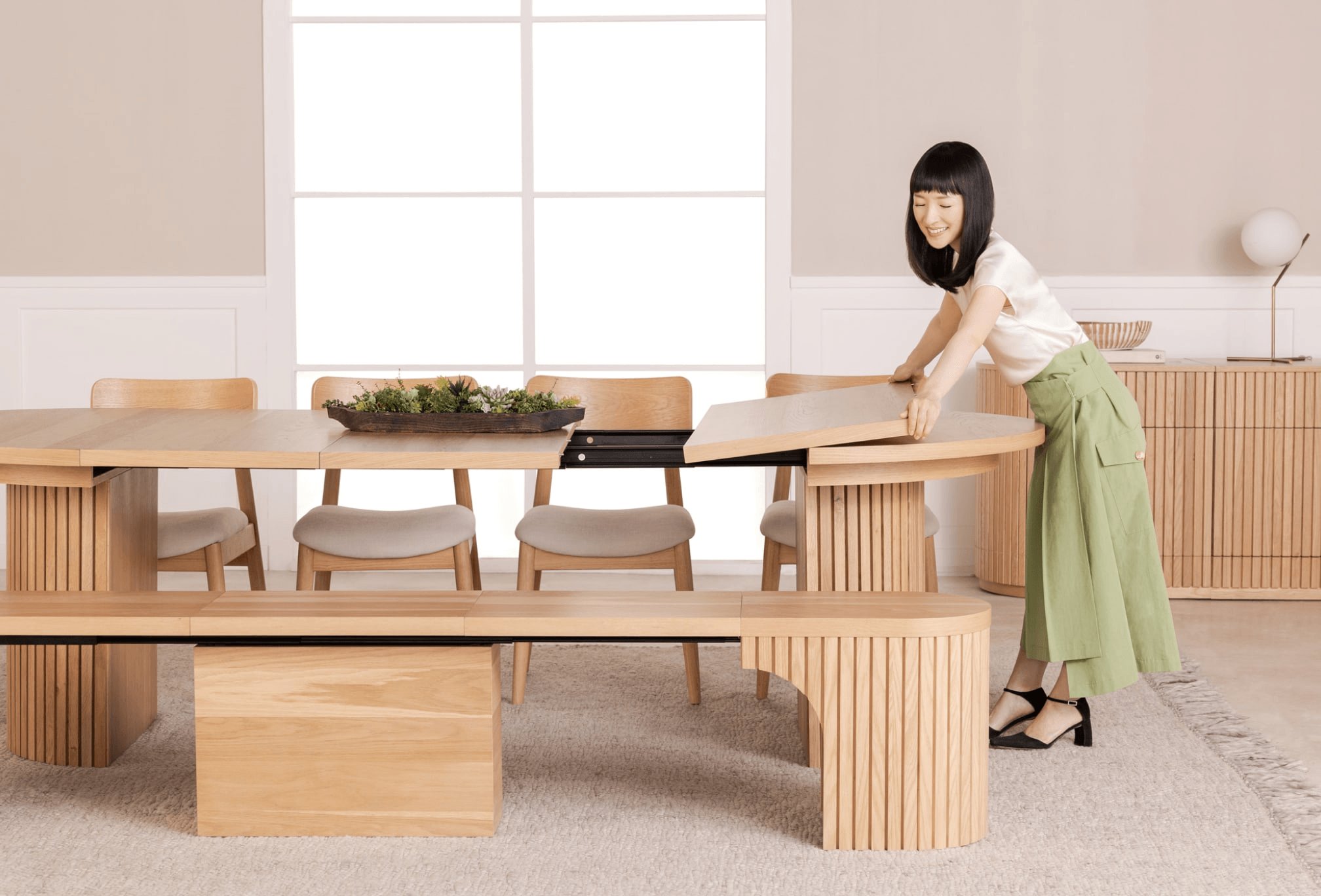
What It Is
An expandable dining table stays small for everyday use and gets bigger when you need more seats. A hidden leaf slides out from under the tabletop. Or the sides flip up on hinges. Either way, you get two tables in one.
Key Features
The collapsed size is what makes these tables work in tight spaces. Most measure about 30 by 36 to 42 inches closed — roughly the size of a large desk. Pop the leaf out and they hit 60 to 72 inches, seating six to eight. Butterfly leaf mechanisms slide the smoothest.
- Seats 2 to 4 collapsed, 6 to 8 expanded
- Round options take up less visual space
- Some store the leaf inside the table
Best For
Small kitchens and open-plan spaces where you eat and entertain in the same room. If you host dinners or holiday meals, an expandable table lets you keep a small footprint 90% of the time and only grow it when needed. For couples in one-bedroom apartments, a 36-inch round expandable table tucks into a corner perfectly. Just check the expanded footprint — you need room to pull chairs out on all sides.
4) Wall-Mounted Desk
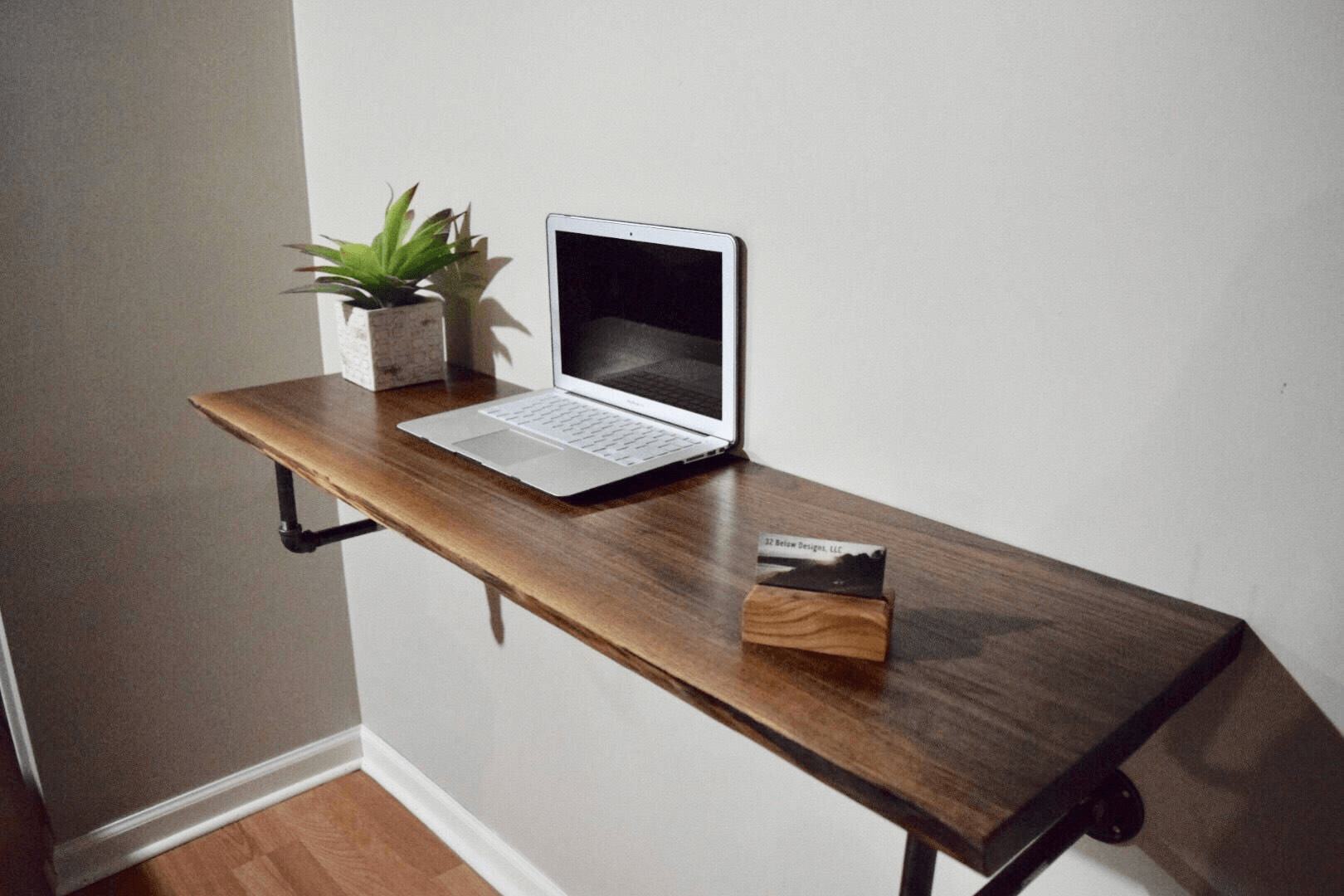
What It Is
A wall-mounted desk attaches to the wall with no legs touching the floor. Some fold down like a shelf when you are done. Others stay fixed but sit shallow enough to fit in spots a normal desk would never go.
Key Features
Wall-mounted desks save more floor space than any other desk type. Fold-down models take up zero floor area when closed — just a flat panel against the wall. Fixed models sit 12 to 18 inches deep, compared to 24 to 30 inches for a standard desk. Weight capacity matters here: look for at least 50 pounds if you plan to keep a monitor on it.
- Folds flat when not in use (fold-down models)
- Some come with built-in shelves or pegboards
- Cable channels keep wires from turning into a mess
Best For
Home offices in weird spaces — a hallway corner, a closet, a narrow wall in the bedroom. Wall-mounted desks are a lifeline for remote workers who do not have a dedicated office. A fold-down model in a closet lets you close the door at 5 PM and reclaim your living space. A 2023 Pew Research study found that 35% of U.S. remote-capable workers are fully remote. That is a lot of people who need a workspace that does not take over their home.
5) Modular Shelving
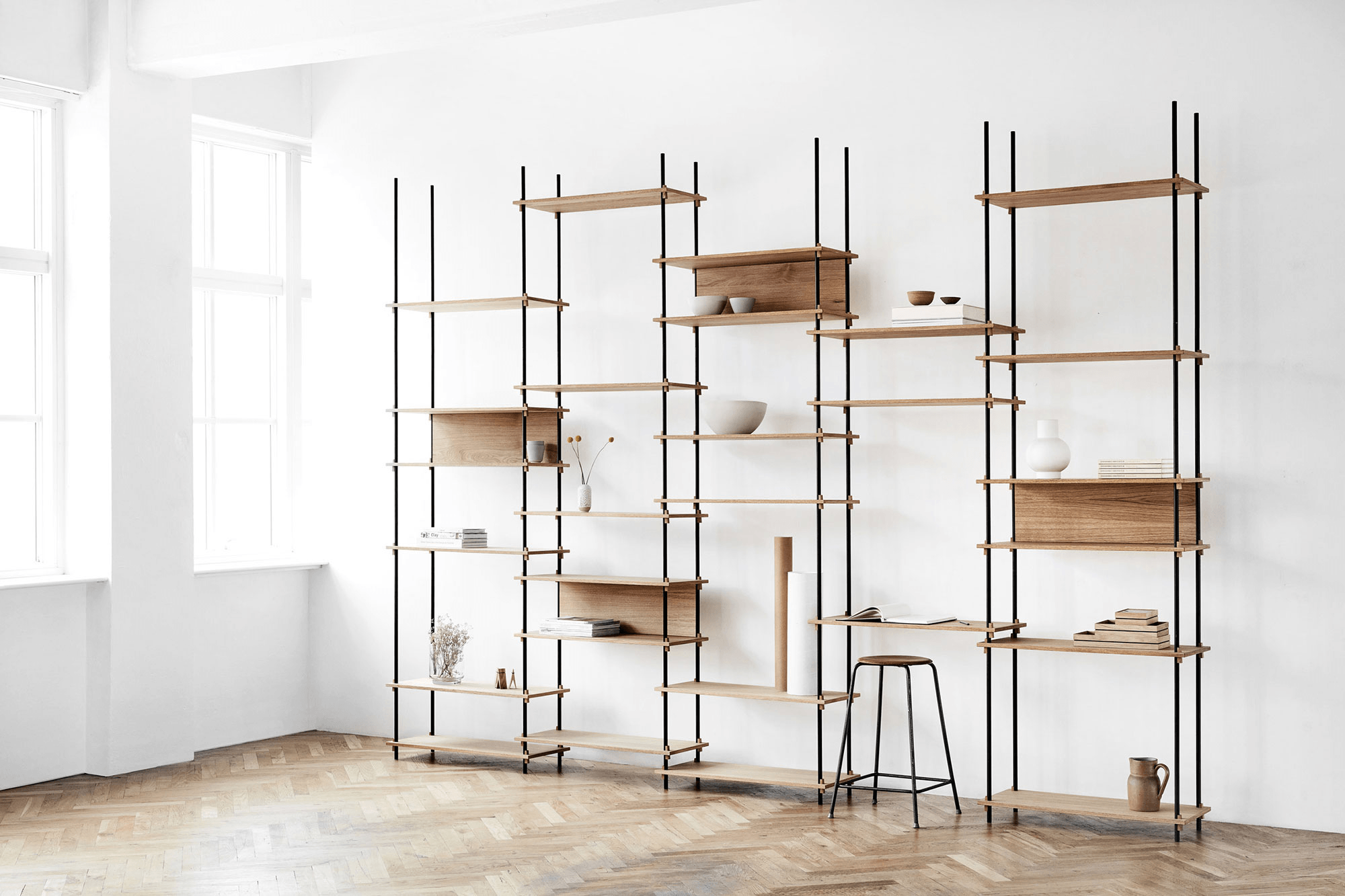
What It Is
Modular shelving comes as individual cubes or frames you arrange however you want. Buy as many pieces as you need. Stack them. Rearrange them when you move. It is furniture you build yourself, one cube at a time.
Key Features
The big win with modular shelving is flexibility. Start with a small 2-by-2 grid. Add more cubes later. Most systems use a standard grid where each cube is 13 to 15 inches square. Get one with wall-anchoring hardware included — a fully loaded unit can tip if you skip this.
- Interlocking or stacking design for custom layouts
- Mix open shelves with drawers or doors
- Easy to take apart and move between apartments
Best For
Renters who move every couple of years and need furniture that adapts. Modular shelving works in any room — books in the living room, clothes in the bedroom, pantry items in the kitchen. If a cube breaks, you replace just that piece instead of the whole unit. That alone makes it worth considering.
6) Loft Bed
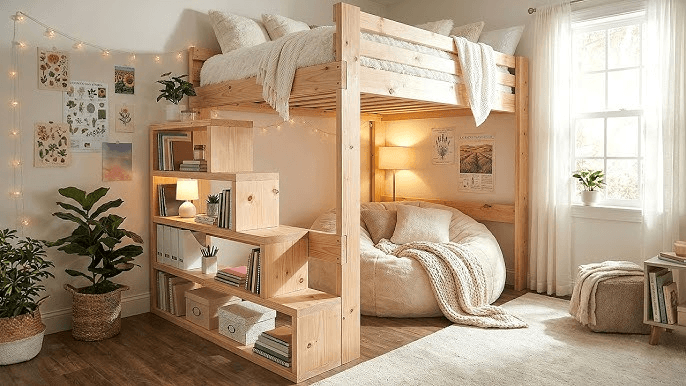
What It Is
A loft bed lifts your mattress high enough to use the space underneath. Not a bunk bed — there is no lower bunk, just open floor you can fill with a desk, a dresser, or a small couch.
Key Features
Clearance height is the number to watch. Standard loft beds give you 30 to 36 inches underneath. High-loft models go up to 48 inches — enough for a small sofa or a full desk. Weight limits run 250 to 400 pounds. Some come with built-in desks, shelves, or a wardrobe rod integrated into the frame.
- Frees up 15 to 25 square feet of floor space
- Built-in options include desk, shelves, and hanging rod
- Most common in twin and full sizes
Best For
Small bedrooms and dorms where every inch counts. A loft bed turns a cramped room into a two-level setup. In a 10-by-10-foot bedroom, a loft with a desk underneath leaves room for a dresser with walking space to spare. The American College Health Association says 45% of college students live in dorms under 200 square feet. Lofts are practically essential in that scenario. Check your ceiling height first — you need at least 90 inches for a comfortable setup.
7) Nesting Tables
What It Is
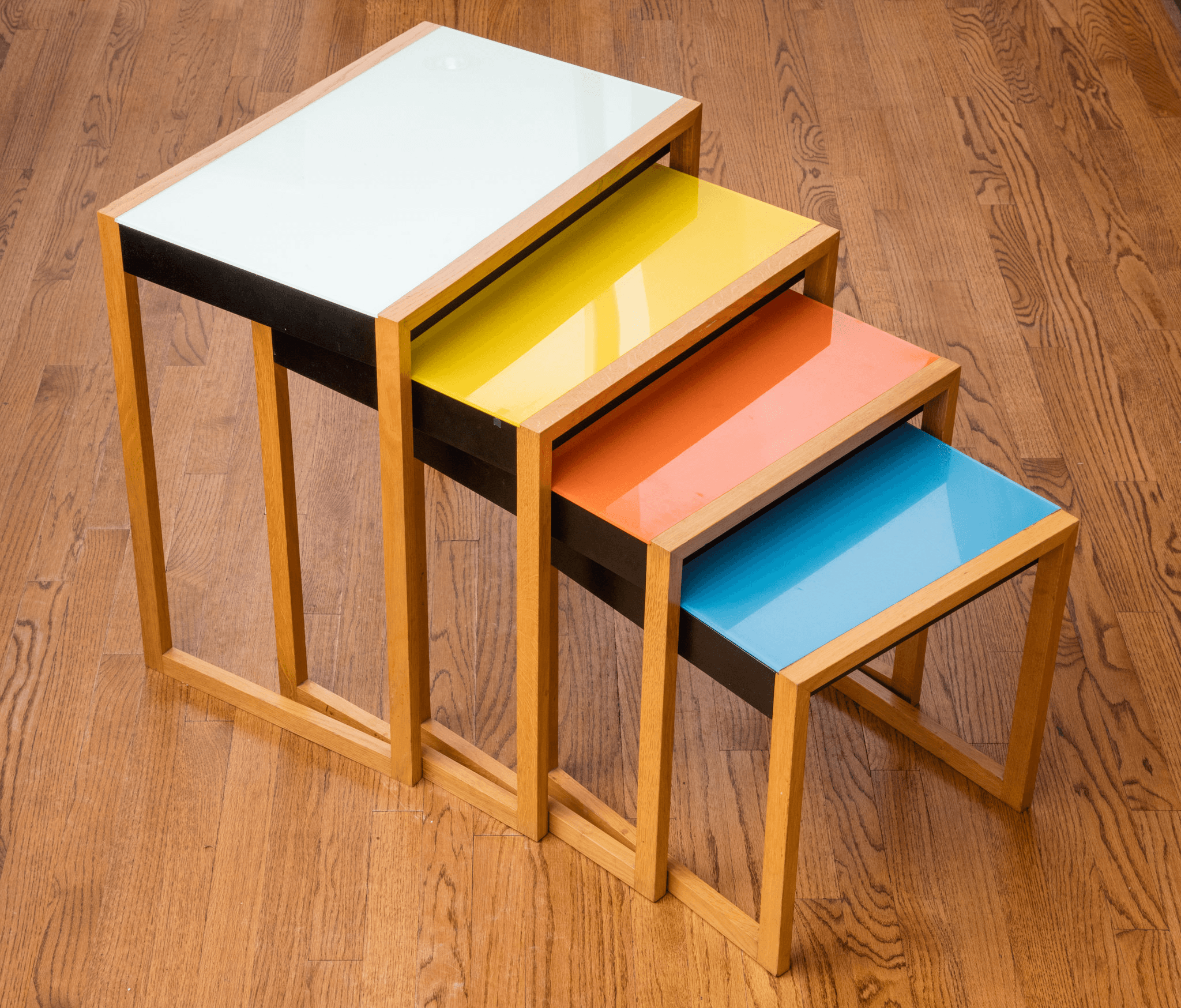
Nesting tables are two or three tables that slide under each other to form one unit. Need more surface space? Pull them apart and use each one separately. Done? Slide them back together.
Key Features
Most sets come with three tables of decreasing sizes. The largest runs about 18 to 22 inches wide and 22 to 26 inches tall. The smallest nests completely underneath. They come in wood, glass, metal, and acrylic. Acrylic is popular for small spaces because it takes up visual space without feeling bulky.
- Use as one side table or spread out around the room
- Smallest table works as a laptop stand or snack tray
- Easy to move around when people come over
Best For
Small living rooms where a single coffee table eats up too much floor. Nesting tables let you keep one small table most days and pull out extras when guests arrive. They work in bedrooms too — keep drinks and books on the largest table, use the smallest for jewelry or your phone.
8) Tall Dresser
What It Is
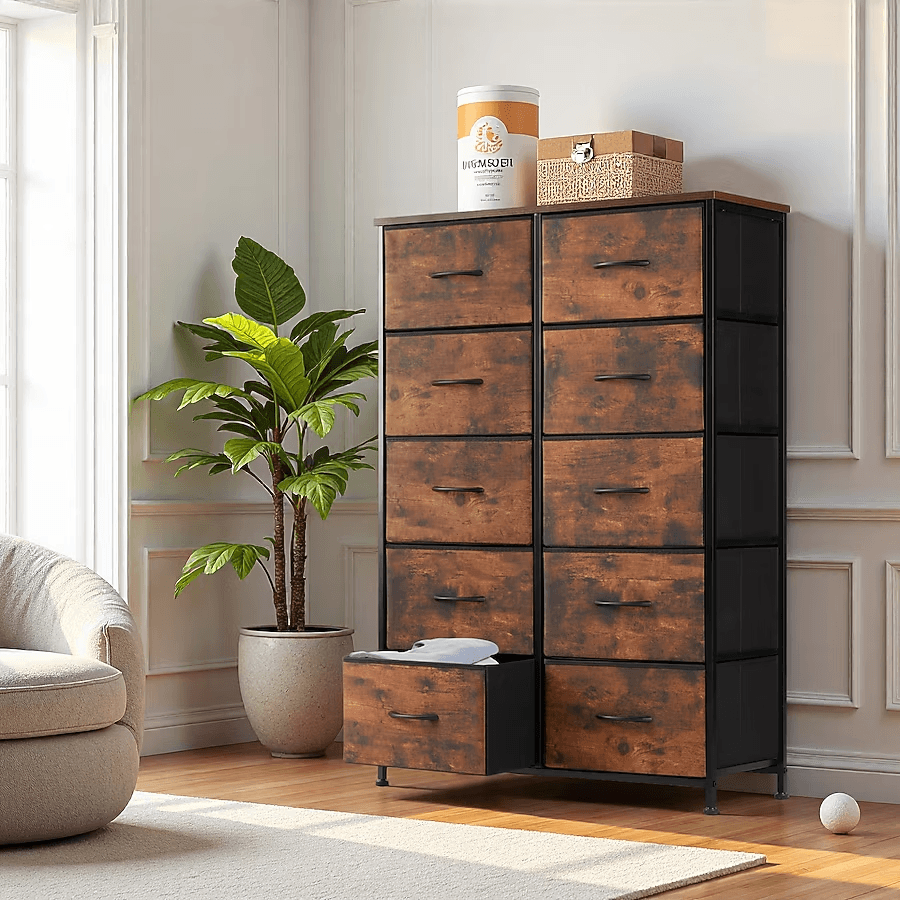
A tall dresser is a narrow, vertical chest of drawers. It stores the same amount as a standard dresser but takes up less floor space by stacking drawers up instead of spreading them sideways.
Key Features
A typical tall dresser measures 30 to 36 inches wide and 48 to 60 inches tall — about half the width of a standard six-drawer dresser. Drawer depth runs 16 to 20 inches, enough for folded clothes. Anti-tip hardware is a must — a fully loaded tall dresser is top-heavy and needs to be secured to the wall.
- 5 to 9 drawers in a narrow footprint
- Deeper bottom drawers for sweaters and jeans
- Shallow top drawers for socks and accessories
Best For
Tight bedrooms where a standard dresser blocks walkways or door openings. A tall dresser fits next to a closet door or in a narrow gap beside the bed without eating into the main floor area. In apartments where closet space is limited, it replaces a bulky wardrobe setup in half the footprint.
9) Folding Chairs
What It Is
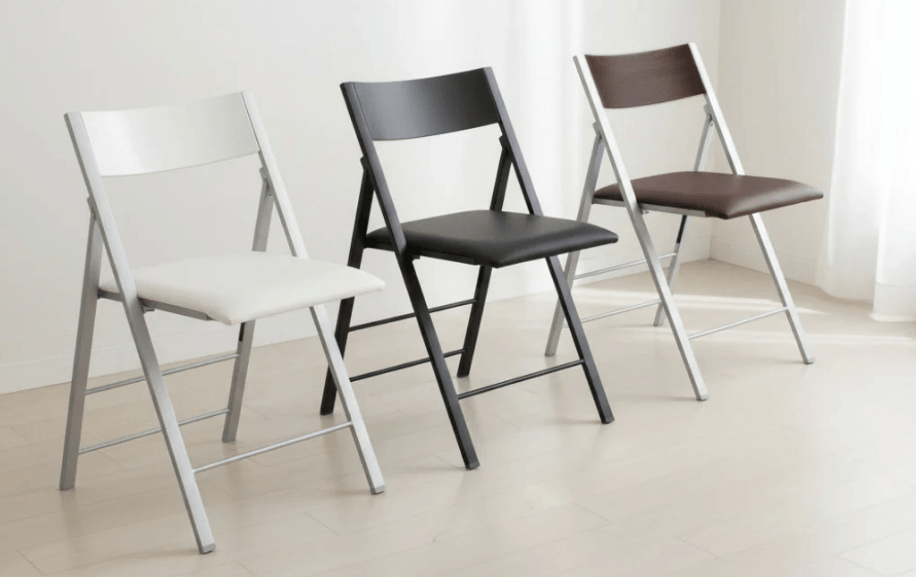
Folding chairs have a hinge that lets them collapse flat. You stash them in a closet or behind a door and pull them out when you need extra seating. Simple concept. Hugely useful.
Key Features
The key number is folded thickness. Good folding chairs collapse to 2 to 4 inches — thin enough to slide behind a door or stack against a wall. Weight runs 8 to 15 pounds per chair. Wood looks better but weighs more. Metal is lightest and cheapest. Padded seats exist and are worth the extra few dollars.
- Stack or hang for compact storage
- Padded seats available if guests will be sitting for a while
- Some have a carrying handle
Best For
Small apartment dining where you only need four chairs a couple of times a year. Keep two everyday chairs at your table. Stash four folding chairs behind a door or under the bed. When holiday dinners or parties roll around, pull them out and you have seating for everyone. Folding chairs also work for home offices — keep one in the closet and grab it when someone needs to sit at your desk.
10) Corner Shelving Unit
What It Is
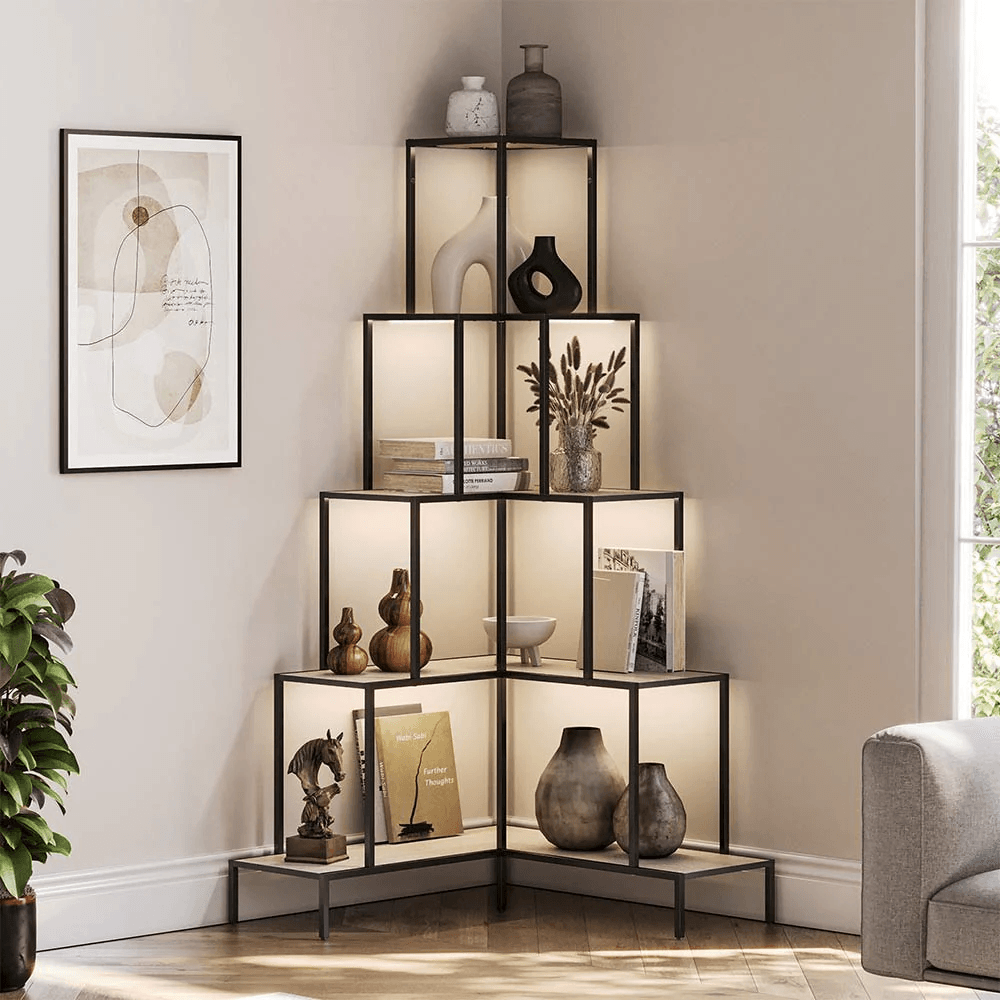
A corner shelving unit fits into a 90-degree corner — that dead space where two walls meet that most furniture cannot use at all.
Key Features
Corner shelves come in a few styles. Triangular shelves sit flush in the corner. L-shaped shelves wrap around on both walls. Spinning corner units rotate for easy access. Heights range from 3 feet to 8 feet. Shelf depth runs 10 to 14 inches at the widest point.
- Turns dead corner space into useful storage
- Some are freestanding, others mount to the wall
- Available in open shelf or cabinet styles
Best For
Every room with an unused corner. Living room corner shelves hold plants, photos, and books. Kitchen corner shelves store spices, oils, and small appliances. Bathroom corner shelves handle towels and toiletries. The National Kitchen and Bath Association ranks corner storage among the top five most requested features in small kitchen remodels. Do not let your corners sit empty — they are free real estate.
3. How to Choose Furniture for a Small Apartment
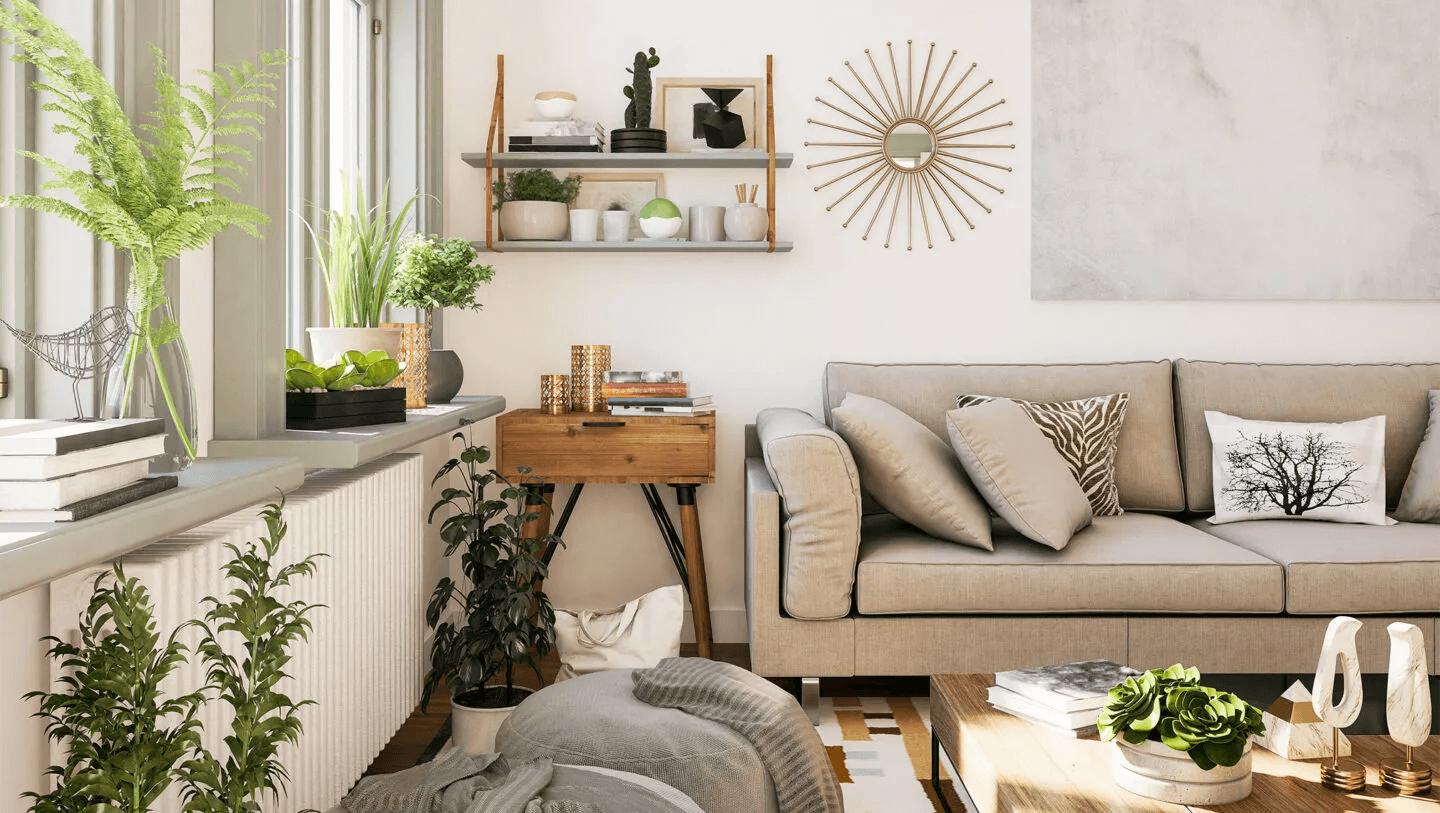
Buying furniture for a small apartment takes more planning than a normal-sized room. Here is what actually matters.
1. Measure everything — Know your room dimensions, door widths, and hallway clearances before you buy. A piece that fits in the showroom might not make it up your stairs.
2. Prioritize multi-function — Every item should do at least two jobs. A storage ottoman beats a regular ottoman every time.
3. Think vertical — Use walls for shelves and hanging organizers. The floor is only one surface in your room.
4. Leave breathing room — Do not fill every inch. A room with 30% empty space feels twice as big as one packed full.
5. Choose light colors — Light furniture reflects light and opens up a room. Dark colors absorb light and shrink space.
4. How Does HomeBridge Help You Import Furniture and Building Materials from China?
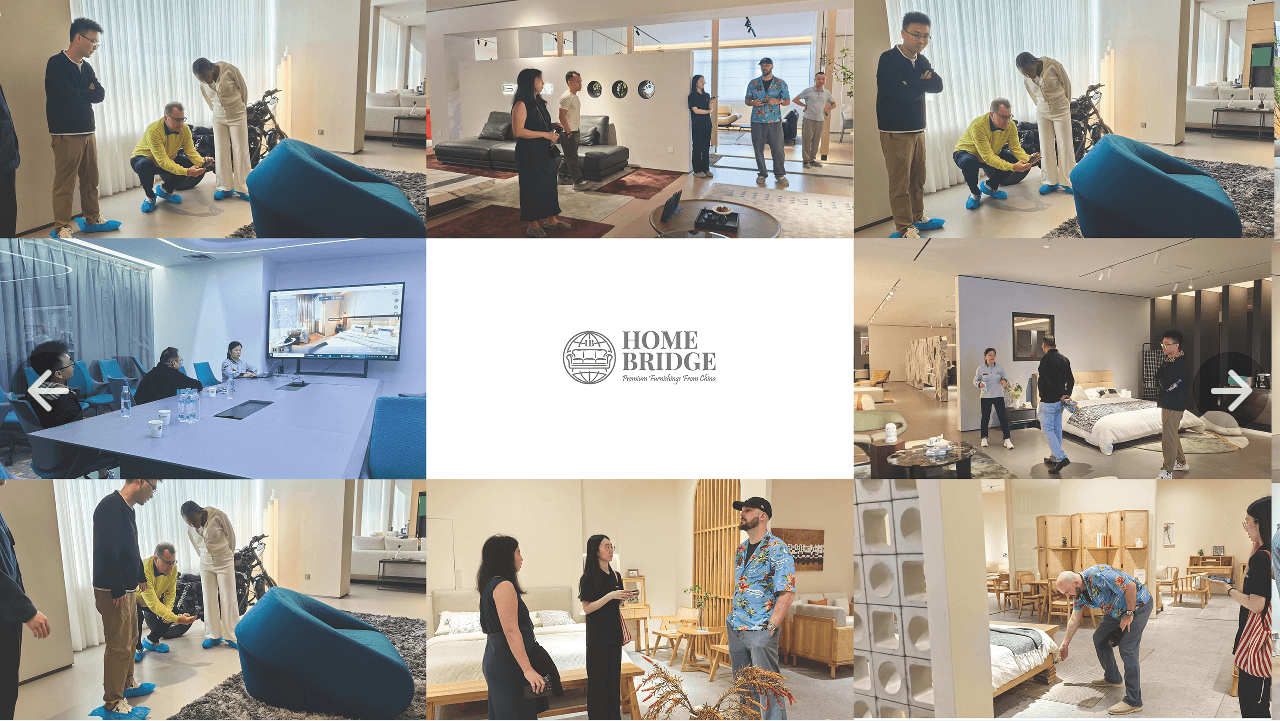
If you are looking for quality small-space furniture at competitive prices, we can help. HomeBridge connects you directly with Chinese manufacturers so you skip the middleman markup and buy at factory prices.
- Direct factory pricing on space-saving furniture designs
- Wide range of materials (wood, metal, upholstery) for every style
- Custom sizes available for unique room dimensions
- Quality control inspections before your order ships
- Freight and logistics support from factory to your door
We handle the sourcing so you get the best price possible for furniture that fits your space and your budget. Contact us to talk about your next project.
5. Frequently Asked Questions
1) What type of furniture is best for small apartments?
Multi-functional furniture, hands down. Pieces that combine seating with storage or sleeping with seating give you the most value per square foot. Storage ottomans, sleeper sofas, and expandable tables top the list.
2) Should I buy multi-functional furniture?
If you live in a small space, yes. Multi-functional furniture cuts clutter, saves floor space, and usually costs less than buying separate pieces for each job. Just make sure each function actually works well — a bad sleeper sofa helps nobody.
3) What color furniture makes a small room look bigger?
Light colors — white, beige, light gray, pastels. They bounce natural light around and make the room feel larger. Dark furniture soaks up light and closes the space in.
4) Where should I put furniture in a small apartment?
Put larger pieces against the longest wall to keep pathways open. Use corners for shelving and storage. Keep the center of the room clear. Floating furniture even a few inches from the wall can make the room feel more open.
5) Is modular furniture worth it for small spaces?
Yes. Modular furniture adapts to different room layouts and changing needs. It is especially useful for renters. You can add, remove, or rearrange pieces without replacing your whole setup.
6) What is the best sofa for a small apartment?
A loveseat or a compact two-seater. If you need guest sleeping space, get a sleeper sofa. If storage is the priority, look for one with built-in storage under the cushions.
7) How can I make my small apartment look bigger with furniture?
Pick furniture with exposed legs — it keeps the sightlines open. Choose pieces that blend with your wall color. Avoid oversized furniture that overwhelms the room. Keep walkways clear and use mirrors to bounce light around.
6. Conclusion
Small apartments do not have to feel small. The right furniture choices turn a cramped space into a home that actually works for how you live.
Start with the basics — a storage ottoman, a sleeper sofa, and an expandable dining table cover your core needs. Add modular shelving and a wall-mounted desk for storage and work. Fill in the rest based on what your specific space needs. Measure first. Prioritize pieces that do more than one thing. And never underestimate what vertical space can do for you. Your apartment is only as cramped as the furniture you fill it with.
.svg)






.svg)
.svg)


