

How to Pick a Coffee Table?

How to Pick a Coffee Table?
Author-Image
Last Update:  
June 5, 2026

A coffee table is one of the most-used pieces of furniture in the living room. It holds your coffee, books, remote controls, and everyday items. When friends visit, people naturally gather around it to talk and relax.

It has become a basic part of many homes. Around 75% of U.S. households have a coffee table in the living room, and the global coffee table market reached about $9.45 billion in 2025.

In recent years, coffee table trends have started to change. Traditional square and heavy wooden tables are still common, but more buyers are now looking at round, irregular, and nesting designs. Instead of focusing only on function, today’s buyers want a coffee table that is both practical and visually pleasing.

So, how should an ordinary family choose the right coffee table for their home?
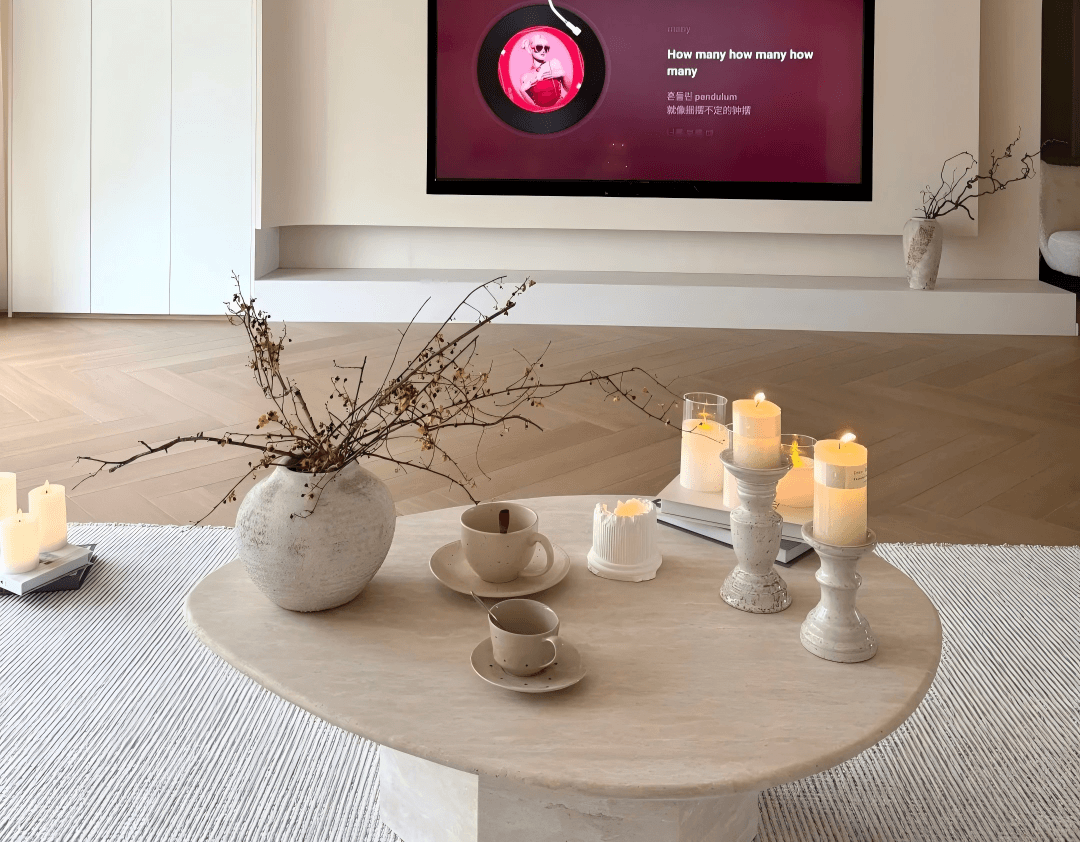
A coffee table with a vase, candles, and teacups

COLOR: USE LIGHT–DARK CONTRAST

When choosing a coffee table, many people first think about the color they like. But once the table is placed in the living room, the color should not be judged on its own. It needs to work with the sofa, rug, TV cabinet, and the overall room.

A practical way to create visual balance is to use light–dark contrast.

If your sofa is dark, choose a lighter coffee table. A dark sofa has more visual weight, while a light coffee table can brighten the center of the room and create a clear focal point.

For example, a dark gray or black sofa can work well with a light wood or off-white coffee table. This keeps the living room from feeling too heavy and helps the space look more open.
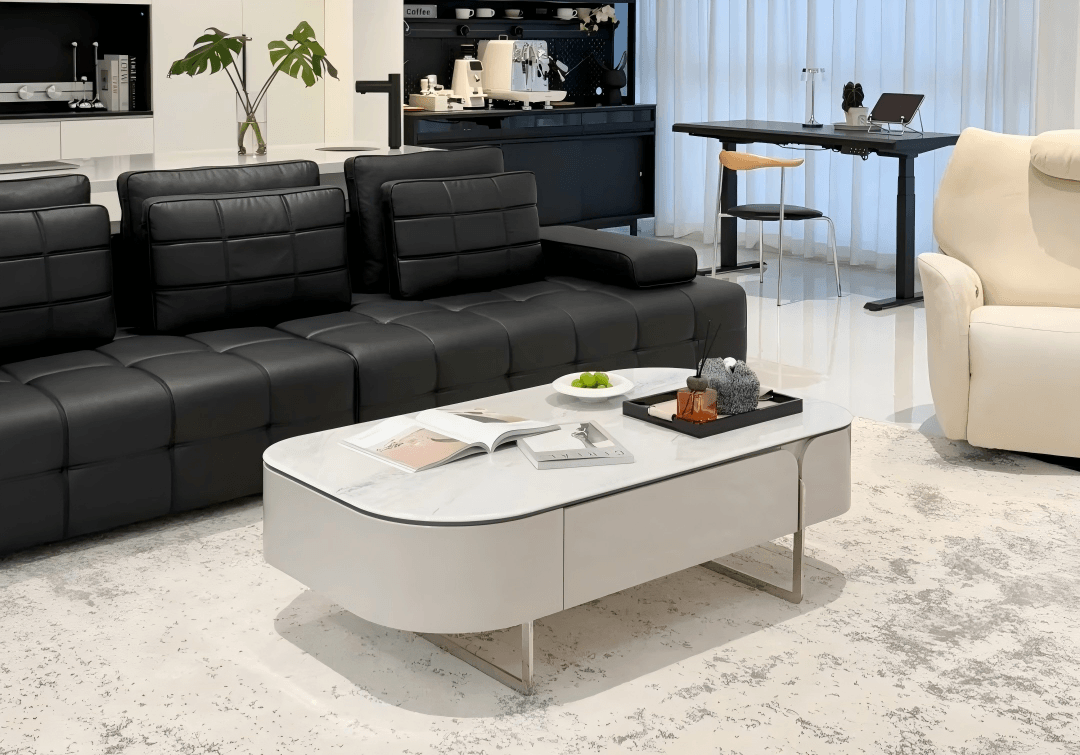
A black sofa paired with a white coffee table

If your sofa is light in color, choose a darker coffee table. Light sofas often feel soft and airy, but if every piece in the living room is too light, the space can look flat and unfocused.

A darker coffee table can add visual weight and make the layout feel more grounded.

For example, an off-white or cream sofa can work well with a walnut, black, or dark gray coffee table. This adds more depth to the room and keeps the space from looking too pale.

So when choosing a coffee table color, try to create a clear light–dark contrast with your sofa. It can make the living room feel more polished and well-balanced.
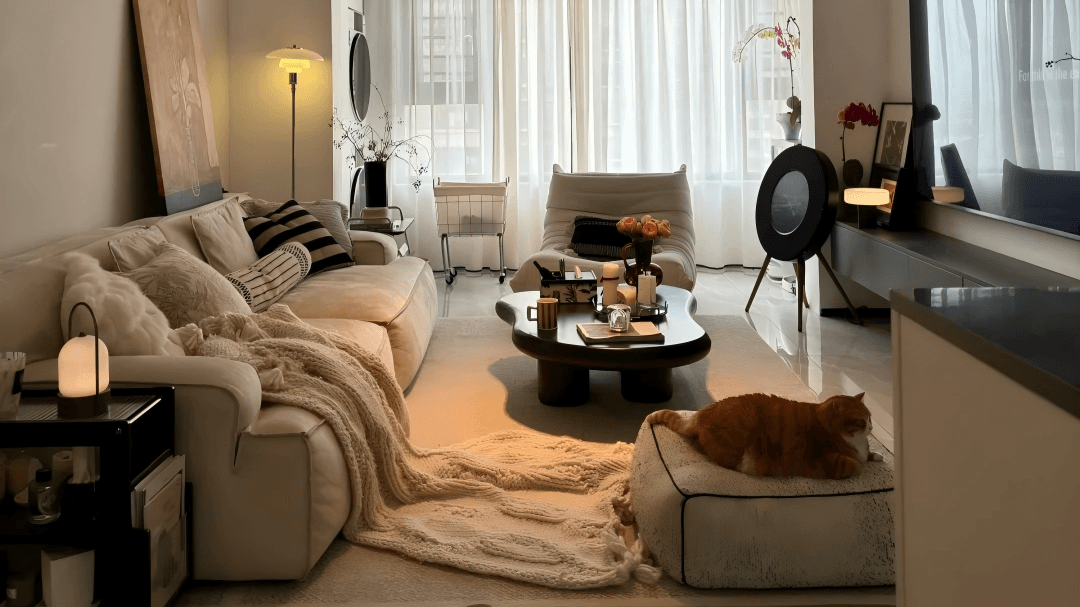
A beige sofa paired with a black coffee table

SHAPE: MATCH THE COFFEE TABLE WITH YOUR SOFA LINES

The shape of a coffee table affects both the visual balance and the flow of the living room.

If you have a larger sofa, such as a three-seater, an L-shaped sofa, or a sectional, a rectangular coffee table is usually a better fit. Its long shape follows the line of the sofa and makes the space look more connected.

A rectangular coffee table also gives you enough surface area to cover the main seating zone. Whether you use it for cups, books, or trays, it feels more practical in daily life.
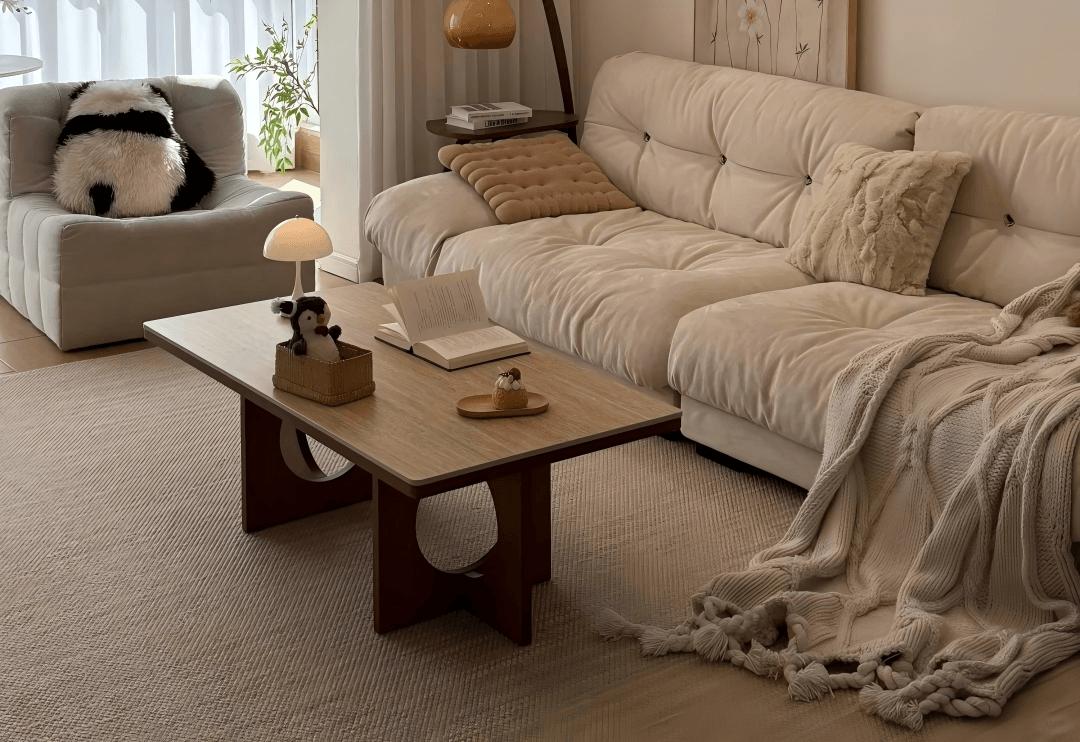
An L-shaped sofa paired with a rectangular coffee table

If your sofa has a curved shape, or if the living room has softer lines overall, you can consider an irregular, round, or oval coffee table.

A curved sofa already creates a sense of flow. If it is paired with a square coffee table with strong straight edges, the lines may feel mismatched.

An irregular or rounded coffee table can echo the curve of the sofa, soften the sharp edges, and make the whole space feel more balanced and cohesive.

A curved sofa paired with a round coffee table

SIZE: GET THE HEIGHT AND LENGTH RIGHT

The comfort of a coffee table depends a lot on its size.

Start with height. In most cases, the coffee table should be about the same height as the sofa seat. A common height is around 40–45 cm. This makes it natural to reach for a cup, book, or remote control while sitting down.

If you often eat light meals, work, or use a laptop on the coffee table, you can choose one that is about 3–5 cm higher than the sofa seat. But avoid going too high. Otherwise, your arms may feel lifted and uncomfortable after a while.

A good coffee table height should let your arms rest naturally when seated. It should also leave enough room for your legs when you stand up or move around.

Next, consider length. A coffee table is usually best when it is about one-half to two-thirds the length of the sofa. This proportion often looks the most balanced.

If the table is too short, it may look weak in front of the sofa. If it is too long, it can make the living room feel crowded and block the walking path.

You should also think about clearance. Leave at least about 50 cm between the coffee table and the TV cabinet. This makes it easier to walk, clean, and pick up items in daily use.

Before buying a coffee table, measure your sofa length, the distance between the sofa and TV cabinet, the rug size, and the walking space in the living room. Then decide the right length, width, and height.
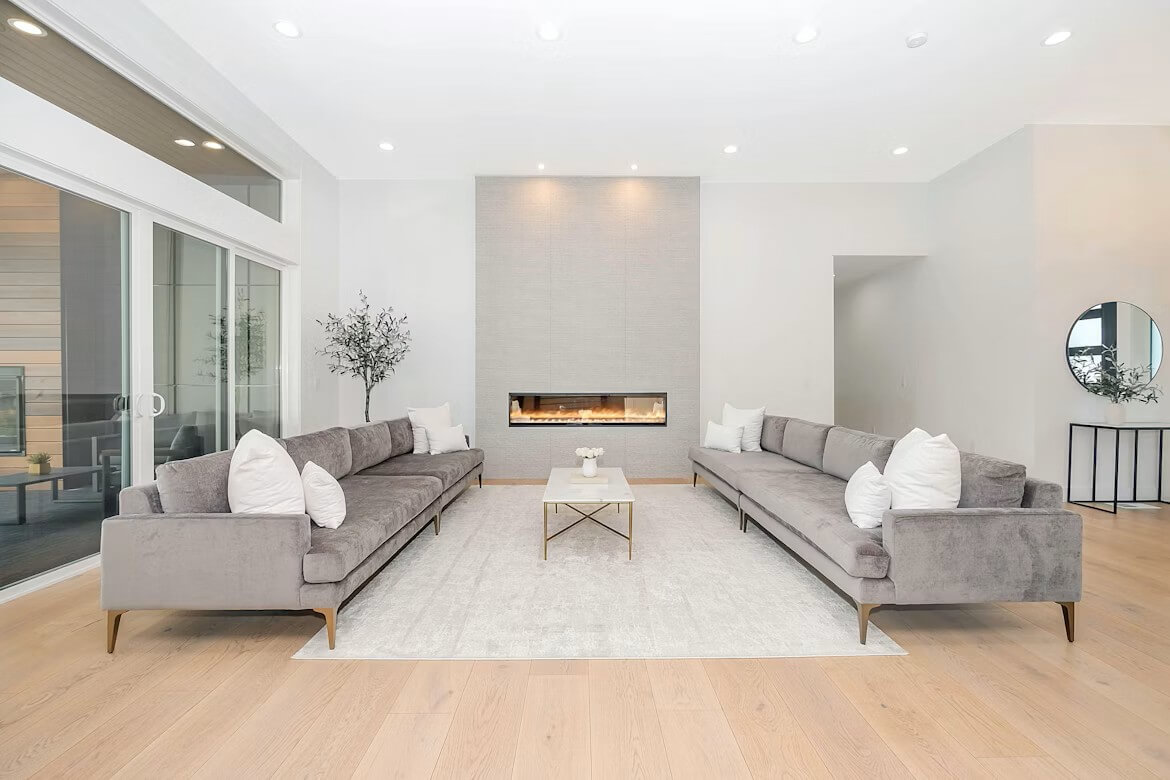
A well-sized coffee table

MATERIAL: LOOKS MATTER, BUT MAINTENANCE MATTERS TOO

A coffee table is used every day, so the material should not only look good in photos. It also needs to be durable and easy to clean.

Sintered stone coffee tables have become popular in recent years because they are scratch-resistant, heat-resistant, less likely to absorb stains, and easy to wipe clean. For families who often drink coffee, place hot cups, or enjoy snacks in the living room, sintered stone is a low-maintenance choice.

If you like modern, light luxury, or Italian minimalist interiors, a sintered stone coffee table can also create a clean and refined look.

Glass coffee tables feel light and transparent, which makes them suitable for smaller spaces. They do not add too much visual weight and can make the living room feel more open.

But glass also has clear drawbacks. It is more likely to show water marks, fingerprints, dust, and small scratches. If your living room is used often, you may need to clean it more frequently.

Wood coffee tables feel warm and natural. They work well with Nordic, Japanese, natural wood, American, and vintage-style interiors. But with wood, water protection is very important.

Many people choose a solid wood coffee table because they like the wood grain, but they forget to check whether the surface has been properly sealed. If water is spilled and not wiped quickly, it may soak into the grain and leave dark marks.

So when buying a wood coffee table, always check whether the surface has a water-resistant seal or protective coating. A safer choice is a wood coffee table with multiple layers of water-resistant surface treatment.
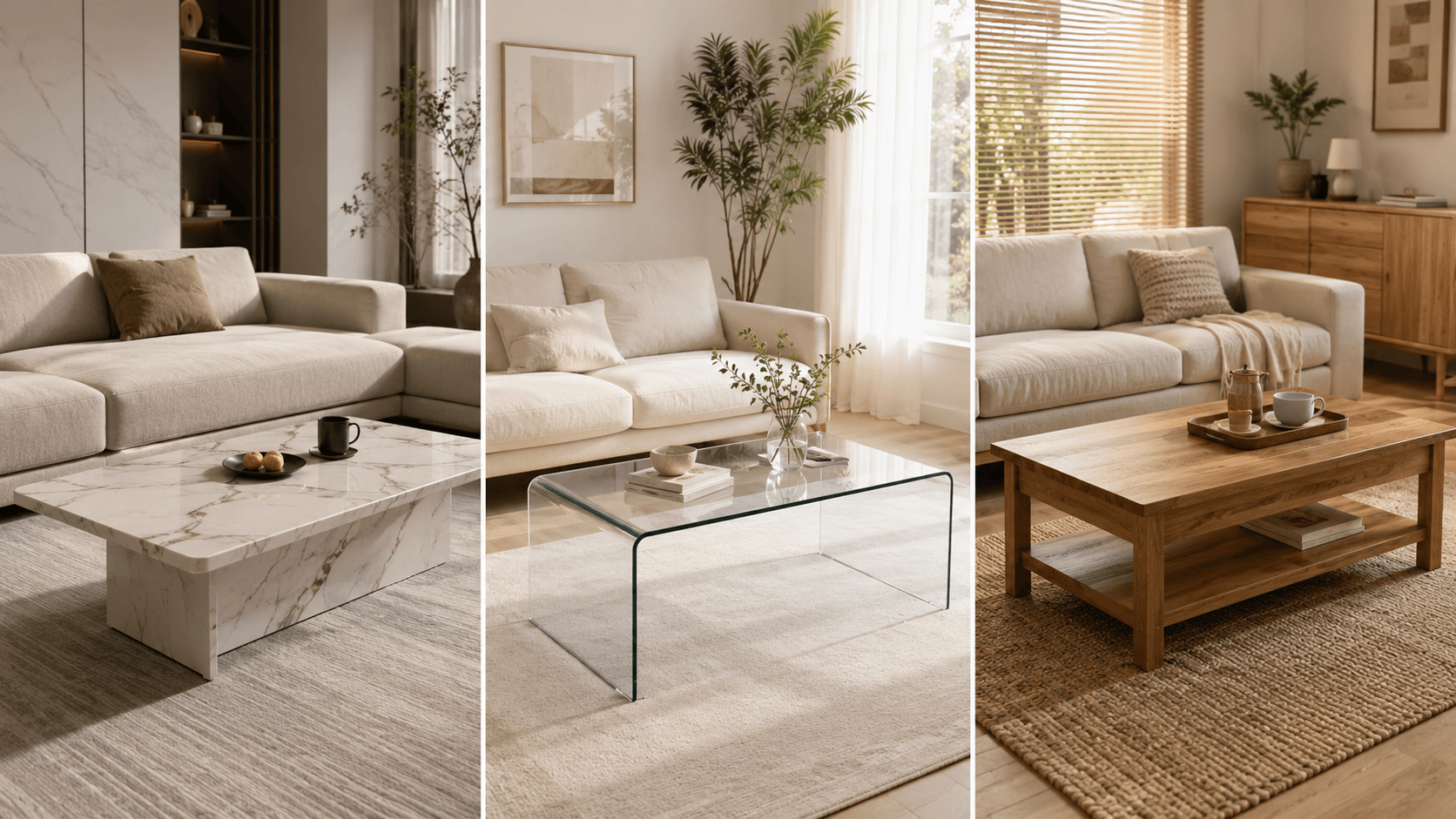
Comparison of sintered stone, glass, and solid wood coffee tables

FUNCTION: DO YOU NEED STORAGE, A LIFT-TOP, OR A NESTING DESIGN?

When choosing a coffee table, think about how you will use it in daily life.

If your living room already has enough cabinets and storage space, a basic tabletop coffee table may be enough.

But if your living room often collects remote controls, tissues, charging cables, magazines, or toys, consider a coffee table with drawers or hidden storage. It can help keep the room tidier and reduce clutter on the tabletop.

If you often eat light meals, work, or use a laptop in the living room, a lift-top coffee table may be useful. The tabletop can be raised closer to your body, so you do not need to bend forward as much.

If you want a more flexible living room layout, consider a nesting coffee table. It can be stacked to save space when not in use, then separated when guests come over to create more tabletop area.

So, the right coffee table should match your real living habits. Before choosing a style, decide whether you need storage, a lift-top design, or a nesting structure. This will make it easier to find a coffee table that truly fits everyday life.
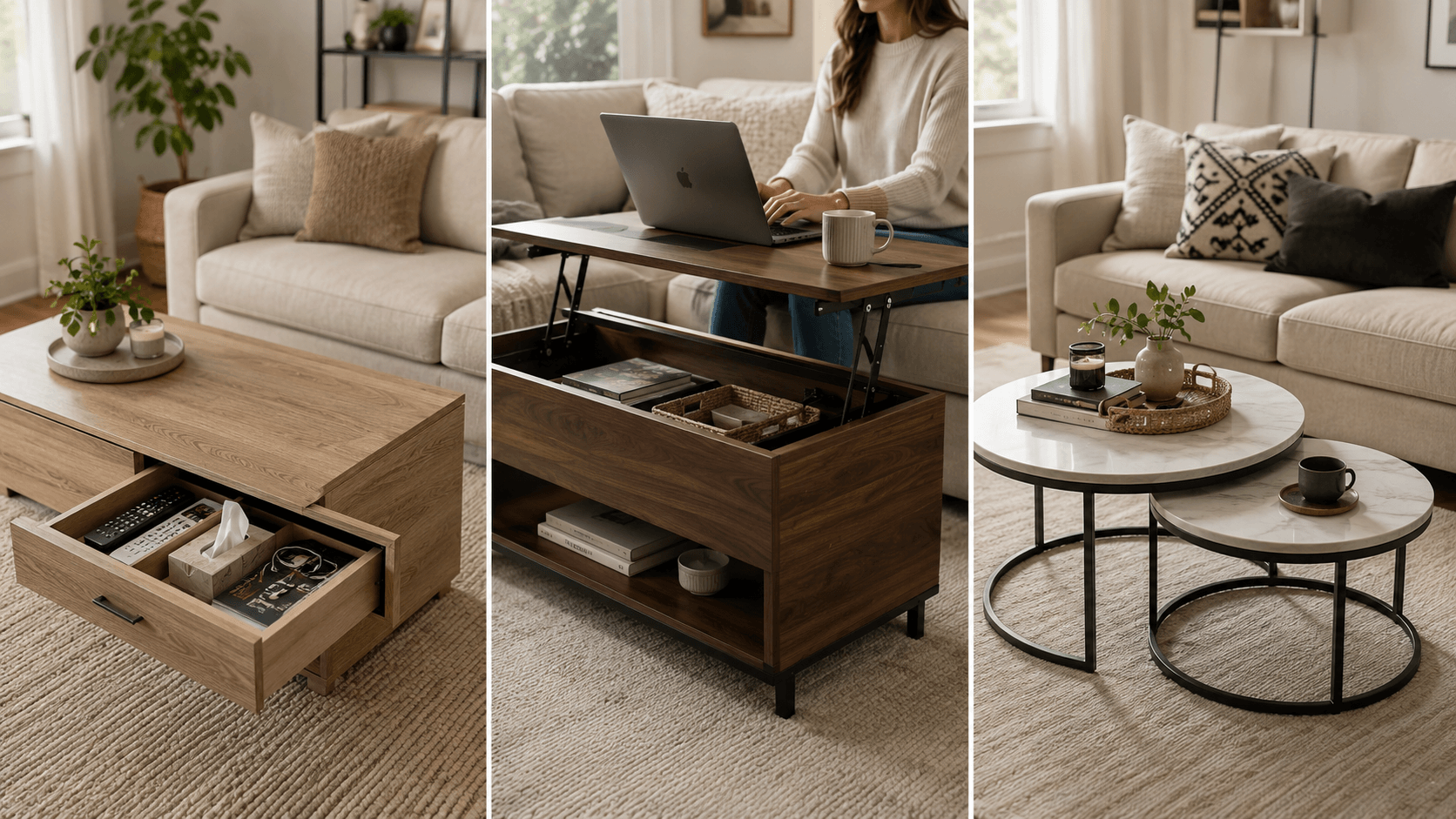
Storage, lift-top, and nesting coffee tables

LET HOMEBRIDGE HELP YOU FIND THE RIGHT COFFEE TABLE

If you do not want to keep searching through limited local stores or online platforms, Homebridge can give you access to more coffee table options. We work with 95 factories and showroom resources in Foshan, China, with product catalogs covering thousands of coffee table designs.

If you have specific needs for size, color, or material, we can also help communicate custom requirements. Whether you need a compact coffee table for a small apartment, a longer table for a large living room, or a coffee table that matches your sofa and overall layout, we can help source or customize it based on your space.

Compared with many local retail channels, sourcing coffee tables through Foshan’s furniture supply chain can often offer better value. Factory prices may be around 10%–30% of local retail store prices, depending on the product, material, and order details. Production and shipping arrangements can also be more flexible, making it suitable for both personal home purchases and whole-home furniture sourcing.

More importantly, Homebridge does not only help you find products. We also support communication, order follow-up, quality checks, logistics planning, and final delivery, helping overseas buyers receive their furniture more smoothly.

If you are looking for more coffee table options or planning furniture for a whole home, Homebridge can help turn your ideas into a clearer and more practical sourcing plan.

Homebridge: A Trusted Furniture Sourcing Partner

Q&A

1. Is a coffee table suitable for a small living room?

Yes, but it does not have to be a large traditional coffee table. Smaller living rooms are better suited to lighter designs with a smaller footprint, such as round coffee tables or slim-leg coffee tables.

2. How should I choose a coffee table for a home with children?

For homes with children, choose a coffee table with rounded corners to reduce the risk of bumps. The surface should also be easy to clean and less likely to absorb stains.

3. Can a coffee table be placed on a rug?

Yes. Placing a coffee table on a rug can make the center of the living room feel more complete and help bring the seating area together.

4. Is it better to buy one large coffee table or two small ones?

If your living room has a regular layout and a larger sofa, one large coffee table can create a stronger sense of balance. For a more flexible layout, two smaller tables or a nesting coffee table may be more practical.

5. Should I buy the coffee table together with the sofa?

It is better to plan them together. If the sofa is chosen first and the coffee table is added later, the height or proportion may not match well.

A better approach is to plan the coffee table’s position, size, and style when deciding the overall living room layout.

6. Can overseas buyers source coffee tables from China?

Yes. China has a wide furniture supply chain, especially in Foshan, where many coffee table factories and showrooms are located.

For overseas buyers, local stores may offer limited choices and higher retail prices. Sourcing from China can provide more options in style, material, size, and budget range.

7. Can coffee tables be customized in size and material?

Yes. If standard coffee tables do not match your living room size or interior style, Homebridge can help customize the size, color, and material based on your needs.

This helps the coffee table fit better with the whole space, instead of looking like a separate piece.

Explore Furniture Solutions with HomeBridge
Contact us for One-stop Professional Furniture Purchaisng Solution!
By clicking the button, you consent to the processing of personal data

Thank you!

Your message has been received.
Oops! Something went wrong while submitting the form.

A coffee table is one of the most-used pieces of furniture in the living room. It holds your coffee, books, remote controls, and everyday items. When friends visit, people naturally gather around it to talk and relax.

It has become a basic part of many homes. Around 75% of U.S. households have a coffee table in the living room, and the global coffee table market reached about $9.45 billion in 2025.

In recent years, coffee table trends have started to change. Traditional square and heavy wooden tables are still common, but more buyers are now looking at round, irregular, and nesting designs. Instead of focusing only on function, today’s buyers want a coffee table that is both practical and visually pleasing.

So, how should an ordinary family choose the right coffee table for their home?

A coffee table with a vase, candles, and teacups

COLOR: USE LIGHT–DARK CONTRAST

When choosing a coffee table, many people first think about the color they like. But once the table is placed in the living room, the color should not be judged on its own. It needs to work with the sofa, rug, TV cabinet, and the overall room.

A practical way to create visual balance is to use light–dark contrast.

If your sofa is dark, choose a lighter coffee table. A dark sofa has more visual weight, while a light coffee table can brighten the center of the room and create a clear focal point.

For example, a dark gray or black sofa can work well with a light wood or off-white coffee table. This keeps the living room from feeling too heavy and helps the space look more open.

A black sofa paired with a white coffee table

If your sofa is light in color, choose a darker coffee table. Light sofas often feel soft and airy, but if every piece in the living room is too light, the space can look flat and unfocused.

A darker coffee table can add visual weight and make the layout feel more grounded.

For example, an off-white or cream sofa can work well with a walnut, black, or dark gray coffee table. This adds more depth to the room and keeps the space from looking too pale.

So when choosing a coffee table color, try to create a clear light–dark contrast with your sofa. It can make the living room feel more polished and well-balanced.

A beige sofa paired with a black coffee table

SHAPE: MATCH THE COFFEE TABLE WITH YOUR SOFA LINES

The shape of a coffee table affects both the visual balance and the flow of the living room.

If you have a larger sofa, such as a three-seater, an L-shaped sofa, or a sectional, a rectangular coffee table is usually a better fit. Its long shape follows the line of the sofa and makes the space look more connected.

A rectangular coffee table also gives you enough surface area to cover the main seating zone. Whether you use it for cups, books, or trays, it feels more practical in daily life.

An L-shaped sofa paired with a rectangular coffee table

If your sofa has a curved shape, or if the living room has softer lines overall, you can consider an irregular, round, or oval coffee table.

A curved sofa already creates a sense of flow. If it is paired with a square coffee table with strong straight edges, the lines may feel mismatched.

An irregular or rounded coffee table can echo the curve of the sofa, soften the sharp edges, and make the whole space feel more balanced and cohesive.

A curved sofa paired with a round coffee table

SIZE: GET THE HEIGHT AND LENGTH RIGHT

The comfort of a coffee table depends a lot on its size.

Start with height. In most cases, the coffee table should be about the same height as the sofa seat. A common height is around 40–45 cm. This makes it natural to reach for a cup, book, or remote control while sitting down.

If you often eat light meals, work, or use a laptop on the coffee table, you can choose one that is about 3–5 cm higher than the sofa seat. But avoid going too high. Otherwise, your arms may feel lifted and uncomfortable after a while.

A good coffee table height should let your arms rest naturally when seated. It should also leave enough room for your legs when you stand up or move around.

Next, consider length. A coffee table is usually best when it is about one-half to two-thirds the length of the sofa. This proportion often looks the most balanced.

If the table is too short, it may look weak in front of the sofa. If it is too long, it can make the living room feel crowded and block the walking path.

You should also think about clearance. Leave at least about 50 cm between the coffee table and the TV cabinet. This makes it easier to walk, clean, and pick up items in daily use.

Before buying a coffee table, measure your sofa length, the distance between the sofa and TV cabinet, the rug size, and the walking space in the living room. Then decide the right length, width, and height.

A well-sized coffee table

MATERIAL: LOOKS MATTER, BUT MAINTENANCE MATTERS TOO

A coffee table is used every day, so the material should not only look good in photos. It also needs to be durable and easy to clean.

Sintered stone coffee tables have become popular in recent years because they are scratch-resistant, heat-resistant, less likely to absorb stains, and easy to wipe clean. For families who often drink coffee, place hot cups, or enjoy snacks in the living room, sintered stone is a low-maintenance choice.

If you like modern, light luxury, or Italian minimalist interiors, a sintered stone coffee table can also create a clean and refined look.

Glass coffee tables feel light and transparent, which makes them suitable for smaller spaces. They do not add too much visual weight and can make the living room feel more open.

But glass also has clear drawbacks. It is more likely to show water marks, fingerprints, dust, and small scratches. If your living room is used often, you may need to clean it more frequently.

Wood coffee tables feel warm and natural. They work well with Nordic, Japanese, natural wood, American, and vintage-style interiors. But with wood, water protection is very important.

Many people choose a solid wood coffee table because they like the wood grain, but they forget to check whether the surface has been properly sealed. If water is spilled and not wiped quickly, it may soak into the grain and leave dark marks.

So when buying a wood coffee table, always check whether the surface has a water-resistant seal or protective coating. A safer choice is a wood coffee table with multiple layers of water-resistant surface treatment.

Comparison of sintered stone, glass, and solid wood coffee tables

FUNCTION: DO YOU NEED STORAGE, A LIFT-TOP, OR A NESTING DESIGN?

When choosing a coffee table, think about how you will use it in daily life.

If your living room already has enough cabinets and storage space, a basic tabletop coffee table may be enough.

But if your living room often collects remote controls, tissues, charging cables, magazines, or toys, consider a coffee table with drawers or hidden storage. It can help keep the room tidier and reduce clutter on the tabletop.

If you often eat light meals, work, or use a laptop in the living room, a lift-top coffee table may be useful. The tabletop can be raised closer to your body, so you do not need to bend forward as much.

If you want a more flexible living room layout, consider a nesting coffee table. It can be stacked to save space when not in use, then separated when guests come over to create more tabletop area.

So, the right coffee table should match your real living habits. Before choosing a style, decide whether you need storage, a lift-top design, or a nesting structure. This will make it easier to find a coffee table that truly fits everyday life.

Storage, lift-top, and nesting coffee tables

LET HOMEBRIDGE HELP YOU FIND THE RIGHT COFFEE TABLE

If you do not want to keep searching through limited local stores or online platforms, Homebridge can give you access to more coffee table options. We work with 95 factories and showroom resources in Foshan, China, with product catalogs covering thousands of coffee table designs.

If you have specific needs for size, color, or material, we can also help communicate custom requirements. Whether you need a compact coffee table for a small apartment, a longer table for a large living room, or a coffee table that matches your sofa and overall layout, we can help source or customize it based on your space.

Compared with many local retail channels, sourcing coffee tables through Foshan’s furniture supply chain can often offer better value. Factory prices may be around 10%–30% of local retail store prices, depending on the product, material, and order details. Production and shipping arrangements can also be more flexible, making it suitable for both personal home purchases and whole-home furniture sourcing.

More importantly, Homebridge does not only help you find products. We also support communication, order follow-up, quality checks, logistics planning, and final delivery, helping overseas buyers receive their furniture more smoothly.

If you are looking for more coffee table options or planning furniture for a whole home, Homebridge can help turn your ideas into a clearer and more practical sourcing plan.

Homebridge: A Trusted Furniture Sourcing Partner

Q&A

1. Is a coffee table suitable for a small living room?

Yes, but it does not have to be a large traditional coffee table. Smaller living rooms are better suited to lighter designs with a smaller footprint, such as round coffee tables or slim-leg coffee tables.

2. How should I choose a coffee table for a home with children?

For homes with children, choose a coffee table with rounded corners to reduce the risk of bumps. The surface should also be easy to clean and less likely to absorb stains.

3. Can a coffee table be placed on a rug?

Yes. Placing a coffee table on a rug can make the center of the living room feel more complete and help bring the seating area together.

4. Is it better to buy one large coffee table or two small ones?

If your living room has a regular layout and a larger sofa, one large coffee table can create a stronger sense of balance. For a more flexible layout, two smaller tables or a nesting coffee table may be more practical.

5. Should I buy the coffee table together with the sofa?

It is better to plan them together. If the sofa is chosen first and the coffee table is added later, the height or proportion may not match well.

A better approach is to plan the coffee table’s position, size, and style when deciding the overall living room layout.

6. Can overseas buyers source coffee tables from China?

Yes. China has a wide furniture supply chain, especially in Foshan, where many coffee table factories and showrooms are located.

For overseas buyers, local stores may offer limited choices and higher retail prices. Sourcing from China can provide more options in style, material, size, and budget range.

7. Can coffee tables be customized in size and material?

Yes. If standard coffee tables do not match your living room size or interior style, Homebridge can help customize the size, color, and material based on your needs.

This helps the coffee table fit better with the whole space, instead of looking like a separate piece.