




Buy more, save more. At first, this may sound strange.
If you buy more furniture, your total spending is obviously higher. So how can it be cheaper?
The key is that we are not talking about the total bill. We are talking about the average landed cost per piece.
When you buy furniture in large batches, you can spread many costs across more items.
These costs include ocean freight, customs clearance, and local delivery. As a result, the average cost of each piece can drop significantly.
This is why some buyers order only one or two pieces from China and feel the price is not as low as expected. Meanwhile, buyers who furnish an entire home or project may save a much larger amount overall.

1. Shipping Cost: Larger Containers Usually Lower the Cost Per Cubic Meter
The main challenge with shipping furniture is not weight. It is volume.
If you only buy one or two furniture items, like a sofa or bed, the total volume may be a few cubic meters. In that case, booking a full container does not make much sense because most of the space would be unused.
For small furniture orders, LCL shipping is usually the more practical option.
LCL means “less than container load.” We load your furniture into the same container as goods from other buyers, and you pay only for the space your goods occupy. For shipments from China to the United States, LCL ocean freight for furniture is often about $100 to $200 per cubic meter.
LCL is flexible, but the unit cost is usually higher. The goods need to go through extra handling, consolidation, container loading, deconsolidation, and sorting. These steps add labor and operation costs.
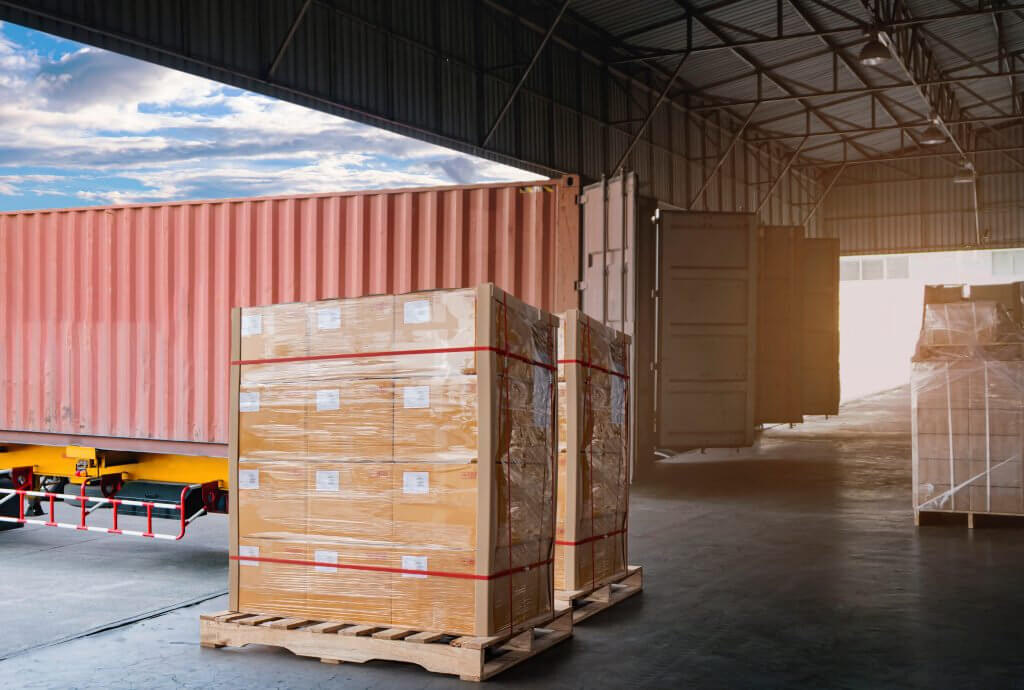
Once your order reaches a larger volume, FCL shipping becomes possible.
FCL means “full container load.” Common container types include 20GP, 40GP, and 40HQ.
Among them, 40HQ is often a strong choice for furniture shipments. It offers much more loading space than a 20GP. The freight cost does not rise in the same proportion.
A 40HQ container has about 2.3 times the loading space of a 20GP, but the ocean freight may only be about 50% higher.
As the shipment volume increases, you can spread the shipping cost across more furniture. The average cost per cubic meter and per item can become much lower.
For example, a 40HQ container from China to the U.S. may cost about $3,000 in ocean freight.
If it carries about 60 CBM of furniture, the average ocean freight cost is about $50 per CBM. That is less than half of many LCL furniture shipping rates.
The table below compares the average cost per cubic meter at different shipment volumes.
It shows how the cost changes as the shipment volume increases.
2. Customs Clearance Cost: Many Fees Are Charged Per Shipment
After the furniture arrives at the destination country, it needs to go through import customs clearance.
This process usually involves documents like the commercial invoice, packing list, bill of lading, product classification, and import declaration.
Many buyers assume that if they buy more furniture, customs clearance costs will increase at the same rate. In reality, many customs-related costs do not apply to each furniture item. They are often charged per shipment or per customs entry.

Take the United States as an example.
For formal import entries, importers usually calculate the MPF (Merchandise Processing Fee) at 0.3464% of the cargo value. For ocean imports, HMF (Harbor Maintenance Fee) usually calculates at 0.125% of the cargo value.
In addition, most importers use a customs broker. They handle import documents, HTS classification, duty calculation, and customs communication. Brokers often charge the service fee per entry or per shipment, not per piece of furniture.
This means that whether you import one sofa or furniture for an entire home, many fixed customs clearance costs will still occur.
The more items you include in one shipment, the more you can spread these fixed costs across products. Naturally, the average clearance cost per furniture item becomes lower.
This is why buying in a more concentrated way can be more cost-effective.
It is not because the tax rate becomes lower. It is not because customs gives you a special discount.
Many clearance-related costs arise per shipment, not per furniture item.
3. Local Delivery Cost: Labor and Service Fees Can Be Shared
The third cost that many buyers overlook is local delivery.
Many people assume that if they buy fe-wer pieces, delivery will cost much less. That is not always the case.
Service providers often charge a large part of local delivery costs based on the service, address, or trip. It is not charged per item.

For example, residential delivery, liftgate service, appointment notification, and inside delivery may all create separate charges. If the delivery address is a home with no loading dock, these service fees can still apply.
The driver may need to schedule a delivery time. The furniture may also need to be moved inside. These fees can apply even if the shipment includes only two pieces.
In other words, whether you buy 2 pieces or 20 pieces, many basic delivery services still happen just once.
The table below shows how this cost-sharing difference can look.
Of course, more furniture can also mean higher base freight, more handling time, and more labor. A 20-piece delivery will usually cost more in total than a 2-piece delivery.
But from the perspective of fixed service fees, concentrated delivery is much more manageable than scattered deliveries.
What Is the Cost Logic of Buying Furniture from China?
Buying furniture from China does not mean the more you buy, the lower your total cost will be.
The real logic is this:
The more concentrated your purchase is, the easier it becomes to lower the landed cost per piece.
If you buy only one chair or a small table, the price difference may not cover the costs.
These costs include shipping, customs clearance, and local delivery.
But if you are furnishing a home, a project, or several rooms at once, China’s furniture supply chain has a clearer advantage.
You can access more furniture styles, better factory prices, and more choices in size, material, color, and finish.
This is the real reason buying furniture from China can make sense.
It is not suitable for every buyer.
But if you need furniture for a whole home or project, it can be a better deal than buying each piece at local stores.

How HomeBridge Helps Reduce the Cost of Whole-Home Furniture Purchasing
HomeBridge does not simply help you find a factory.
We also do not leave you to choose from a long list of suppliers on your own.
We work more like a furniture sourcing team on the buyer’s side.
From the early selection stage, we help match furniture options based on your space, budget, preferred style, and daily-use needs. You can select furniture online. Or you can join a Furniture Tour in China.
You can see materials in person. You can compare craftsmanship. You can test seating comfort. You can visit different factories and showrooms.
If standard items do not fit your space, we can also assist with Made-to-Order furniture. This allows adjustments in size, material, color, proportion, and usage details.
After you place the order, we keep helping. We track production and confirm details. We inspect quality and review packaging. We coordinate loading and manage the logistics process.
The goal is to manage furniture from different factories in one central place.
This reduces repeated communication.
It also avoids unnecessary process costs.
This is why we suggest treating furniture sourcing from China as one full project.
It works better than buying a few scattered items one by one.
The real savings often do not come from one sofa being cheaper.
They come from a more organized, more concentrated, and clearer purchasing process.
If you are preparing for a new home, a whole-home furniture purchase, or a project that requires multiple pieces of furniture, buying from China may be more suitable than you expected.

.svg)







.svg)
.svg)


