

Professional sales manager experienced in team management, customer development and sales strategy formulation. Results-oriented with strong communication and coordination capabilities.
If you are preparing a restaurant project overseas and considering sourcing furniture and related products from China, the real question is usually not just whether a similar design can be found. What matters more is whether the products are suitable for commercial use, delivered on time, kept within budget, and ready for installation after arrival.
Restaurant sourcing is often more complex than residential sourcing. A client may begin with restaurant sofas and dining tables, but the project can quickly expand into ceiling fans, signage lights, stainless steel counters, sinks, outdoor barbecue counters, stage curtains, menu display stands, plates, and glassware. Behind each category, there are decisions about materials, structure, voltage, installation, inspection, packaging, and shipping.
Harper's restaurant project in Australia was a real example of this type of commercial dining space sourcing. The final scope included restaurant sofas, dining tables, U-shaped table and sofa sets, a buffet table, stainless steel counter, ceiling fans, display menu stand, host table, lighting, outdoor barbecue counter, stage curtain, and sink. The product value was USD 15,634, with USD 8,149 in DDP shipping cost.
Many clients begin by sending a reference image and asking, "Can this be made?" For a restaurant project, reference images are useful because they show the desired style, color direction, and atmosphere. But before sourcing begins, it is also important to confirm whether each product is suitable for long-term commercial use and whether it can be installed and maintained smoothly.
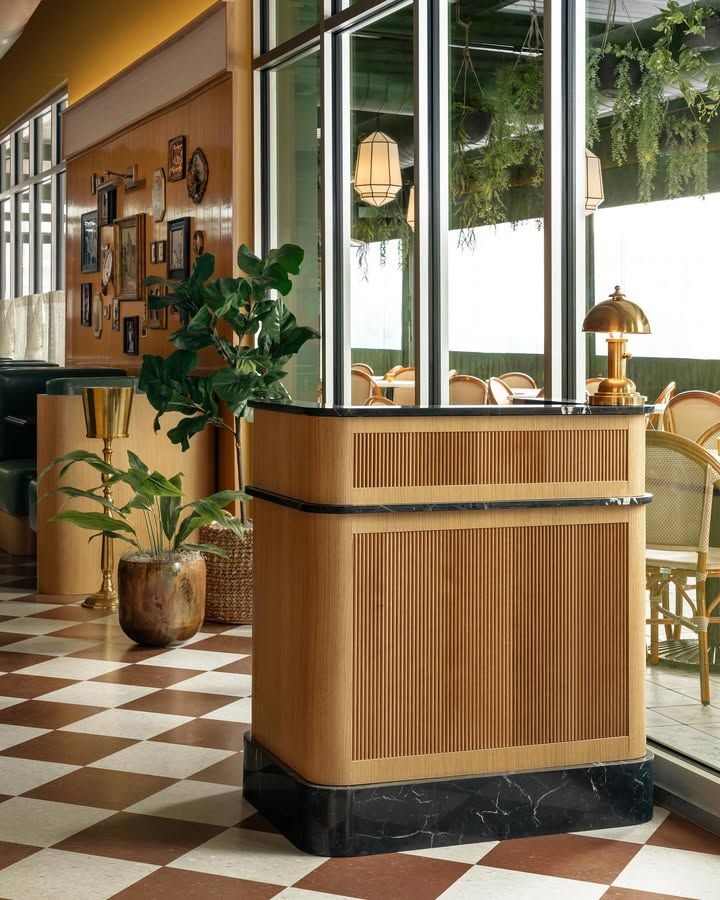
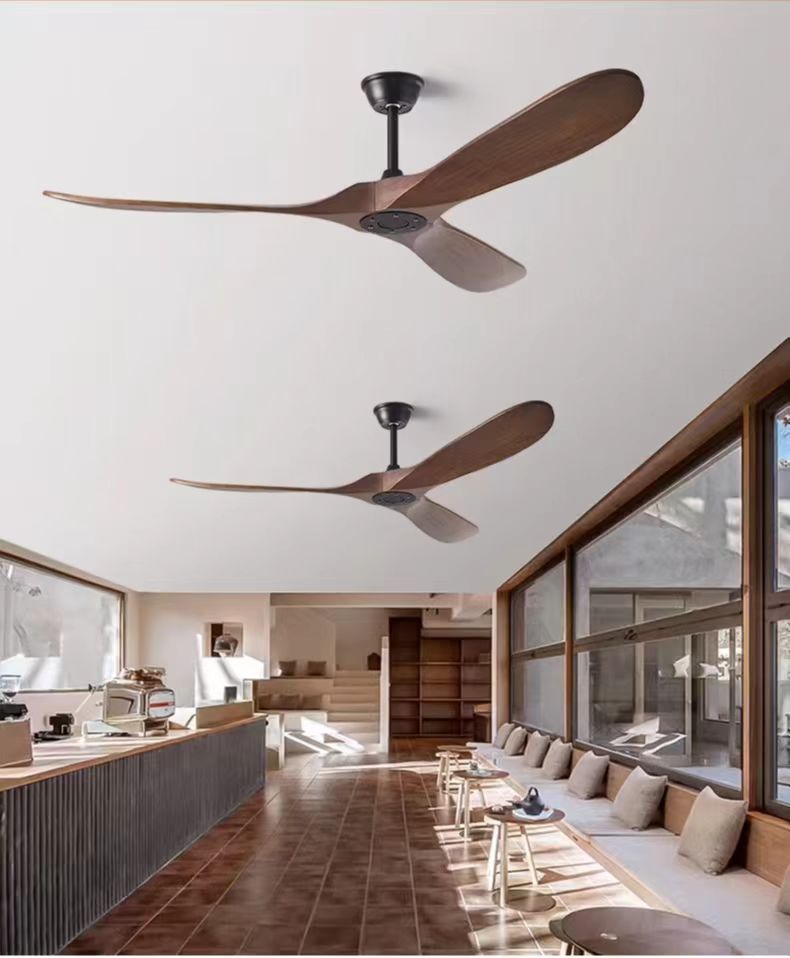
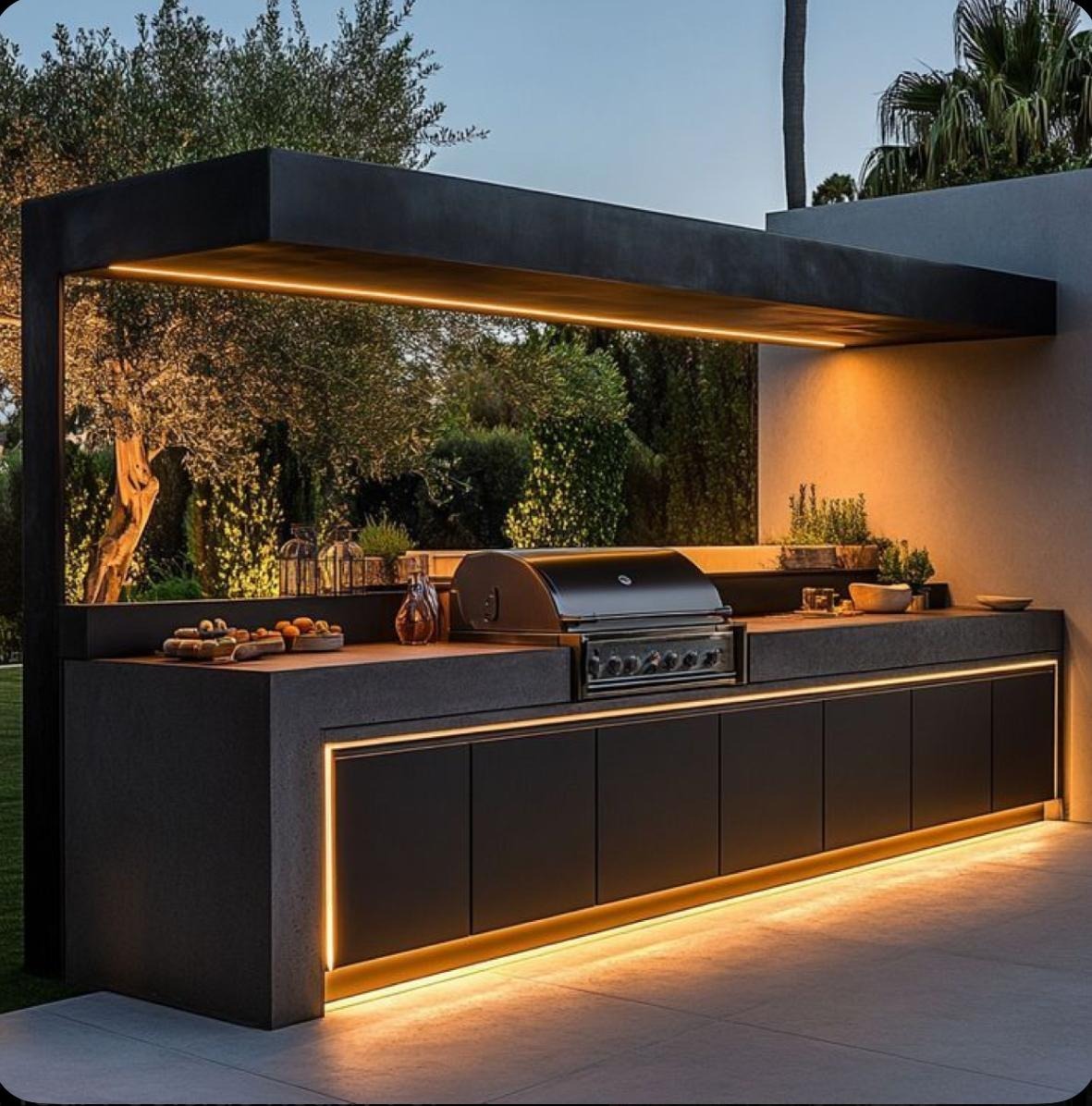
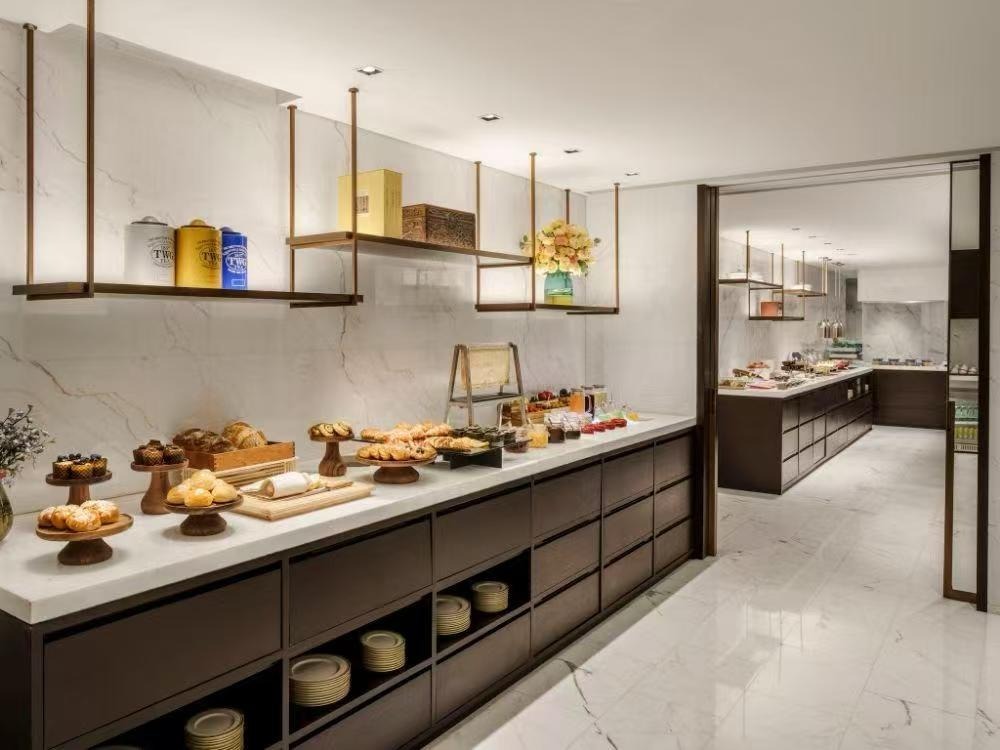
Restaurant furniture and related products must withstand higher usage frequency, repeated cleaning, clear opening schedules, and more complex site conditions. HomeBridge does not simply search for similar-looking items. Instead, we help turn the client's desired visual direction into a sourcing plan that can be produced, inspected, packed, and shipped.
In this type of project, several questions come first:
1. Is the product suitable for commercial use?
Not every product with a similar appearance is suitable for a restaurant. Fans, sofas, stainless steel counters, outdoor cabinets, and display fixtures all need to be assessed based on usage frequency, material, structure, and warranty.
Note:
Not every product with a similar appearance is suitable for a restaurant. Fans, sofas, stainless steel counters, outdoor cabinets, and display fixtures all need to be assessed based on usage frequency, material, structure, and warranty.
2. Can non-standard requirements be broken down into workable modules?
For example, an outdoor barbecue counter can be divided into cabinet structure, countertop, sink, appliance reservation, and local installation. A signage light can be divided into lighting effect, panel material, dimensions, and installation method.
Note:
Signage lights and display menu stands are part of the restaurant's brand presentation. When sourcing these products, it is useful to confirm the lighting effect, panel material, lettering or graphic display method, installation position, and whether power access needs to be reserved.
3. Can the budget be adjusted through materials and configuration?
The same visual direction can often be achieved through different combinations of wood veneer, metal parts, countertop materials, lighting configuration, stainless steel grade, and product dimensions.
Note:
For stainless steel products in restaurant spaces, the use position matters. If the item will be used as a work counter, sink, or high-contact functional area, corrosion resistance, cleanability, and welded edge finishing are usually more important than surface appearance alone.
4. Which products should be prioritized based on lead time?
Core furniture and custom products with longer production cycles should be confirmed first. Supplementary items such as plates and glassware can often be handled later in a more concentrated way.
5. Should logistics be planned together with other projects?
If the client is also working on a residential project, priority restaurant goods may be evaluated for consolidated shipping in the same container, helping reduce shipping cost and making delivery more centralized.
This restaurant project first started with seating and the stage area. The client wanted restaurant sofas in micro leather and shared reference images. Soon after, she also requested curtains for the stage area to support the overall dining space design.
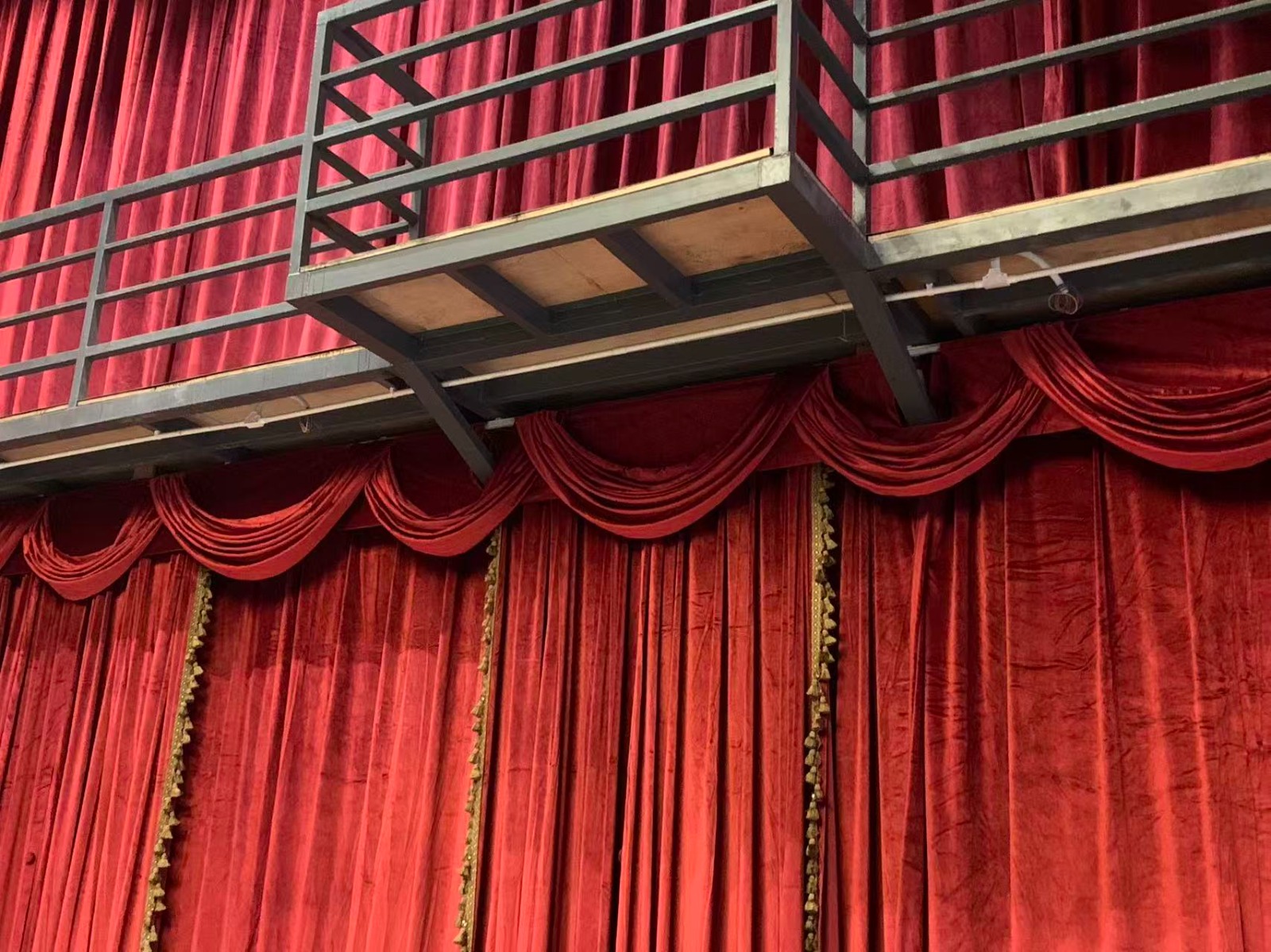
Reference pictures sent by the customer
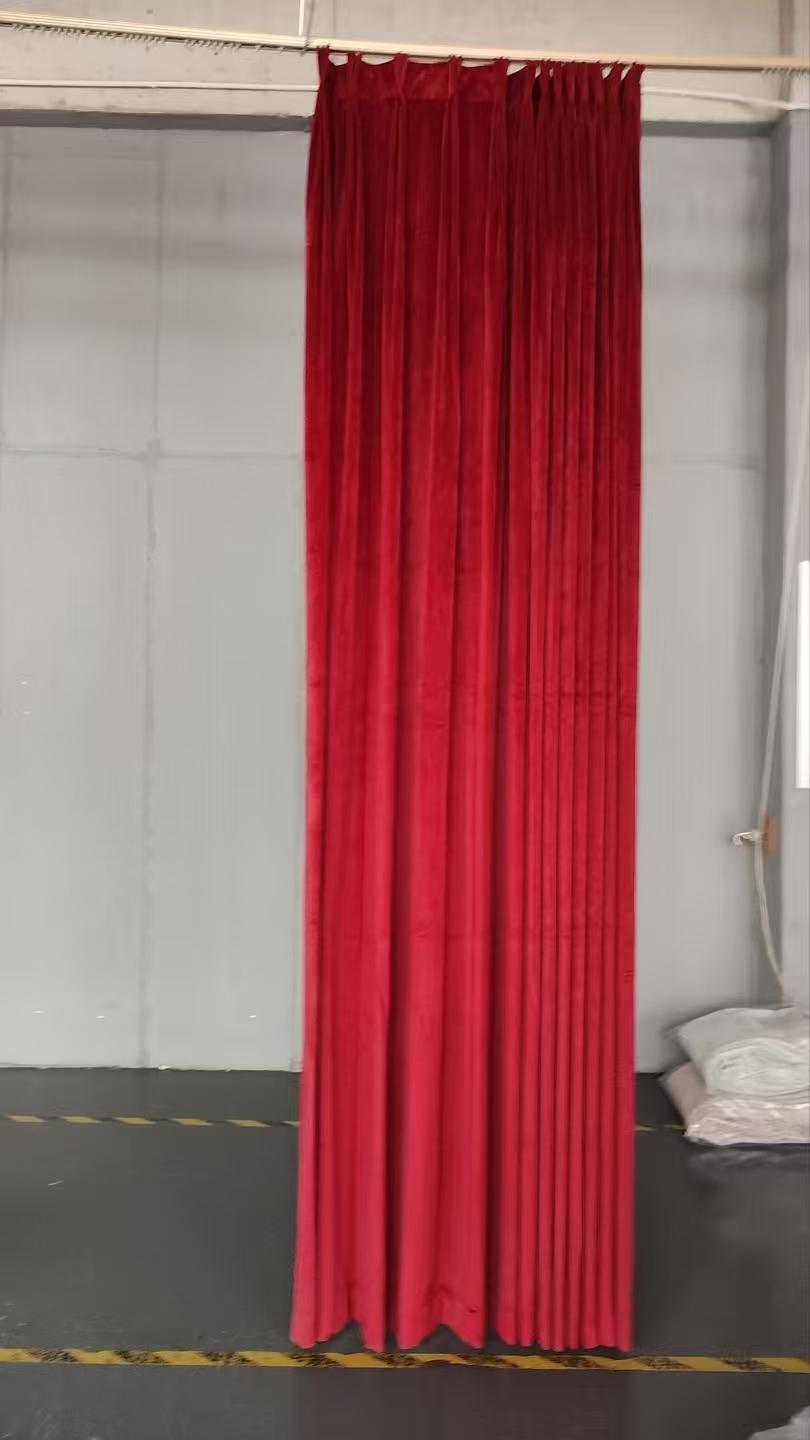
Actual‑shot photos of delivered products
As the project developed, the scope expanded into large restaurant ceiling fans, stainless steel working counters, red-tone sofa material, host table, signage light, display menu stand, outdoor barbecue counter, sink, plates, and glassware. HomeBridge organized these different product types into one commercial restaurant sourcing plan.
For the ceiling fans, the client needed large fans that suited a restaurant space, with both visual presence and long-term stability. HomeBridge sourced options based on the reference image and screened suppliers by capability, product structure, warranty, and export suitability. The final fan direction was confirmed according to export standards, with a 10-year motor warranty and a 2-year full fan warranty. Because the restaurant had a higher ceiling, the installation height was also adapted through multiple hanging rods and dedicated connectors.
Note:
In restaurant projects, ceiling fans, signage lights, display lights, LED strips, and outdoor equipment all need to be checked against the local usage environment. In Australia, the common residential power supply is 230V / 50Hz, while many Chinese products are designed around 220V / 50Hz. Products marked 220-240V / 50Hz usually have a basic voltage range suitable for Australia, but fixed wiring, outdoor use, and long-term commercial operation should still follow local installation requirements.
For the barbecue counter, the client wanted a setup similar to a 6-burner outdoor kitchen, including a barbecue area, beverage cooler, sink, and lower storage. HomeBridge divided the requirement into two parts. The countertop and cabinet structure could be supplied through the China sourcing chain, using an aluminum alloy cabinet structure with rock plate covering for outdoor use. Appliance-related parts such as burners and coolers, which involve local standards, would be configured locally in Australia, while the factory reserved the required positions.
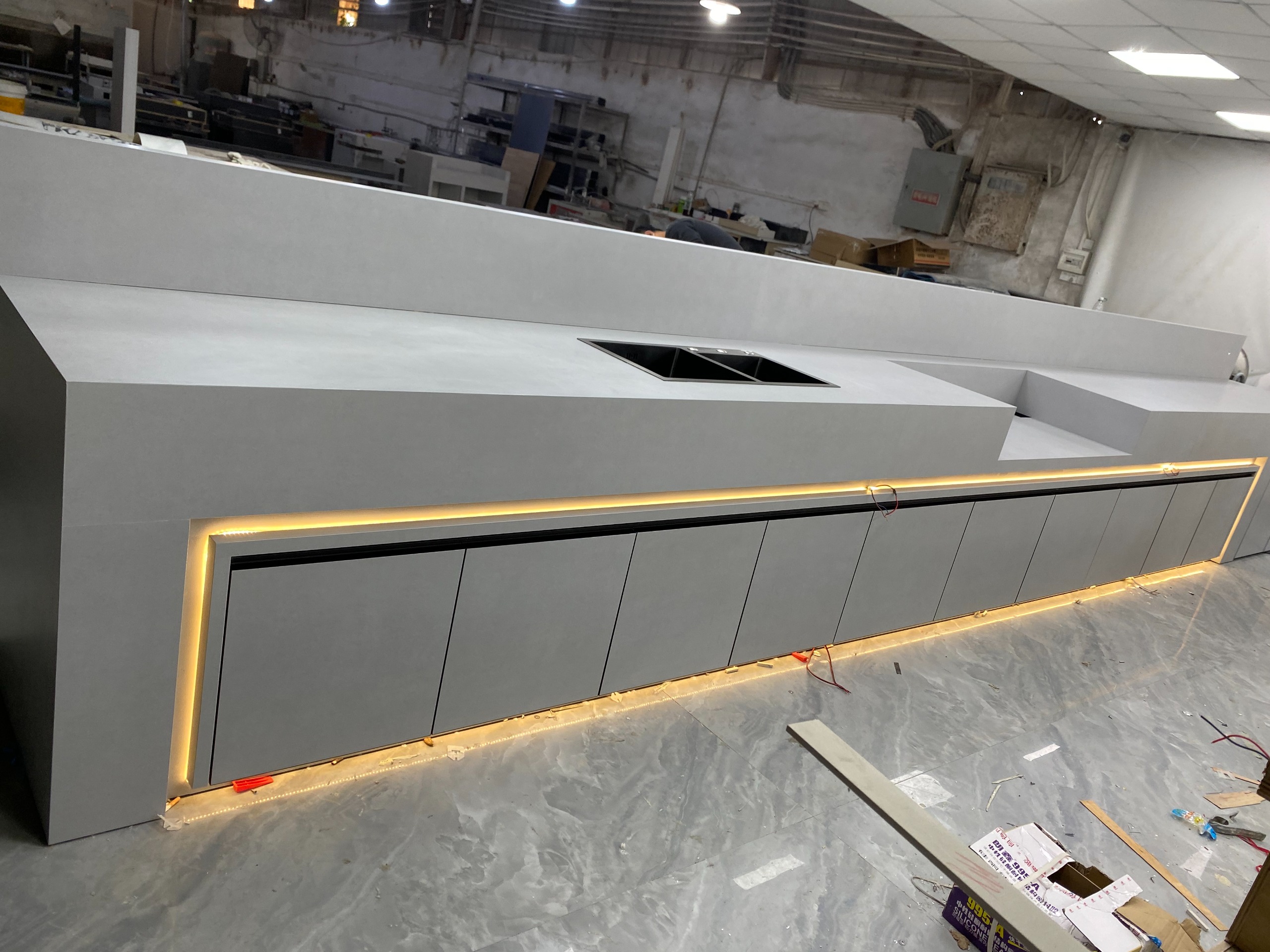
Note:
Outdoor restaurant products need to consider moisture resistance, sun exposure, cleaning, and local installation standards. The cabinet structure, countertop, and appliances do not always need to come from the same supplier. Producing the cabinet and countertop in China while leaving locally regulated appliances to be configured in the destination country can be a more practical approach.
For the host table, display fixtures, and lighting, HomeBridge evaluated different combinations of materials, dimensions, and configurations based on the client's target effect. By adjusting wood veneer, metal parts, countertop materials, lighting configuration, and product dimensions, the project could balance visual result, budget, and durability.
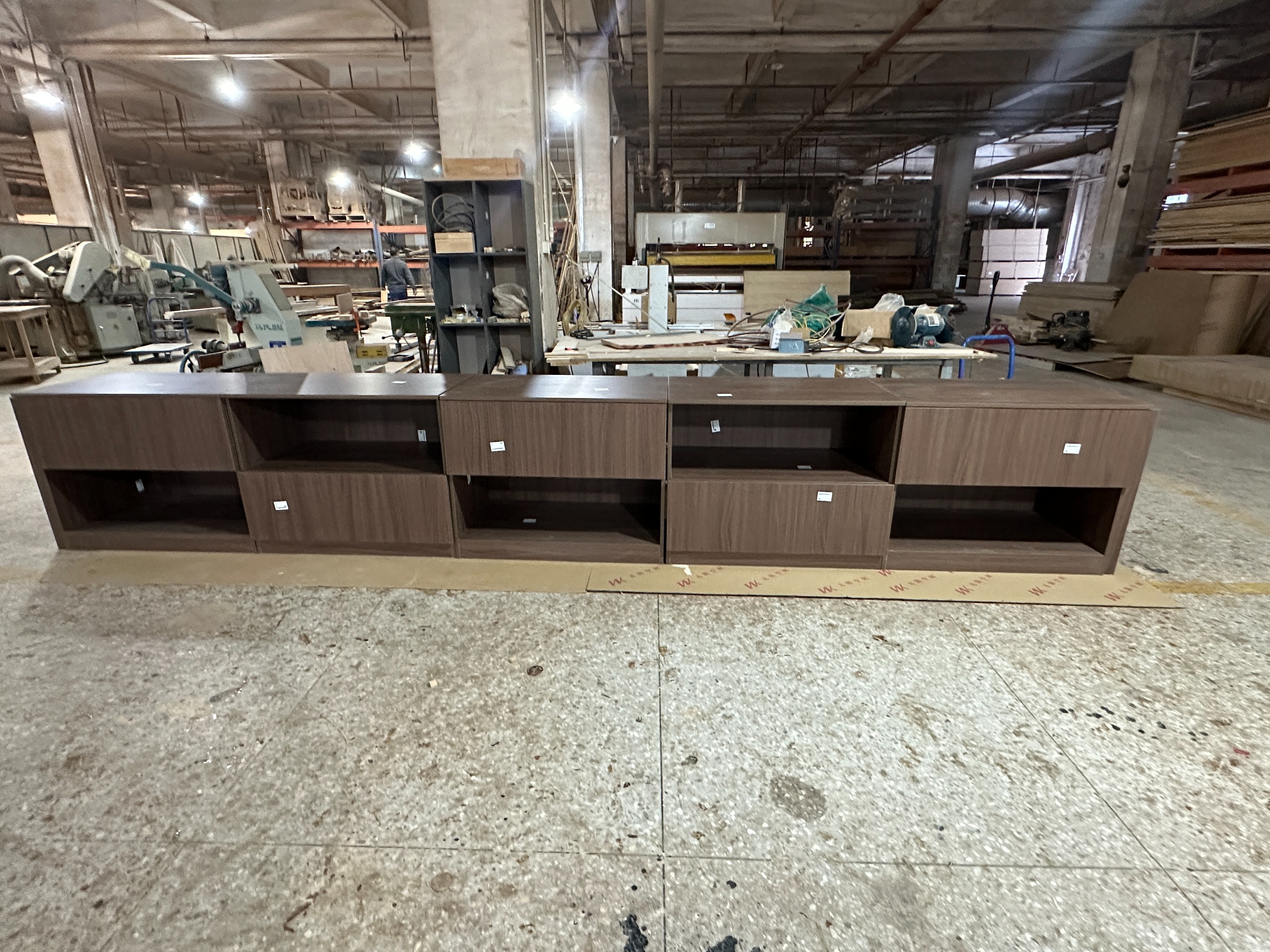
For timing, HomeBridge prioritized core products such as restaurant sofas, tables, stage curtain, and fans for material confirmation and production planning. Shorter-cycle supplementary items such as plates and glassware could then be confirmed later in a more focused way. This helped key products enter production earlier while keeping the overall project rhythm clear.
For overseas restaurant projects, production completion is not the end of the process. Before shipment, it is still important to check product appearance, quantity, key structure, packaging status, and photo or video records. Since cross-border shipping takes time and furniture can be affected by volume, edges, surface materials, and packaging methods, pre-shipment inspection can directly affect installation and opening preparation after arrival.
In Harper's restaurant project, HomeBridge arranged for the project consultant to visit the site before shipment and record the product status through photos and videos. The inspection focused on the overall appearance of restaurant sofas and tables, edge finishing, functional items such as cabinets and sinks, finished effects of lighting and display products, and the goods' condition before and after packaging.
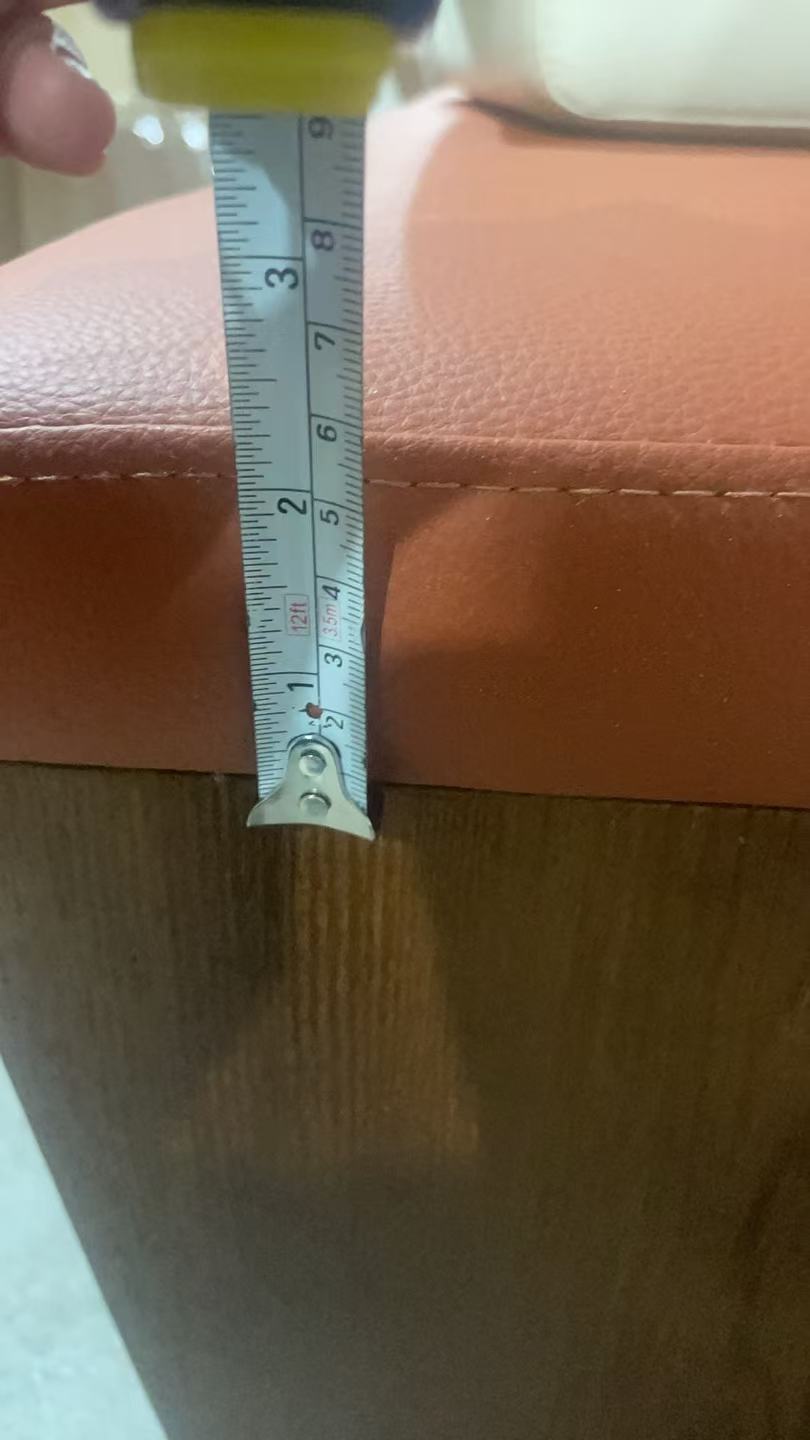
Factory actual‑shot photos of dining‑chair shipments
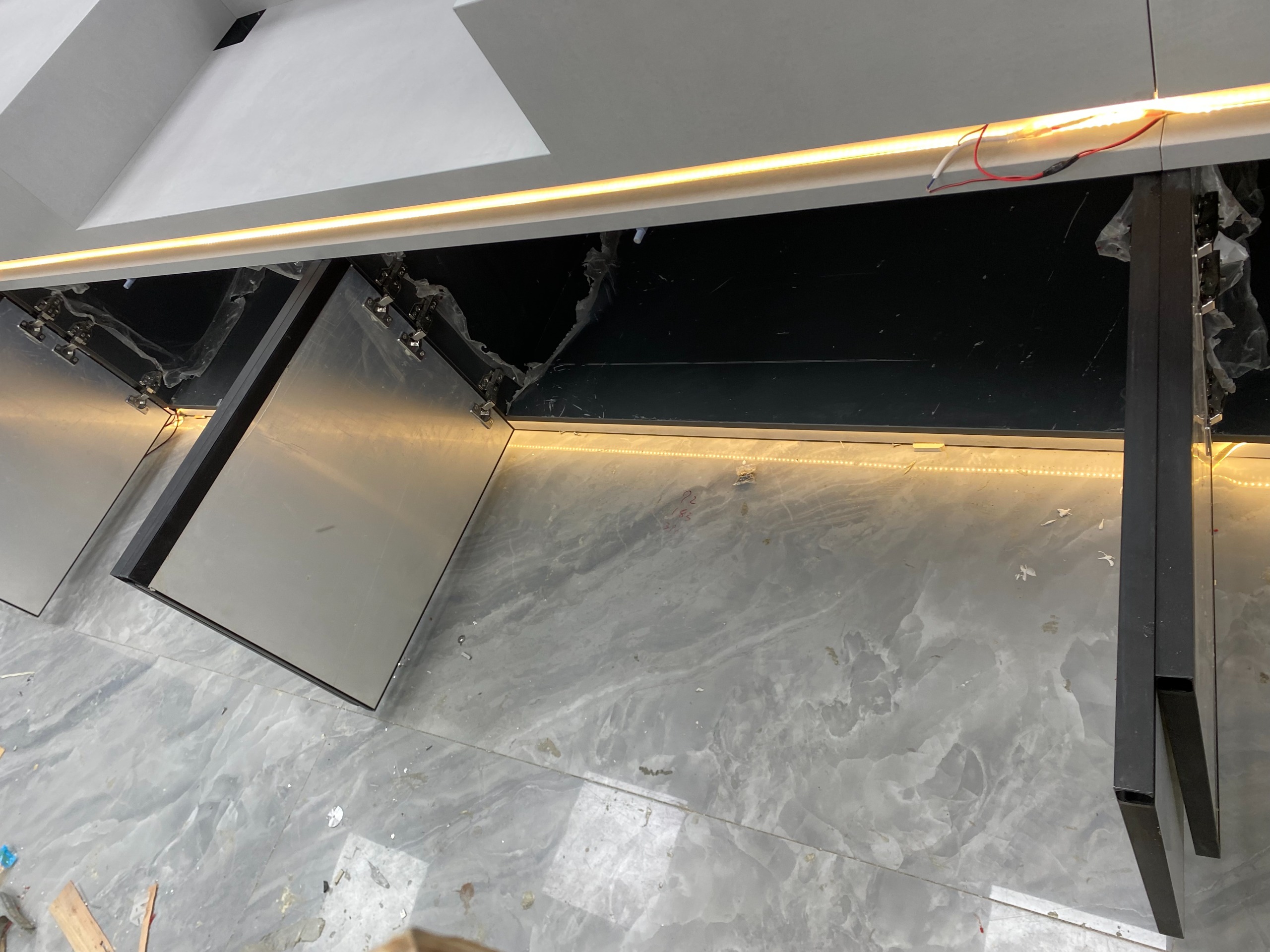
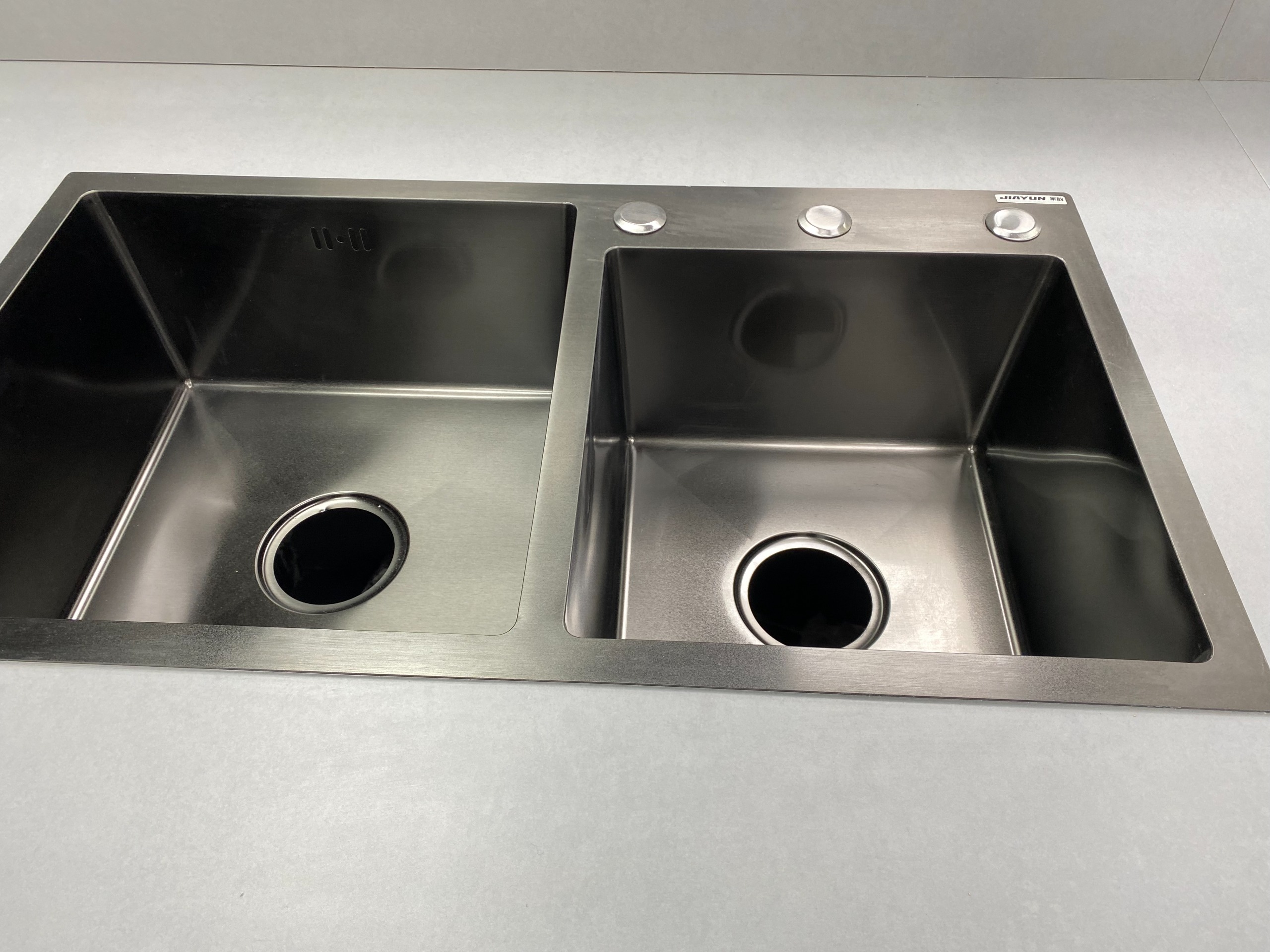
Actual‑shot photos of outdoor barbecue grills before shipment
Note:
Restaurant furniture inspection is not only about checking whether something is damaged. A more professional inspection usually covers four levels: whether the appearance matches the confirmed plan, whether dimensions and accessories may affect installation, whether edges, countertops, metal parts, and upholstery are suitable for commercial use, and whether the packaging can support long-distance shipping.
Outer‑packaging of the barbecue counter
Actual‑shot photos of outdoor barbecue grills before shipment
The value of this step is to clarify key details before the goods leave the factory. For overseas clients, on-site inspection and shipment photo records can also reduce uncertainty in remote sourcing and allow them to see the actual product status before dispatch.
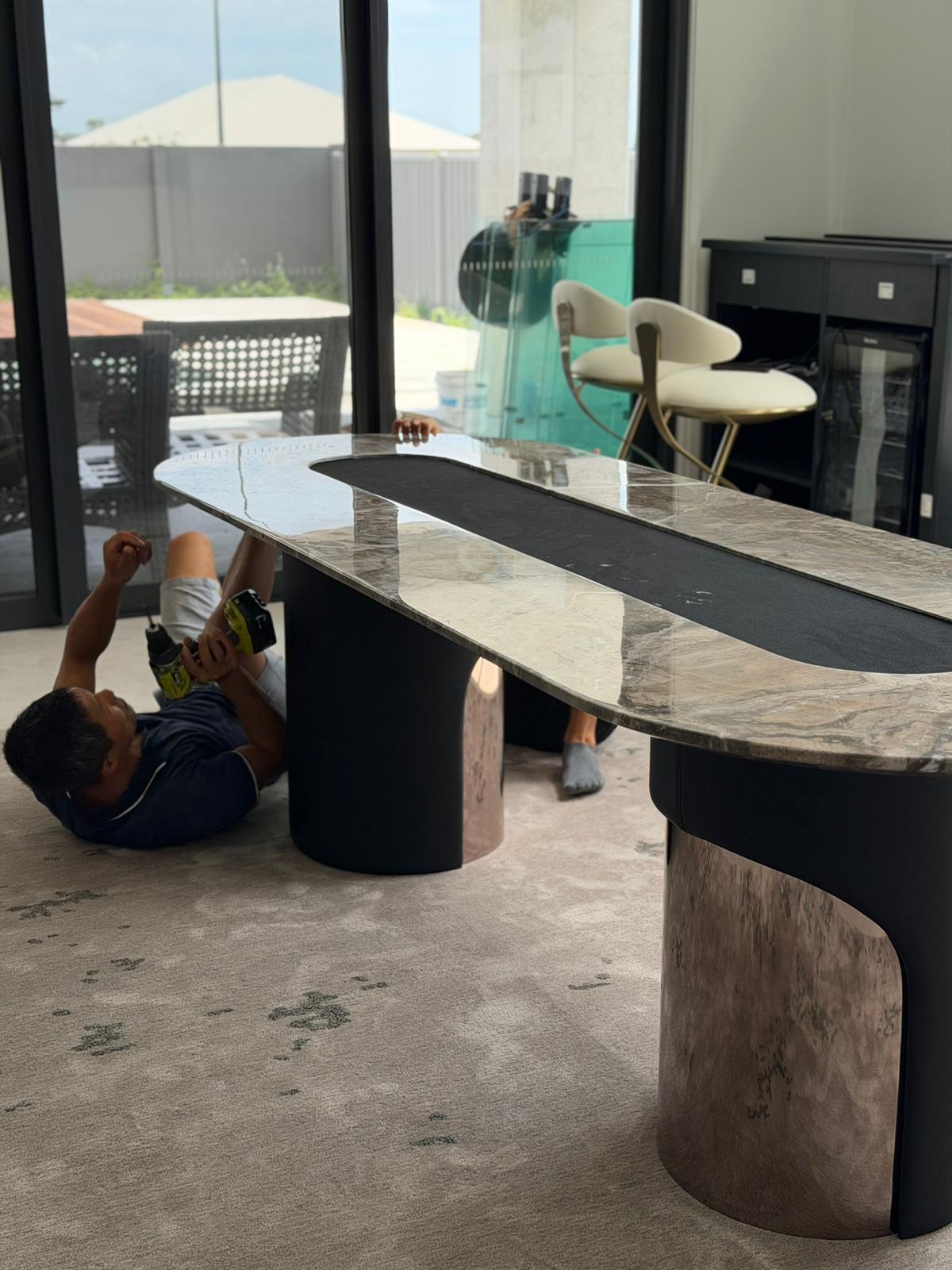
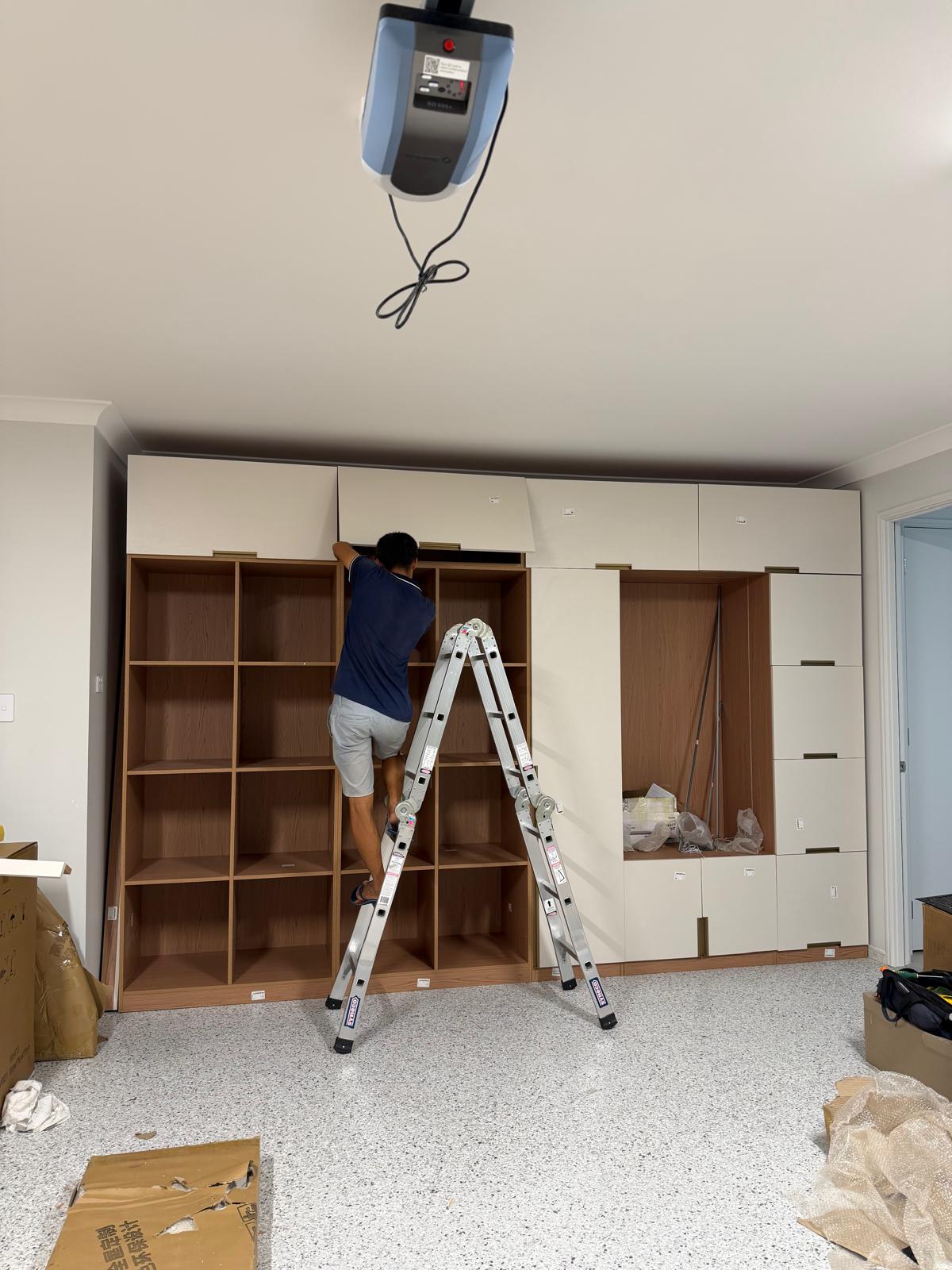
Harper's restaurant project and residential villa project were not two completely separate orders. While the residential project was moving forward, the client had already started planning the restaurant project and wanted selected priority items to ship together with the home furniture where possible.
For overseas clients, this kind of consolidated planning can be very practical. If residential furniture and priority restaurant goods can be combined in the same container, shipping cost may be reduced, and receiving and delivery in Australia can become more centralized.
This means the restaurant case was not simply another order. It was part of a continuous sourcing relationship across residential and commercial spaces. HomeBridge's value was not only in finding products, but also in bringing production cycles, cargo characteristics, and logistics planning into one managed process.
“Thank you, Aimee. Your support and coordination on this project will help us move forward with more business opportunities.”
If you plan to source restaurant furniture and related products from China, it is better to first divide the project into several modules:
Seating area, display area, kitchen or functional area, outdoor area, lighting and soft furnishings, tableware supplements, and shipping plan.
This helps each product category match the right supply chain, while materials and configurations can be adjusted according to budget. For cross-border restaurant projects, the real priority is to make products suitable for commercial use, keep the budget controllable, and keep production and shipping schedules clear.
If the project also involves residential sourcing, consolidated shipping can be evaluated early. For DDP door-to-door shipping, the quote usually includes sea freight, customs clearance, taxes, and final delivery. Clients should review the product cost, shipping cost, and destination-related cost structure before judging the overall budget.
Note:
DDP can be helpful for clients who want to reduce communication around customs clearance and local delivery, but it does not mean every cost can be fixed at the earliest stage. Furniture shipping cost is often affected by volume, packaging method, destination delivery conditions, and whether goods can be consolidated. The more stable the product list is, the more accurate the shipping estimate will be.
Harper's case shows how overseas restaurant clients can turn scattered reference images and functional requirements into a practical commercial restaurant sourcing plan through systematic product matching, supplier coordination, material confirmation, production priority planning, pre-shipment inspection, and DDP shipping coordination.

China, Shenzhen
Longgang, Jingji Yujing Age, 1808
Lunes a viernes de 9:00 a 18:00 (hora de China)